Excretory System
Interactive passage with audio narration, comprehension questions, and printable PDF.
By completing this purchase you agree to our Terms of Use and Privacy Policy. Your subscription renews automatically until you cancel. You can cancel anytime from your account settings. All sales are final and non-refundable. Digital content is available for download in your account immediately upon purchase.
What's included
Excretory System preview and details
About this printable Excretory System science reading passage, NGSS-aligned (Grades 5-8)
Sample passage and quiz from Excretory System
Reading passage and comprehension quiz preview
Excretory System
The excretory system is essential for maintaining a healthy internal environment in the body by removing metabolic wastes produced during normal cell activities. If these wastes are not eliminated, they can build up to toxic levels and harm organs and tissues. Scientists have discovered, through careful observation and measurement, that several body organs work together to filter and remove different types of waste. This process is critical for maintaining homeostasis, the stable conditions needed for life.
How the Kidneys Filter Blood and Form Urine
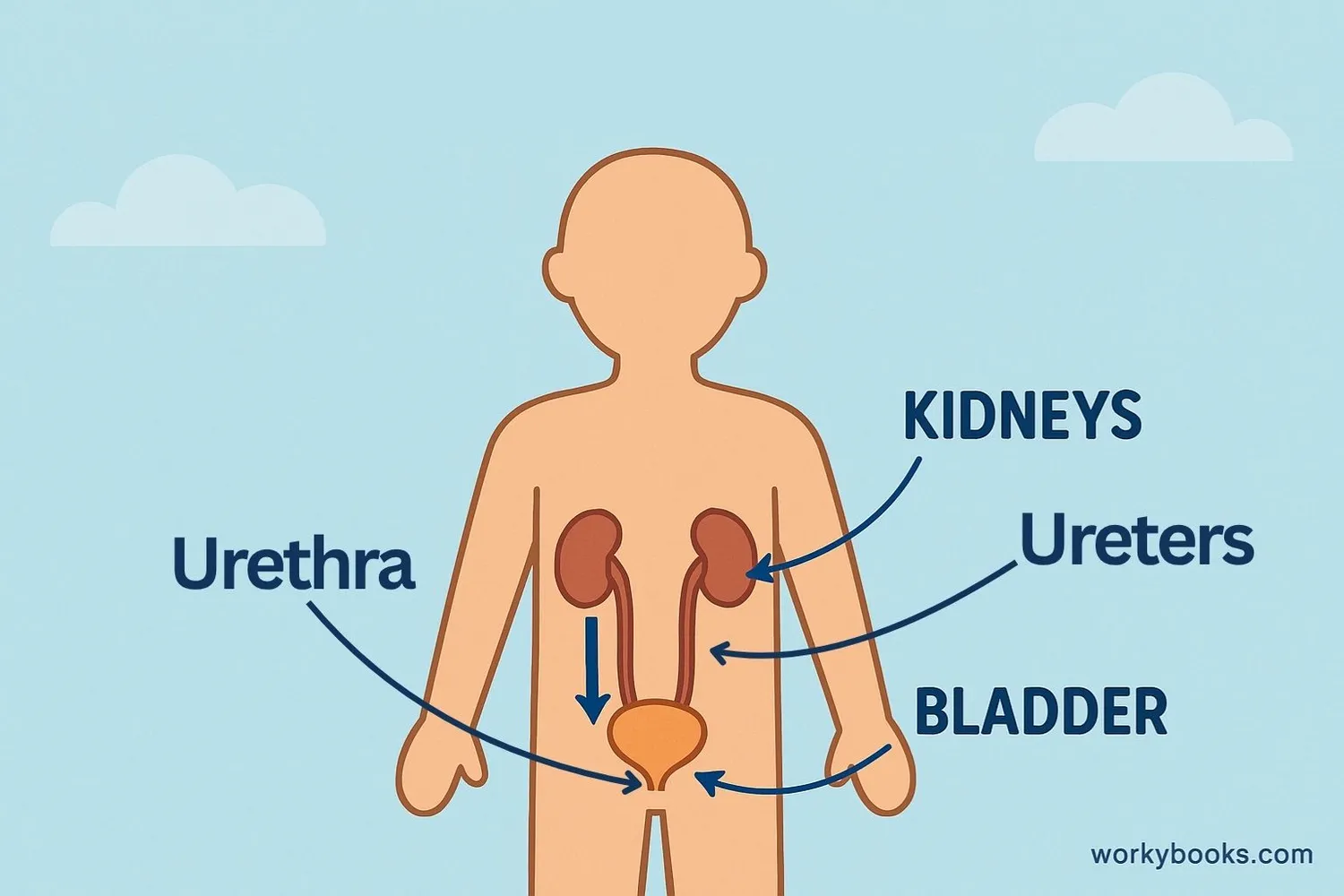
The kidneys are the main organs of the excretory system. Each kidney contains about one million nephrons, which are tiny filtering units. Blood enters the kidneys carrying excess water, salts, and a nitrogen-based waste called urea, which forms when the body breaks down proteins. The nephrons filter out these wastes, while important substances like glucose and most water are reabsorbed back into the blood. The remaining liquid, called urine, contains water, urea, and excess salts. Urine then travels through the ureters to the bladder, where it is stored until it leaves the body through the urethra.
Other Excretory Organs and Their Roles
While the kidneys handle most metabolic waste, other organs also contribute to excretion. The lungs remove carbon dioxide, a waste product of cellular respiration, from the blood when you breathe out. The skin releases water, salts, and small amounts of urea through sweat, which also helps cool the body. The liver processes toxins and breaks down old red blood cells, turning some waste into urea for the kidneys to remove. Together, these organs ensure that different types of waste are eliminated efficiently.
Kidney Health and What Happens When It Fails
The excretory system depends heavily on healthy kidneys. Drinking plenty of water and limiting salt intake helps the kidneys function properly. If the kidneys become damaged and cannot filter wastes, dangerous substances build up in the blood. This condition is called kidney failure and can be life-threatening. In such cases, a medical process called dialysis is used to artificially remove wastes from the blood. Understanding how the excretory system works helps people make choices that protect their health and prevent disease.
In summary, the excretory system is a complex network of organs that work together to keep our bodies free of harmful wastes, supporting health and life. This system demonstrates the principle of homeostasis, showing how body systems interact to maintain balance even when conditions change.
Interesting Fact: Every day, your kidneys filter about 180 liters (47 gallons) of blood, but only about 1.5 liters (less than half a gallon) of urine leaves your body!
Comprehension quiz (10 questions)
1. What is the main function of the excretory system?
2. Which organ filters blood and forms urine?
3. What is the name of the tiny filtering units inside the kidneys?
4. What waste product do the lungs remove from the body?
5. What is another word for the process of keeping the body's internal environment stable?
6. What is the effect of kidney failure?
7. What is dialysis?
8. Which of the following is NOT removed by the kidneys?
9. True or False: The skin is part of the excretory system because it removes waste through sweat.
10. True or False: The bladder stores urine before it leaves the body.
Perfect for the way you teach
- Build comprehension skills
- Auto-graded quiz
- Differentiated reading
- Read together at home
- Improve fluency
- Quiet reading time
- Reading curriculum support
- Independent practice
- Track Lexile growth