Skeletal System
Interactive passage with audio narration, comprehension questions, and printable PDF.
By completing this purchase you agree to our Terms of Use and Privacy Policy. Your subscription renews automatically until you cancel. You can cancel anytime from your account settings. All sales are final and non-refundable. Digital content is available for download in your account immediately upon purchase.
What's included
Skeletal System preview and details
About this printable Skeletal System science reading passage, NGSS-aligned (Grades 5-8)
Sample passage and quiz from Skeletal System
Reading passage and comprehension quiz preview
Skeletal System
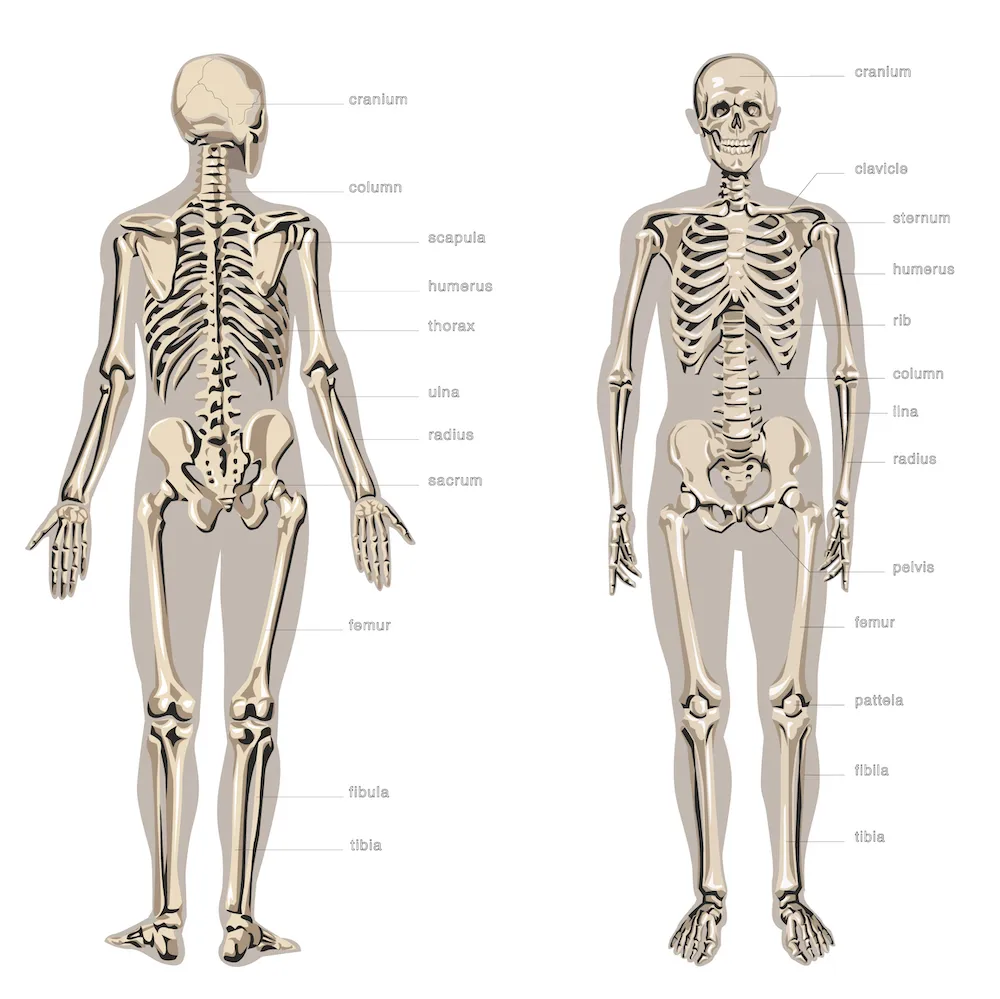
The skeletal system forms the strong internal framework of the human body. In adults, it contains 206 individual bones that interact with muscles and joints to support movement, protect vital organs, and enable daily activities. When a person runs, jumps, or even sits upright, this system is at work. Understanding how these bones are organized and function together helps explain many aspects of health and biology.
Bone Structure and Function
The bones in our bodies are not just rigid sticks. Each bone is a living organ with multiple layers and specialized parts. The outer layer is called compact bone, which is dense and provides strength. Inside is spongy bone, which is lighter and contains spaces. The center of many bones holds bone marrow, a soft tissue that produces blood cells. Bones store important minerals like calcium and phosphorus, releasing them into the bloodstream when needed. As a whole, the skeletal system supports the body, protects organs (like the skull shielding the brain and the ribs encasing the heart and lungs), allows movement by providing attachment points for muscles, and creates new blood cells.
Bone Types and Joints
Bones come in different shapes and sizes, which are grouped into four types: long bones (such as the femur), short bones (like those in the wrist), flat bones (such as the sternum), and irregular bones (like the vertebrae). Bones connect at joints, which are specialized structures that allow movement. Some joints, like those in the skull, are fixed and do not move. Others, like the hinge joint at the elbow, allow bending in one direction. The ball-and-socket joint in the hip or shoulder allows movement in many directions. Cartilage, a smooth and flexible tissue, covers the ends of bones at joints to prevent friction and wear.
Bone Health and Injuries
Healthy bones depend on proper nutrition and activity. Consuming enough calcium and vitamin D helps bones stay strong, while exercise encourages bone growth and density. Bones are living tissue that can repair themselves after injury. However, injuries such as fractures (breaks in the bone) and sprains (stretching or tearing of ligaments in joints) are common, especially in growing children and active teens. Scientists use X-rays and other imaging technologies to study bone structure, diagnose injuries, and monitor healing. The study of osteoporosis, a disease where bones become weak, has shown the importance of bone health throughout life.
In summary, the skeletal system is a complex network that provides structure, protection, movement, and essential biological functions. Its health is connected to nutrition, exercise, and overall well-being. Advancements in science and medicine continue to help us understand and care for our bones, improving quality of life and longevity.
Interesting Fact:
Some of the smallest bones in your body are inside your ear, and they help you hear!
Comprehension quiz (10 questions)
1. How many bones are in the adult human skeletal system?
2. Which organ does the skull protect?
3. What is the main function of bone marrow?
4. Which mineral is mainly stored in bones?
5. What type of joint allows movement in many directions, like in the hip?
6. What does the passage mean by 'spongy bone'?
7. Why is vitamin D important for bone health?
8. If a person has a fracture, what has happened to their bone?
9. True or False: Cartilage covers the ends of bones at joints to reduce friction.
10. True or False: The only function of bones is to support the body.
Perfect for the way you teach
- Build comprehension skills
- Auto-graded quiz
- Differentiated reading
- Read together at home
- Improve fluency
- Quiet reading time
- Reading curriculum support
- Independent practice
- Track Lexile growth