Integumentary System
Interactive passage with audio narration, comprehension questions, and printable PDF.
What's included
Integumentary System preview and details
About this printable Integumentary System science reading passage, NGSS-aligned (Grades 5-8)
Sample passage and quiz from Integumentary System
Reading passage and comprehension quiz preview
The Integumentary System: More Than Just Skin Deep
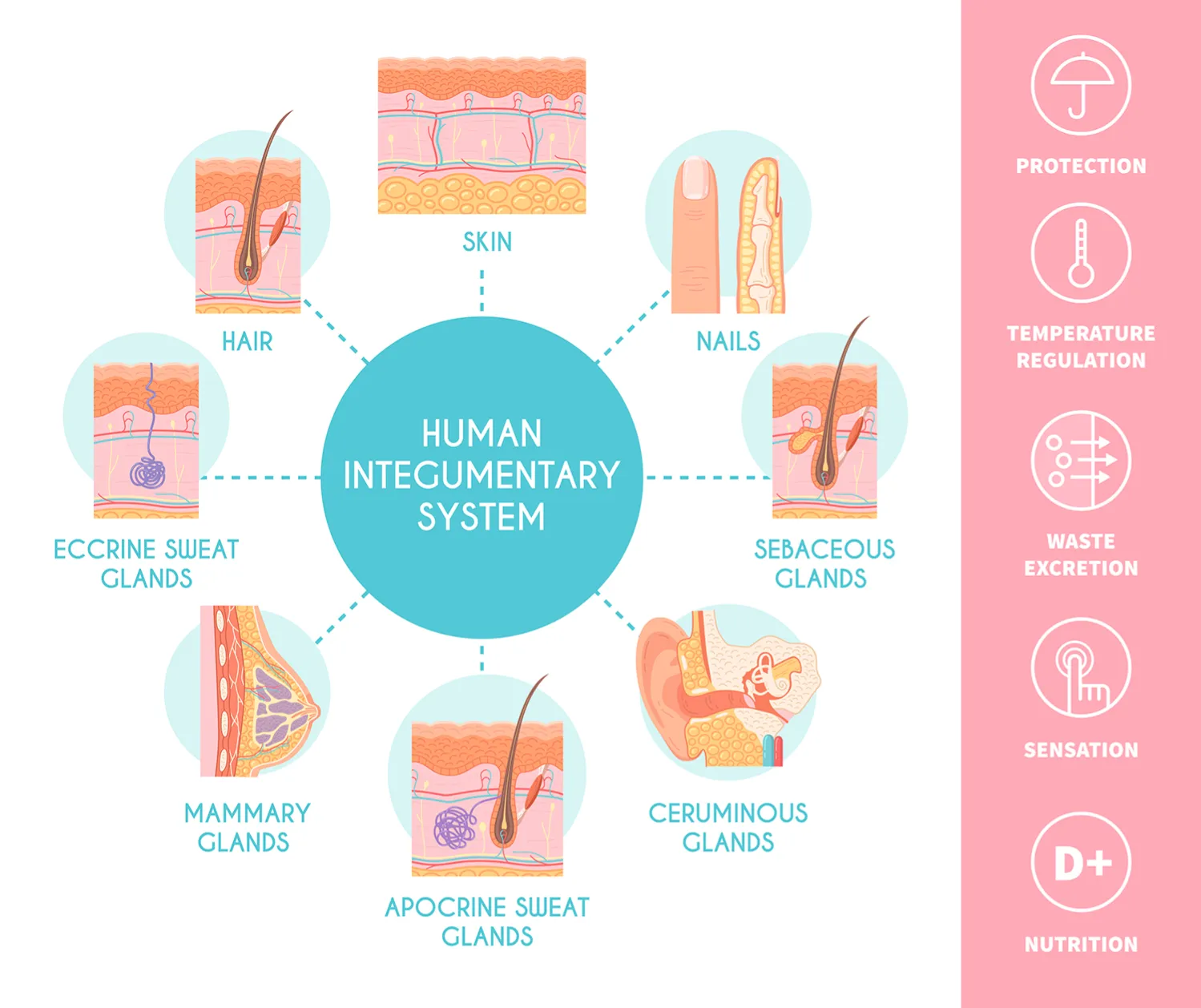
Skin is the largest organ in the human body, covering about 2 square meters and weighing nearly 16% of your total body mass. Scientists have discovered that this outer covering does far more than just protect the body from physical harm. The integumentary system, which includes the skin, hair, and nails, is essential for survival. It serves as a barrier against infection, regulates temperature, and allows us to sense the world around us.
Layers of the Skin: Structure and Function
The skin is made up of three main layers, each with specialized roles. The outermost layer, called the epidermis, acts as a protective shield. It contains melanin, a pigment that gives skin its color and blocks harmful ultraviolet (UV) rays from the sun. The dermis lies beneath the epidermis and houses blood vessels, nerves, sweat glands, and hair follicles. This layer supplies nutrients, removes waste, and enables sensations such as touch and pain. The deepest layer, the hypodermis, is mostly made of fat. It insulates the body, stores energy, and absorbs shocks from impacts.
Mechanisms of Protection and Regulation
The integumentary system is our first line of defense against external threats. When the skin detects a rise in body temperature, sweat glands release moisture that evaporates, cooling the body. Blood vessels in the dermis can widen or narrow to control heat loss. The skin also blocks entry of pathogens, or disease-causing organisms, by forming a physical and chemical barrier. When skin is injured, specialized cells quickly start repairing the damage, often forming a scab to prevent infection. Melanin in the epidermis helps prevent DNA damage from UV light, reducing the risk of skin cancer.
Hair, Nails, and Sensation: Extra Protection and Feedback
Hair and nails are also part of the integumentary system. Hair grows from follicles in the dermis and can help keep the body warm by trapping air close to the skin. Eyelashes and eyebrows protect the eyes from dust and sweat. Nails are made of tough keratin and protect the tips of fingers and toes from injury. The skin is packed with receptors that send information about pressure, pain, and temperature to the brain, allowing us to react to our environment quickly.
Healthy skin produces vitamin D when exposed to sunlight, which the body needs for strong bones. However, too much sun can cause sunburn, aging, or even cancer, so scientists recommend wearing sunscreen and protective clothing. Advances in dermatology, the study of skin, have improved our understanding of how to keep the integumentary system healthy and functioning.
The integumentary system shows how different parts of the body work together to protect, regulate, and sense. It connects to bigger biological ideas like homeostasis—the body's ability to maintain stable conditions. By learning how the skin, hair, and nails operate, we understand not just the mechanisms of protection, but also how our bodies interact with the environment every second.
Interesting Fact: The average adult has about 5 million hair follicles, and every minute, you lose about 30,000 to 40,000 dead skin cells!
Comprehension quiz (10 questions)
1. Which of the following is NOT a part of the integumentary system?
2. What is the main function of melanin in the epidermis?
3. Which skin layer is responsible for insulation and shock absorption?
4. What happens when your body temperature rises according to the passage?
5. In the passage, what does the word 'receptor' most closely mean?
6. What does the hypodermis mainly do?
7. Why do scientists recommend using sunscreen?
8. If someone cannot produce enough melanin, what would likely happen?
9. True or False: The dermis contains sweat glands, nerves, and blood vessels.
10. True or False: Hair and nails help protect the body and give sensory feedback.
Perfect for the way you teach
- Build comprehension skills
- Auto-graded quiz
- Differentiated reading
- Read together at home
- Improve fluency
- Quiet reading time
- Reading curriculum support
- Independent practice
- Track Lexile growth