Immune System
Interactive passage with audio narration, comprehension questions, and printable PDF.
By completing this purchase you agree to our Terms of Use and Privacy Policy. Your subscription renews automatically until you cancel. You can cancel anytime from your account settings. All sales are final and non-refundable. Digital content is available for download in your account immediately upon purchase.
What's included
Immune System preview and details
About this printable Immune System science reading passage, NGSS-aligned (Grades 5-8)
Sample passage and quiz from Immune System
Reading passage and comprehension quiz preview
Immune System
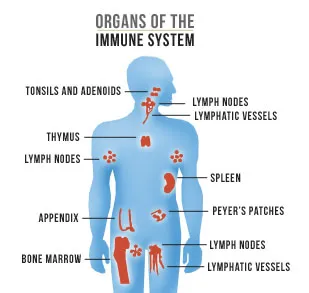
"Organs of the Immune System" / Wikimedia Commons (Public domain).
The immune system is a complex network that protects the body from pathogens—harmful microorganisms like bacteria, viruses, fungi, and parasites that can cause disease. When a person gets a cut or inhales a virus, the immune system acts rapidly to defend the body and keep it healthy. This system is made up of many parts that work together in layers, using both general and highly specialized strategies to fight invaders. Understanding how these defenses work helps scientists develop medicines and vaccines to prevent and treat diseases.
Barriers and the First Line of Defense
The body’s first protection against pathogens is its physical and chemical barriers. The skin acts like a shield, blocking most germs from entering. If germs land in your nose or mouth, mucus traps them, and tiny hairs called cilia help move them out. Stomach acid destroys many harmful microorganisms that are swallowed. Tears also contain chemicals that break down bacteria. These barriers stop most pathogens before they can cause harm, but if they fail, the immune system uses other methods.
Second and Third Lines of Defense: Inflammation, White Blood Cells, and Specific Immunity
If a pathogen passes the first barriers, the body responds with nonspecific responses such as inflammation and fever. White blood cells called phagocytes rush to the area to attack and digest invaders. This response is fast and attacks anything foreign. However, for targeted defense, the immune system uses lymphocytes. B cells make proteins called antibodies that attach to specific pathogens. T cells destroy infected body cells. Once the infection is gone, some B and T cells become memory cells, which help the body respond faster if the same pathogen returns.
Immunity, Vaccines, and When the System Goes Wrong
The immune system’s ability to learn and remember pathogens creates immunity. Vaccines use this process: by introducing a harmless part of a pathogen, vaccines train the immune system to recognize and attack the real thing. This prevents diseases like measles and polio. However, sometimes the immune system overreacts or makes mistakes. In allergies, the body attacks harmless substances like pollen. In autoimmune disorders, the immune system targets the body’s own cells, causing diseases like type 1 diabetes or lupus. These exceptions show the importance of balance in immune responses.
Today, scientists use what they know about the immune system to create new treatments and prevent epidemics. Understanding these defenses helps us stay healthy and fight global health challenges.
Interesting Fact: The human immune system can produce over 10 billion different antibodies, allowing it to recognize almost any pathogen it encounters.
Comprehension quiz (10 questions)
1. What is the main function of the immune system?
2. Which of the following is a physical barrier against pathogens?
3. What are pathogens?
4. What is the role of antibodies in the immune system?
5. In the passage, what does 'immunity' mean?
6. Which cells destroy infected body cells during specific immunity?
7. Why are vaccines important for health?
8. True or False: Allergies occur when the immune system attacks harmful pathogens.
9. True or False: Memory cells help the immune system respond faster if a pathogen returns.
10. What might happen if the immune system attacks the body's own cells?
Perfect for the way you teach
- Build comprehension skills
- Auto-graded quiz
- Differentiated reading
- Read together at home
- Improve fluency
- Quiet reading time
- Reading curriculum support
- Independent practice
- Track Lexile growth