How Does Cryptobiosis work
Interactive passage with audio narration, comprehension questions, and printable PDF.
What's included
How Does Cryptobiosis work preview and details
About this printable How Does Cryptobiosis work science reading passage, NGSS-aligned (Grades 5-8)
Sample passage and quiz from How Does Cryptobiosis work
Reading passage and comprehension quiz preview
Cryptobiosis: Nature's Survival Mechanism
What Exactly is Cryptobiosis?
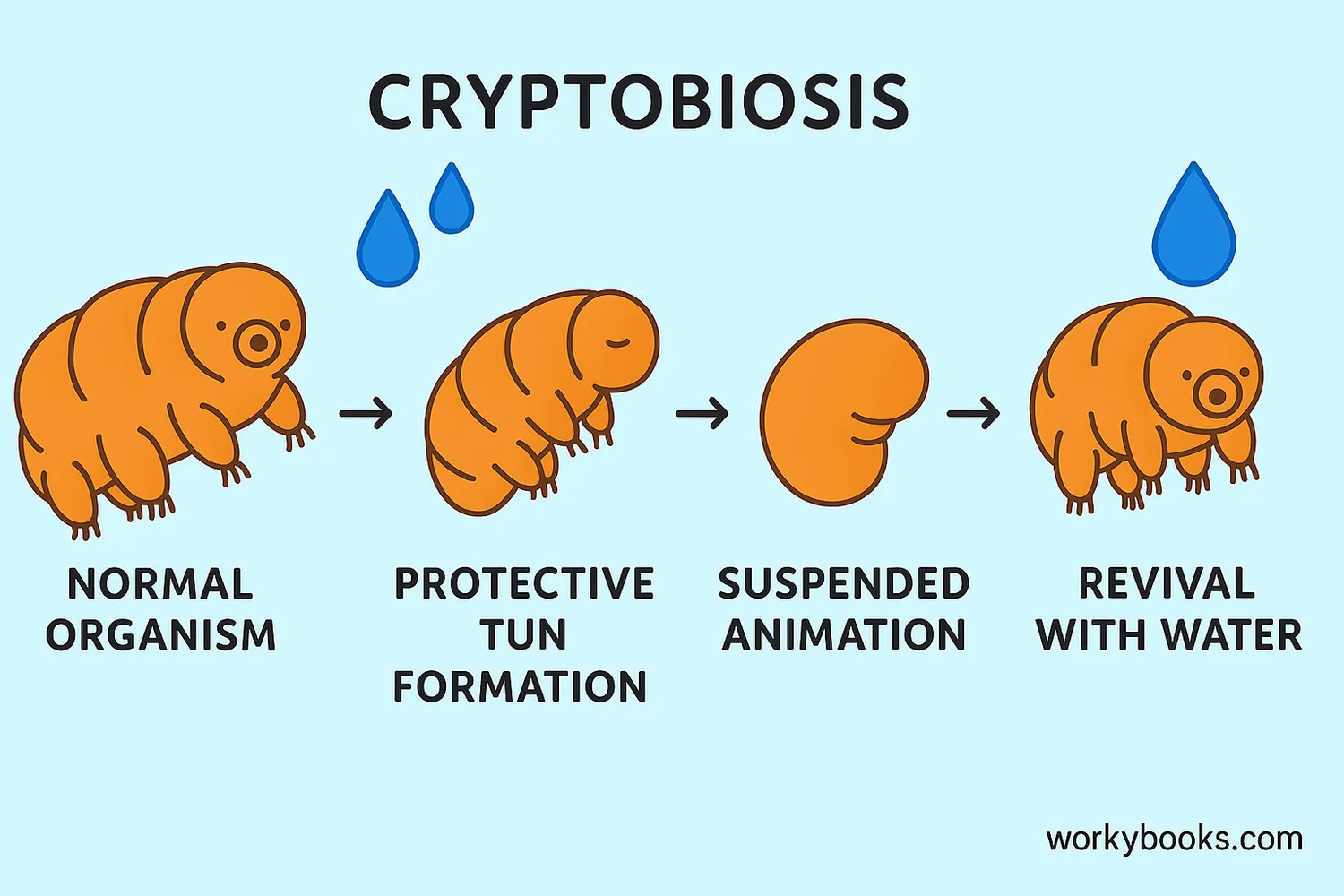
Cryptobiosis is an extraordinary biological state where an organism completely pauses all visible signs of life to survive impossible conditions. Think of it like a computer going into hibernation mode - but far more extreme. In this suspended state:
● The organism appears completely dead (no movement, breathing, or metabolic activity)
● All biological processes are put on hold
● Cells enter a protective "time capsule" state
● The organism can withstand what would normally be instant death
The Step-by-Step Science of Cryptobiosis
When conditions turn deadly, here's exactly what happens inside the organism's cells:
Phase 1: Water Emergency Protocol
As dehydration begins:
- Cells activate special genes that produce protectant molecules (like trehalose in brine shrimp or TDPs in tardigrades)
- These molecules gradually replace water inside cells, forming a thick, syrup-like glass
- This biological "antifreeze" coats delicate cellular structures like a protective shell
Phase 2: Metabolic Shutdown
Once protected:
- The heart/brain (if present) stops completely
- Energy production drops to near-zero (only 1/10,000th of normal activity remains)
- Cells disconnect from each other gently to prevent damage
Phase 3: Structural Lockdown
To prevent collapse:
- DNA coils into ultra-tight protective bundles
- Cell membranes change structure to become flexible yet strong
- All repair enzymes position themselves for instant action upon revival
Phase 4: The Waiting Game
The organism remains in this state until:
● Water returns
● Temperatures normalize
● Radiation levels decrease
Documented cases of cryptobiotic survival include these remarkable examples. While revival success decreases over time, verified cases include:
● Tardigrades:
○ 30 years in dried moss (Japan, 2016)
○ 10 days in open space (2007 ESA mission)
● Nematode Worms:
○ 39 years in Arctic permafrost (Siberia, 2018)
● Bacteria:
○ 250 million years in salt crystals (controversial 2000 study)
Revival Process:
When conditions improve:
- Water re-enters cells within minutes (like a dried sponge soaking up water)
- Protective molecules gradually dissolve
- Cellular "machinery" reboots over 24-48 hours
- The organism goes about its business as if nothing happened!
Fun Fact: In 2021, scientists revived 24,000-year-old microscopic rotifers from Siberian permafrost - organisms that were frozen when woolly mammoths still roamed Earth!
Comprehension quiz (8 questions)
1. What is the primary purpose of cryptobiosis?
2. Which molecule do tardigrades use to replace water in their cells?
3. 3. During cryptobiosis, metabolic activity drops to approximately:
4. What happens FIRST when an organism enters cryptobiosis?
5. 5. The term "cryptobiosis" literally means:
6. In this context, "trehalose" refers to:
7. Why can't humans undergo cryptobiosis?
8. If scientists found a cryptobiotic organism in Martian soil, what would most likely revive it?
Perfect for the way you teach
- Build comprehension skills
- Auto-graded quiz
- Differentiated reading
- Read together at home
- Improve fluency
- Quiet reading time
- Reading curriculum support
- Independent practice
- Track Lexile growth