This learning resource is available in interactive and printable formats. The interactive worksheet can be played online and assigned to students. The Printable PDF version can be downloaded and printed for completion by hand.
This passage provides a comprehensive overview of the human reproductive system for middle school students, aligning with NGSS standards MS-LS1-3 and MS-LS1-4. Students will learn about the anatomy and function of both the male and female reproductive systems, including the roles of organs such as the testes, ovaries, uterus, and more. The passage explains the process of gamete production through meiosis and the significance of hormones like testosterone, estrogen, and progesterone. The menstrual cycle is introduced in an age-appropriate way, emphasizing how the system is regulated and why it matters for human health and survival. Real-world applications and scientific thinking are highlighted throughout. The passage includes an audio-integrated format for accessibility, along with a glossary, differentiated versions, Spanish translations, quizzes, writing prompts, and graphic organizers to support deeper learning and engagement.
CONTENT PREVIEW
Expand content preview
The human reproductive system is essential for the survival of our species. This complex network of organs, hormones, and processes allows humans to produce offspring. The reproductive system includes both male and female structures, each with specialized roles. Understanding how these systems work together helps explain how new life begins and is sustained. Scientists study reproductive systems to learn about health, genetics, and the development of individuals.
Structure and Function of the Male and Female Reproductive Systems
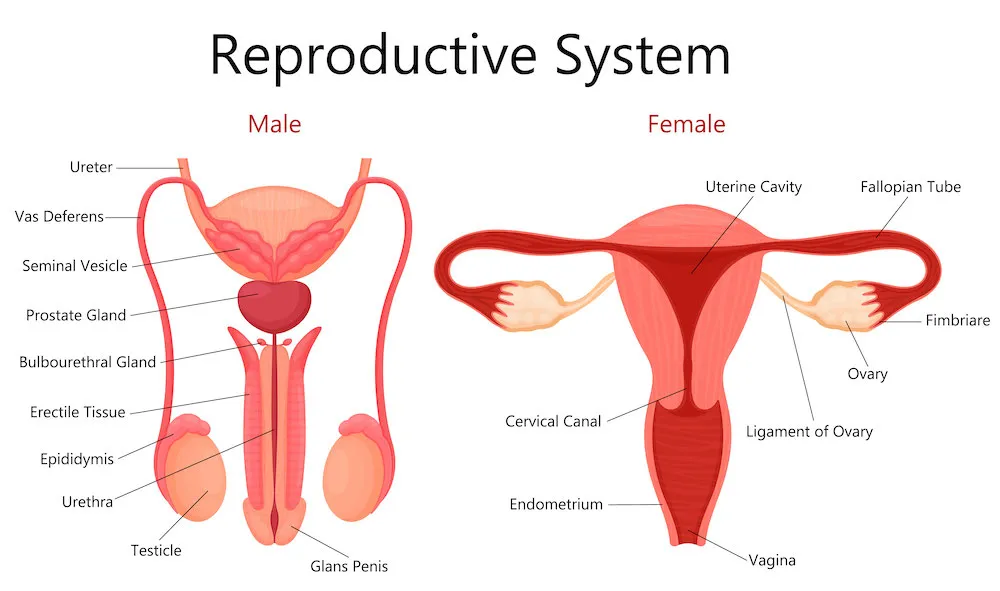
The male reproductive system includes organs such as the testes, which produce sperm and the hormone testosterone. Sperm travel through tubes called the vas deferens, where fluids from the seminal vesicles and prostate are added. This mixture forms semen, which exits the body through the urethra. In the female reproductive system, the ovaries produce eggs and release hormones like estrogen and progesterone. Eggs travel through the fallopian tubes to the uterus, where a fertilized egg can develop into a baby. The vagina is the passageway that connects the uterus to the outside of the body.
Gamete Production: The Role of Meiosis
Both sperm and egg cells are called gametes. They are produced by a special type of cell division known as meiosis. Meiosis reduces the number of chromosomes in each gamete to half, which is 23 in humans. This ensures that when sperm and egg join during fertilization, the resulting cell has the normal 46 chromosomes. In males, the testes produce millions of sperm every day after puberty. In females, the ovaries contain all the eggs a woman will ever have at birth, and typically one egg matures each month.
Hormonal Regulation and the Menstrual Cycle
Hormones play a crucial role in controlling the reproductive system. In males, testosterone stimulates sperm production and the development of male characteristics. In females, estrogen and progesterone manage the menstrual cycle, which prepares the body for possible pregnancy. The menstrual cycle usually lasts about 28 days and involves the thickening of the uterine lining, the release of an egg, and, if fertilization does not occur, the shedding of the lining as menstruation. These hormonal changes are carefully regulated through feedback systems in the body.
The reproductive system is a key example of how specialized organs and hormones interact to allow complex processes like reproduction. Research into reproductive health has led to advances in medicine, fertility treatments, and our understanding of genetics. Studying the reproductive system helps scientists address health challenges and improve quality of life for people worldwide.
Interesting Fact: At puberty, the human body begins to produce mature gametes, and this process is regulated by signals from the brain to the reproductive organs.
What is the main function of the human reproductive system?
To allow humans to produce offspringTo digest foodTo protect the body from diseaseTo pump blood through the body
Which organ produces sperm and testosterone in males?
TestesUterusOvariesVagina
Where does a fertilized egg develop in the female reproductive system?
UterusTestesProstateVas deferens
What is the process called that produces sperm and egg cells with half the normal number of chromosomes?
MeiosisMitosisFertilizationMenstruation
What does the term 'gametes' refer to, as used in the passage?
Reproductive cells (sperm and eggs)HormonesOrgansBlood cells
Why is it important that gametes have only half the normal number of chromosomes?
So when they join, the resulting cell has the correct number of chromosomesTo help them move fasterTo make them strongerTo make the process shorter
Which hormones are mainly responsible for controlling the menstrual cycle?
Estrogen and progesteroneTestosterone and insulinAdrenaline and cortisolGlucagon and melatonin
If the uterine lining is not needed for pregnancy, what happens?
It is shed from the body as menstruationIt thickens permanentlyIt becomes an eggIt turns into sperm
True or False: Both males and females produce eggs.
TrueFalse
True or False: The testes produce both sperm and the hormone testosterone.
TrueFalse
Perfect For:
👩🏫 Teachers
• Reading comprehension practice
• Auto-graded assessments
• Literacy skill development
👨👩👧👦 Parents
• Reading practice at home
• Comprehension improvement
• Educational reading time
🏠 Homeschoolers
• Reading curriculum support
• Independent reading practice
• Progress monitoring
Reading Features:
📖
Reading Passage
Engaging fiction or nonfiction text
❓
Comprehension Quiz
Auto-graded questions
📊
Instant Feedback
Immediate results and scoring
📄
Printable Version
Download for offline reading
🔊
Read Aloud
Voice-over with word highlighting
Reviews & Ratings
No reviews yet. Be the first to share your experience!
Related Content
Venus Flytrap Facts
This passage explains where Venus flytraps live in North Carolina bogs, how their snap traps work, and their unique way ...
MS-LS1-4RI.6.3RI.7.3RI.8.8
Pitcher Plants: Reproduction Facts
This passage describes tropical and North American pitcher plants, their liquid-filled traps, and how they get nutrients...
MS-LS1-4RI.6.3RI.7.3RI.8.8
How Does Cryptobiosis work
This passage explains cryptobiosis, the process where organisms like tardigrades pause their metabolism to survive extre...
MS-LS1-3RI.6.3RI.7.3RI.8.8
What Characteristic Is Used to Divide Aquatic Biomes into Three Zones?
This NGSS-aligned reading passage explains how aquatic biomes such as oceans and lakes are divided into three zones base...
MS-LS1-3
What Is the Floor of an Aquatic Biome Called?
This NGSS-aligned science reading passage explains the benthic zone, which is the floor of an aquatic biome such as ocea...
MS-LS1-4
Echidna Puggle
This interactive science reading passage, titled "Echidna Life: From Egg to Puggle," delves into the fascinating reprodu...
MS-LS1-4
Seed Dispersal
This middle school science passage examines the fascinating process of seed dispersal and the diverse strategies plants ...
MS-LS1-4
Cell Division: Mitosis
This comprehensive science passage for middle school students explores the key concept of mitosis, the division of the n...
MS-LS1-4
Skeletal System
This comprehensive middle school science passage explores the human skeletal system, focusing on the 206 bones of the ad...
MS-LS1-3
Homeostasis
This engaging science passage introduces middle school students to the concept of homeostasis, focusing on how living or...
MS-LS1-3
Organization of the Human Body
This comprehensive passage for grades 6-8, aligned to NGSS MS-LS1-3, guides students through the intricate organization ...
MS-LS1-3
Desert Birds
This informational passage for grades 6-8 examines how desert birds survive and thrive in some of the harshest environme...
MS-LS2-1MS-LS2-2MS-LS1-4
Levels of Organization
This middle school science passage, aligned with NGSS MS-LS1-3, introduces students to the concept of biological levels ...
MS-LS1-3
Muscular System
This comprehensive passage for grades 6-8 explores the human muscular system, covering structure, function, and health. ...
MS-LS1-3
Integumentary System
This comprehensive middle school science passage aligns with NGSS standard MS-LS1-3 and explores the integumentary syste...
MS-LS1-3
Digestive System
This comprehensive science passage for grades 6-8 explores the digestive system, tracing the step-by-step journey of foo...
MS-LS1-3MS-LS1-7
Excretory System
This comprehensive middle school science passage explores the excretory system and its importance in maintaining the bod...
MS-LS1-3
Circulatory System
This engaging middle school science passage explores the circulatory system, focusing on how the heart, blood, and blood...
MS-LS1-3
Respiratory System
This comprehensive passage for grades 6-8 explores the respiratory system, examining the pathway of air from the nose an...
MS-LS1-3MS-LS1-7
Nervous System
This comprehensive middle school science passage explores the structure, function, and significance of the human nervous...