This learning resource is available in interactive and printable formats. The interactive worksheet can be played online and assigned to students. The Printable PDF version can be downloaded and printed for completion by hand.
This middle school science passage provides a comprehensive look at floods, their causes, types, and impacts, addressing the real-world hazards they present. Students will learn the mechanisms behind river, flash, coastal, urban, and dam failure floods, as well as the scientific principles of floodplains and recurrence intervals. The text explores how human activities like deforestation and urbanization increase flood risks, and uses case studies such as Bangladesh and Hurricane Katrina to highlight global and local consequences. The passage aligns with NGSS MS-ESS3-2, focusing on the interactions between Earth’s systems and human impacts. Activities include a quiz, writing prompts, glossary, and two graphic organizers to encourage critical thinking. Audio integration supports diverse learners. This resource is ideal for grades 6-8 science classrooms, helping students understand both the science and societal aspects of flooding events.
CONTENT PREVIEW
Expand content preview
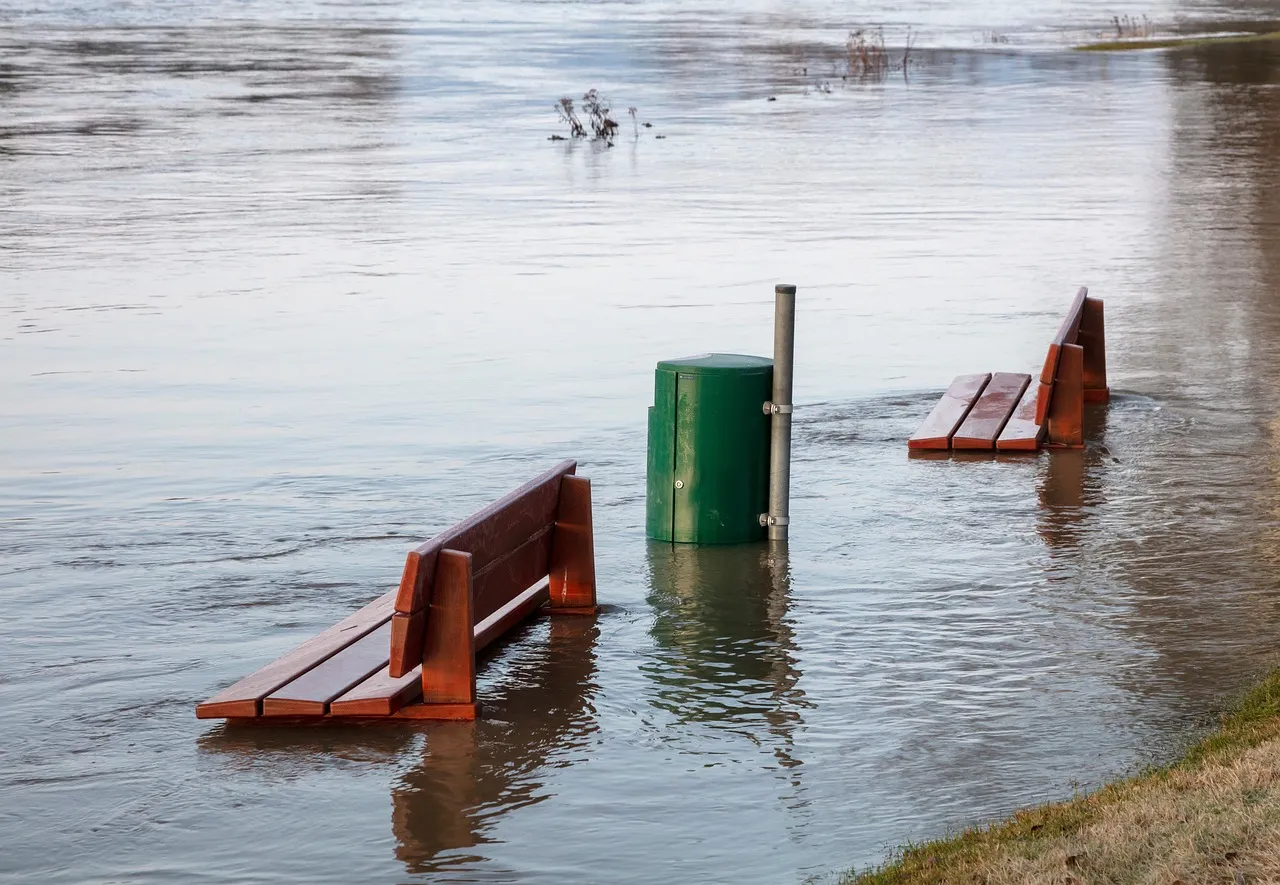
Urban floods. Image by LTapsaH / Pixabay.
Floods are among the most common and destructive natural hazards on Earth. Each year, floods impact millions of people, causing loss of life, property damage, and environmental changes. Understanding how and why floods occur helps communities prepare for these dangerous events. Floods are not caused by a single factor, but by a complex interaction of weather, geography, and human activities.
Mechanisms of Flooding Flooding happens when water covers land that is usually dry. This can occur for several reasons. River floods happen when rivers overflow their banks, often due to heavy rainfall or rapid snowmelt. For example, in the spring, melting snow can increase river levels by several meters. Flash floods are the fastest and most dangerous type, developing within minutes or hours after intense rain. Flash floods are responsible for more than 85% of flood-related deaths in the United States. Coastal floods occur when ocean water surges onto land, driven by storms, high tides, or rising sea levels. Urban floods are caused by cities’ hard surfaces, like roads and buildings, which block water from soaking into the ground. When drainage systems are overwhelmed, streets can quickly flood. Dam failure floods are less common but extremely destructive, as large amounts of water are suddenly released.
Floodplains, Recurrence, and Human Impact Floodplains are flat areas next to rivers that naturally flood from time to time. While flooding brings nutrients that help agriculture, it can also threaten communities built in these areas. Scientists use recurrence intervals, such as a “100-year flood,” to describe the statistical chance of a flood of a certain size happening in any given year (a 1% chance). These intervals are based on historical data, not predictions. Human actions can increase flood risks. Deforestation removes trees that absorb rainwater, while urbanization creates more impervious surfaces. Draining wetlands and modifying river channels also reduce the land’s ability to absorb water. Climate change is making extreme rainfall and sea levels more common, raising flood risks globally.
Impacts and Case Studies The impacts of floods go beyond water damage. Floods can cause drowning, destroy homes and infrastructure, contaminate water supplies, and spread disease. Agricultural lands may be ruined, leading to food shortages. Bangladesh faces frequent floods due to its low elevation and large rivers, affecting millions each year. In 2005, Hurricane Katrina caused catastrophic flooding in New Orleans when levees failed, resulting in over 1,800 deaths and billions in damages. Recent urban floods, like those in Houston, Texas, show how rapidly cities can be overwhelmed.
Floods reveal the connections between natural systems and human choices. By studying and understanding floods, communities can reduce risks and adapt to a changing world.
Interesting Fact: The largest flood ever recorded was the 1931 China floods, which may have caused up to 4 million deaths, showing the massive scale floods can reach.
Which type of flood occurs when rivers overflow their banks due to heavy rain or snowmelt?
River floodFlash floodCoastal floodUrban flood
What is a flash flood?
A slow flood that lasts for weeksA sudden and dangerous flood that happens quickly after heavy rainFlooding caused by ocean wavesA flood caused by melting glaciers
Which country is mentioned as being frequently affected by floods due to its low elevation and large rivers?
BangladeshBrazilCanadaAustralia
In the passage, what is the main human activity that increases flood risk by creating more impervious surfaces?
DeforestationUrbanizationFarmingFishing
What is a floodplain?
A hilltop above a riverAn area far from waterFlat land next to a river that can floodA city near the ocean
The term 'recurrence interval' in the passage refers to:
How often people move after a floodThe chance of a certain size flood occurring in any yearThe time it takes for a river to dry upThe number of dams in a country
Why are flash floods considered the deadliest type of flood in the United States?
They happen slowly, so people ignore warnings.They develop quickly, leaving little time to escape.They only affect rural areas.They are caused by snowmelt.
How does climate change increase flood risks?
By making rivers shorterBy causing more extreme rainfall and rising sea levelsBy decreasing the amount of rainBy building more dams
True or False: Urban floods are caused when natural wetlands absorb too much water.
TrueFalse
True or False: Floods can spread diseases and contaminate water supplies.
TrueFalse
Perfect For:
👩🏫 Teachers
• Reading comprehension practice
• Auto-graded assessments
• Literacy skill development
👨👩👧👦 Parents
• Reading practice at home
• Comprehension improvement
• Educational reading time
🏠 Homeschoolers
• Reading curriculum support
• Independent reading practice
• Progress monitoring
Reading Features:
📖
Reading Passage
Engaging fiction or nonfiction text
❓
Comprehension Quiz
Auto-graded questions
📊
Instant Feedback
Immediate results and scoring
📄
Printable Version
Download for offline reading
🔊
Read Aloud
Voice-over with word highlighting
Reviews & Ratings
No reviews yet. Be the first to share your experience!
Related Content
Natural Disaster: Earthquake
Earthquakes occur when tectonic plates move, causing the ground to shake. Understanding earthquakes helps us prepare and...
RI.3.1RI.4.4RI.4.2RI.5.2
Volcanic Eruptions: Causes, Types, and Key Features
This science passage explains volcanic eruptions, aligned with NGSS MS-ESS3-2 (natural hazards) and ESS2-2 (Earth’s syst...
MS-ESS3-2MS-ESS2-2RST.6-8.3
Kīlauea Volcano: Hawaii’s Ever-Changing Landscape
This passage details Kīlauea's volcanic history and status, aligned with NGSS MS-ESS3-2 (natural hazards) and ESS2-3 (Ea...
MS-ESS3-2MS-ESS2-3RST.6-8.2
All About Seismometers
This informational science passage explores seismometers and their role in measuring earthquakes, designed specifically ...
MS-ESS3-2MS-ESS2-3RST.6-8.2
What Is the Difference Between Magma and Lava?
This educational reading passage explains the critical difference between magma and molten rock beneath Earth's surface ...
MS-ESS2-3MS-ESS3-2RST.6-8.4
Obsidian: The Natural Glass Rock
This science reading passage explores obsidian, a volcanic glass that forms when lava cools so rapidly that crystals can...
MS-ESS2-3MS-ESS3-2RST.6-8.4
Measuring Hurricane Intensity – The Saffir-Simpson Hurricane Wind Scale
This NGSS-aligned science reading passage explains how the Saffir-Simpson Hurricane Wind Scale is used to measure the in...
MS-ESS3-2
Tools and Technology in Earth Science
This middle school science reading passage explores the wide range of tools and technologies used in Earth science, from...
MS-ESS2-2MS-ESS3-2MS-ETS1-1MS-PS4-3
Types of Maps
This engaging science passage for grades 6-8 introduces students to the various types of maps and their uses, supporting...
MS-ESS2-2MS-ESS3-2MS-ETS1-1MS-ETS1-4
Mass Movements
This NGSS-aligned passage introduces middle school students to the science of mass movements—gravity-driven motions of r...
MS-ESS2-1MS-ESS3-2
What Causes Earthquakes?
This middle school science passage explains what causes earthquakes, focusing on the interactions between tectonic plate...
MS-ESS2-2MS-ESS3-2
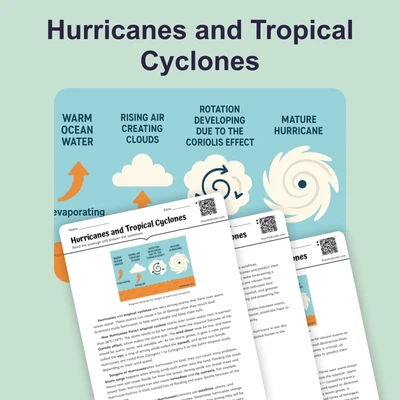
Hurricanes and Tropical Cyclones
This in-depth passage for grades 6-8 covers hurricanes and tropical cyclones, aligning with NGSS standards MS-ESS3-2 and...
MS-ESS3-2MS-ESS2-5
Hurricane Preparedness and Safety
This passage explores the science and practical strategies of hurricane preparedness and safety, designed for middle sch...
MS-ESS3-2MS-ETS1-1
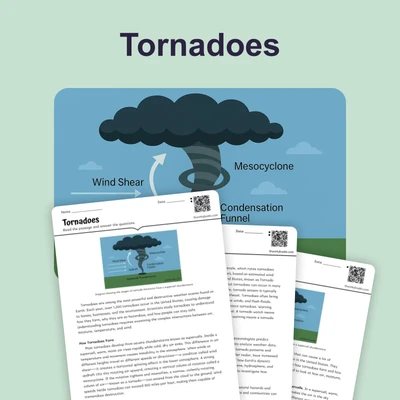
Tornadoes
This informational science passage for grades 6-8 explores the science of tornadoes, aligning with NGSS standards MS-ESS...
MS-ESS3-2MS-ESS2-5
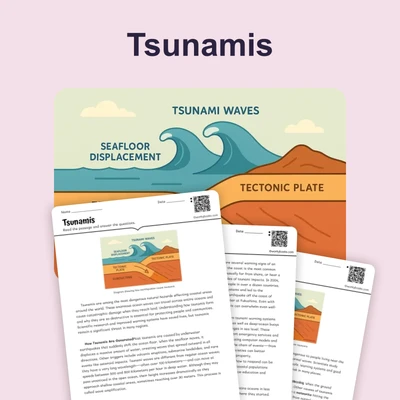
Tsunamis
This middle school science passage explores tsunamis, focusing on their causes, characteristics, and impacts. Students w...
MS-ESS3-2
Tsunami Warning and Safety
This comprehensive middle school science passage examines the systems and science behind tsunami warning and safety. Ali...
MS-ESS3-2
Earthquake Hazards and Damage
This middle school science reading passage examines the hazards and damage caused by earthquakes, aligned with NGSS MS-E...
MS-ESS3-2
Earthquake Zones and Patterns
This informational science passage introduces middle school students to the global distribution of earthquakes, focusing...
MS-ESS2-2MS-ESS3-2
Seismic Waves
This comprehensive middle school passage introduces students to seismic waves, the energy released during earthquakes. A...