Hurricane Preparedness and Safety — Reading Comprehension
Rate this
Premium Resource
Present
Present in classroom. No work saved
Assign
Classroom with student accounts, Track progress
Quick Play
No student accounts, assign with a link
Grades
5
6
7
8
Standards
MS-ESS3-2
MS-ETS1-1
PRINT+DIGITAL RESOURCE
This learning resource is available in interactive and printable formats. The interactive worksheet can be played online and assigned to students. The Printable PDF version can be downloaded and printed for completion by hand.
This passage explores the science and practical strategies of hurricane preparedness and safety, designed for middle school students (grades 6-8). Focusing on the mechanisms of hurricane forecasting, the difference between watches and warnings, and detailed steps for preparation, the text integrates scientific principles of weather systems and societal responses. It highlights the importance of emergency supplies, property protection, and evacuation planning, as well as post-storm hazards and the role of hurricane-resistant construction. Real-world case studies illustrate both successes and failures of preparation. The material aligns with NGSS standards MS-ESS3-2 and MS-ETS1-1, supporting understanding of natural hazards and engineering solutions. Audio integration is available, making the content accessible to diverse learners. This resource is ideal for science classrooms looking to blend earth science concepts with practical life skills and critical thinking.
CONTENT PREVIEW
Expand content preview
Important steps for hurricane preparedness
Hurricanes are powerful tropical cyclones that can bring extreme winds, heavy rain, and flooding to coastal and inland areas. Every year, these storms threaten millions of people and cause billions of dollars in damage. Understanding hurricane preparedness and safety is essential for reducing risks and saving lives. Scientists and emergency managers use advanced forecasting and planning to help communities respond effectively when hurricanes approach.
Forecasting Hurricanes and Issuing Warnings Modern weather technology, such as satellites and computer models, allows meteorologists to track hurricanes as they form and move. A 5-day forecast provides communities with information about a storm's expected path and intensity, giving valuable warning time. When a hurricane may impact an area within 48 hours, officials issue a hurricane watch. If a hurricane is expected within 36 hours, a hurricane warning is declared. These warnings trigger official responses, including public alerts, opening shelters, and preparing evacuation routes. Accurate forecasts are crucial because a storm’s path can shift, and even small changes can affect millions of people.
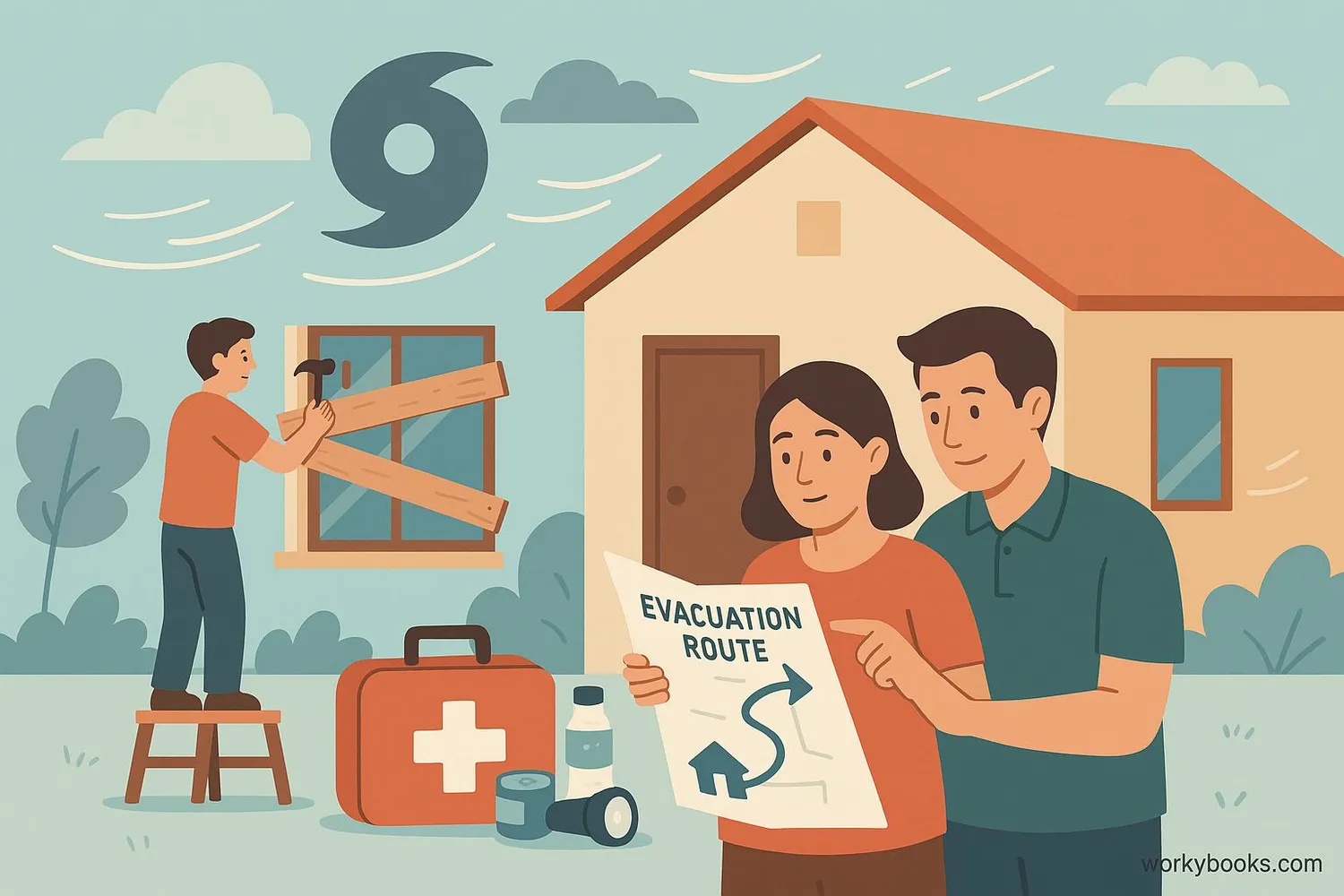
Preparation Before the Storm Effective hurricane preparedness involves gathering emergency supplies and making a safety plan. Families should have at least three days’ worth of water, non-perishable food, a flashlight, batteries, medications, and a first aid kit. Protecting property is also important: installing storm shutters and securing outdoor objects can prevent wind damage. Communities must know their evacuation zones and routes. Local governments may issue mandatory evacuation orders for areas at highest risk. Special attention is needed for populations with disabilities or medical needs, who may require extra assistance. Traffic management plans help prevent congestion as large numbers of people evacuate at once.
During and After the Hurricane When a hurricane strikes, those who do not evacuate should shelter in interior rooms, away from windows, to avoid injury from flying debris. After the storm, dangers remain: downed power lines, floodwaters, and contaminated water supplies can cause serious harm. It is vital to wait for official announcements before returning home. Building codes in hurricane-prone areas, such as the Miami-Dade standards, require structures to withstand high winds and flying debris, reducing damage and saving lives. Real-world case studies show that communities with strong preparedness plans and strict building codes recover faster and experience fewer casualties than those without them.
Hurricane preparedness is an ongoing process that involves science, engineering, and community cooperation. By understanding the warning system, preparing supplies, following evacuation plans, and building stronger structures, people can reduce the dangerous impacts of hurricanes.
Interesting Fact: The strongest hurricane ever recorded in the Atlantic, Hurricane Wilma (2005), had sustained winds of 185 mph and a record-low pressure of 882 millibars!
What is the main purpose of hurricane preparedness?
To reduce risks and save lives during hurricanesTo make hurricanes less frequentTo stop hurricanes from formingTo increase wind speeds
Which of the following supplies is NOT recommended for a hurricane emergency kit?
Non-perishable foodFlashlightVideo gamesFirst aid kit
How much warning time does a 5-day hurricane forecast provide?
5 hours5 days48 hours36 hours
What happens when a hurricane warning is declared?
It means a hurricane is expected within 36 hoursIt means there is no dangerIt means the hurricane has already passedIt means all schools are closed for a month
What does the word 'evacuation zone' mean in the passage?
The area where people should gather during a stormA type of emergency supplyA place people may need to leave for safetyA special warning for meteorologists
In the passage, what is the main reason for building codes like the Miami-Dade standards?
To make houses look nicerTo prevent hurricanes from formingTo help buildings resist strong winds and debrisTo encourage people to move away
Why is it important for communities to have traffic management plans during evacuation?
To keep the roads empty for emergency vehicles onlyTo prevent congestion and help many people leave safelyTo close all roads quicklyTo stop people from going to shelters
After a hurricane, why should people wait for official announcements before returning home?
Because there may be hidden dangers like downed power lines and floodingBecause the weather will always stay badBecause all supplies are goneBecause there is free food in shelters
True or False: A hurricane watch means a hurricane is expected within 36 hours.
TrueFalse
True or False: Building codes can help reduce damage from hurricanes.
TrueFalse
Perfect For:
👩🏫 Teachers
• Reading comprehension practice
• Auto-graded assessments
• Literacy skill development
👨👩👧👦 Parents
• Reading practice at home
• Comprehension improvement
• Educational reading time
🏠 Homeschoolers
• Reading curriculum support
• Independent reading practice
• Progress monitoring
Reading Features:
📖
Reading Passage
Engaging fiction or nonfiction text
❓
Comprehension Quiz
Auto-graded questions
📊
Instant Feedback
Immediate results and scoring
📄
Printable Version
Download for offline reading
🔊
Read Aloud
Voice-over with word highlighting
Reviews & Ratings
No reviews yet. Be the first to share your experience!
Related Content
Natural Disaster: Earthquake
Earthquakes occur when tectonic plates move, causing the ground to shake. Understanding earthquakes helps us prepare and...
RI.3.1RI.4.4RI.4.2RI.5.2
Volcanic Eruptions: Causes, Types, and Key Features
This science passage explains volcanic eruptions, aligned with NGSS MS-ESS3-2 (natural hazards) and ESS2-2 (Earth’s syst...
MS-ESS3-2MS-ESS2-2RST.6-8.3
Kīlauea Volcano: Hawaii’s Ever-Changing Landscape
This passage details Kīlauea's volcanic history and status, aligned with NGSS MS-ESS3-2 (natural hazards) and ESS2-3 (Ea...
MS-ESS3-2MS-ESS2-3RST.6-8.2
All About Seismometers
This informational science passage explores seismometers and their role in measuring earthquakes, designed specifically ...
MS-ESS3-2MS-ESS2-3RST.6-8.2
What Is the Difference Between Magma and Lava?
This educational reading passage explains the critical difference between magma and molten rock beneath Earth's surface ...
MS-ESS2-3MS-ESS3-2RST.6-8.4
Obsidian: The Natural Glass Rock
This science reading passage explores obsidian, a volcanic glass that forms when lava cools so rapidly that crystals can...
MS-ESS2-3MS-ESS3-2RST.6-8.4
Measuring Hurricane Intensity – The Saffir-Simpson Hurricane Wind Scale
This NGSS-aligned science reading passage explains how the Saffir-Simpson Hurricane Wind Scale is used to measure the in...
MS-ESS3-2
Tools and Technology in Earth Science
This middle school science reading passage explores the wide range of tools and technologies used in Earth science, from...
MS-ESS2-2MS-ESS3-2MS-ETS1-1MS-PS4-3
Types of Maps
This engaging science passage for grades 6-8 introduces students to the various types of maps and their uses, supporting...
MS-ESS2-2MS-ESS3-2MS-ETS1-1MS-ETS1-4
Mass Movements
This NGSS-aligned passage introduces middle school students to the science of mass movements—gravity-driven motions of r...
MS-ESS2-1MS-ESS3-2
What Causes Earthquakes?
This middle school science passage explains what causes earthquakes, focusing on the interactions between tectonic plate...
MS-ESS2-2MS-ESS3-2
Floods: Causes and Types
This middle school science passage provides a comprehensive look at floods, their causes, types, and impacts, addressing...
MS-ESS3-2
Hurricanes and Tropical Cyclones
This in-depth passage for grades 6-8 covers hurricanes and tropical cyclones, aligning with NGSS standards MS-ESS3-2 and...
MS-ESS3-2MS-ESS2-5
Tornadoes
This informational science passage for grades 6-8 explores the science of tornadoes, aligning with NGSS standards MS-ESS...
MS-ESS3-2MS-ESS2-5
Tsunamis
This middle school science passage explores tsunamis, focusing on their causes, characteristics, and impacts. Students w...
MS-ESS3-2
Tsunami Warning and Safety
This comprehensive middle school science passage examines the systems and science behind tsunami warning and safety. Ali...
MS-ESS3-2
Earthquake Hazards and Damage
This middle school science reading passage examines the hazards and damage caused by earthquakes, aligned with NGSS MS-E...
MS-ESS3-2
Earthquake Zones and Patterns
This informational science passage introduces middle school students to the global distribution of earthquakes, focusing...
MS-ESS2-2MS-ESS3-2
Seismic Waves
This comprehensive middle school passage introduces students to seismic waves, the energy released during earthquakes. A...