Tornadoes
Interactive passage with audio narration, comprehension questions, and printable PDF.
By completing this purchase you agree to our Terms of Use and Privacy Policy. Your subscription renews automatically until you cancel. You can cancel anytime from your account settings. All sales are final and non-refundable. Digital content is available for download in your account immediately upon purchase.
What's included
Tornadoes preview and details
About this printable Tornadoes science reading passage, NGSS-aligned (Grades 5-8)
Sample passage and quiz from Tornadoes
Reading passage and comprehension quiz preview
Tornadoes
Tornadoes are among the most powerful and destructive weather events found on Earth. Each year, over 1,200 tornadoes occur in the United States, causing damage to homes, businesses, and the environment. Scientists study tornadoes to understand how they form, why they are so hazardous, and how people can stay safe. Understanding tornadoes requires examining the complex interactions between air, moisture, temperature, and wind.
How Tornadoes Form
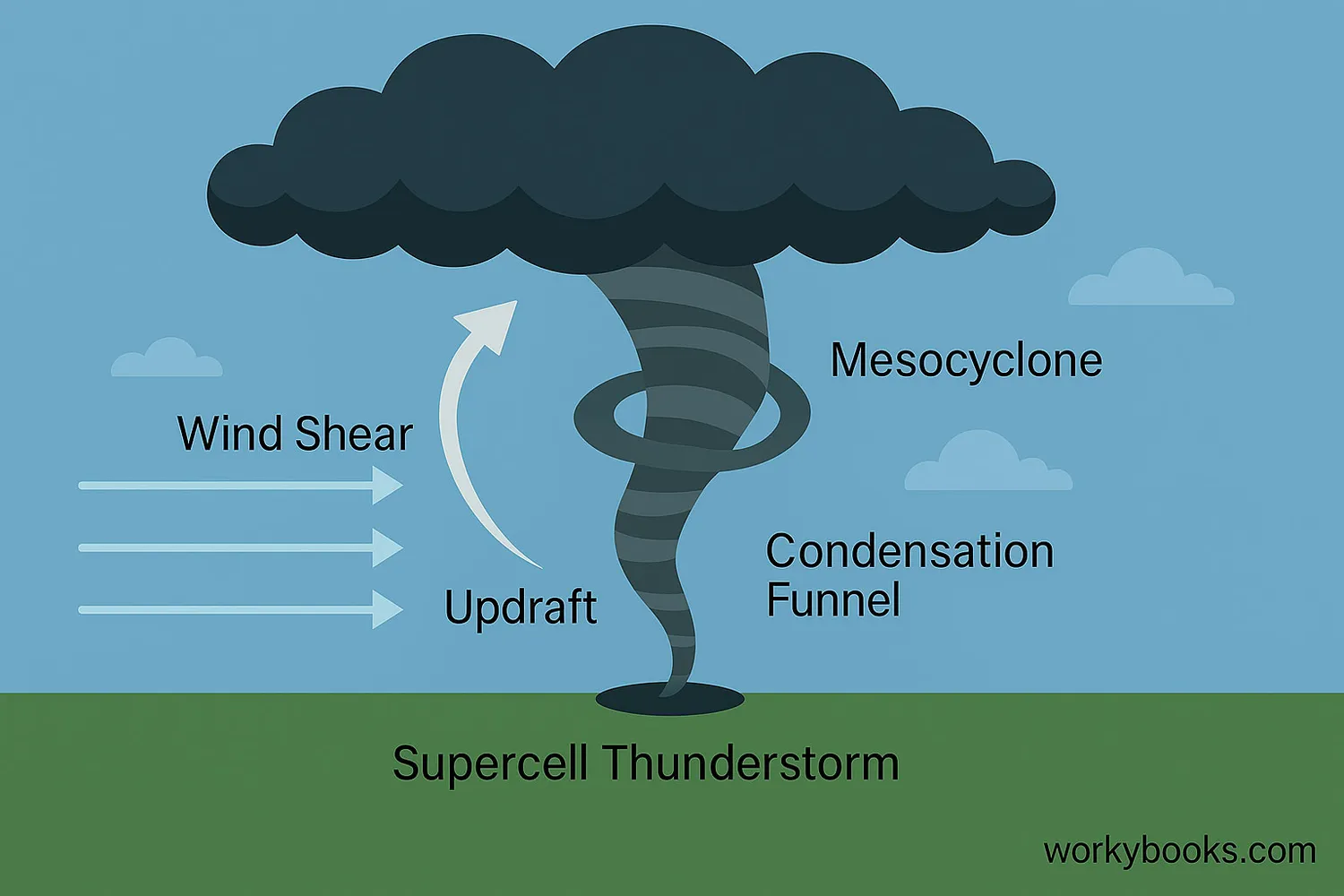
Most tornadoes develop from severe thunderstorms known as supercells. Inside a supercell, warm, moist air rises rapidly while cold, dry air sinks. This difference in air temperature and movement causes instability in the atmosphere. When winds at different heights travel at different speeds or directions—a condition called wind shear—it creates a horizontal spinning effect in the lower atmosphere. A strong updraft tilts this rotating air upward, creating a vertical column of rotation called a mesocyclone. If the rotation tightens and intensifies, a narrow, violently rotating column of air—known as a tornado—can extend from the cloud to the ground. Wind speeds inside tornadoes can exceed 300 miles per hour, making them capable of tremendous destruction.
Characteristics, Hazards, and Detection
Tornadoes are classified by the Enhanced Fujita scale, which rates tornadoes from EF0 (light damage) to EF5 (incredible destruction), based on estimated wind speeds and the damage they cause. The central United States, known as Tornado Alley, experiences the highest number of tornadoes, but tornadoes can occur in many regions and at different times of the year. For example, tornado season is typically spring in the central U.S., but it shifts to fall in the Southeast. Tornadoes often bring other hazards, such as large hail, damaging straight-line winds, and flash floods. Scientists use Doppler radar and trained spotters to detect tornadoes. Warning times are usually a few minutes, so quick action is critical. A tornado watch means conditions are favorable for tornadoes, while a tornado warning means a tornado has been detected or is imminent.
Scientific Understanding and Broader Implications
Research into tornado formation and behavior helps meteorologists predict storms more accurately and improve public safety. Scientists analyze weather data, use computer models, and study past events to understand tornado patterns and risks. Improved detection methods, such as advanced Doppler radar, have increased warning times and saved lives. Tornadoes are an example of how Earth's dynamic systems interact, showing connections between the atmosphere, hydrosphere, and human society. As climate patterns shift, scientists continue to investigate how tornado frequency and intensity may change in the future.
Tornadoes demonstrate the importance of understanding natural hazards and preparing for severe weather. By studying tornadoes, scientists and communities can reduce risks and protect lives.
Interesting Fact: The widest tornado ever recorded was 2.6 miles wide and struck near El Reno, Oklahoma, in 2013.
Comprehension quiz (10 questions)
1. What is a tornado?
2. What often causes tornadoes to form?
3. According to the passage, what is Tornado Alley?
4. Which statement best describes the Enhanced Fujita scale?
5. What does 'wind shear' mean in the passage?
6. Which hazard is often associated with tornadoes besides strong winds?
7. Why is Doppler radar important in tornado detection?
8. If a tornado warning is issued, what does it mean?
9. Tornadoes can only happen in the central United States. True or False?
10. Warning times for tornadoes are usually several hours. True or False?
Perfect for the way you teach
- Build comprehension skills
- Auto-graded quiz
- Differentiated reading
- Read together at home
- Improve fluency
- Quiet reading time
- Reading curriculum support
- Independent practice
- Track Lexile growth