Hurricanes and Tropical Cyclones
Interactive passage with audio narration, comprehension questions, and printable PDF.
By completing this purchase you agree to our Terms of Use and Privacy Policy. Your subscription renews automatically until you cancel. You can cancel anytime from your account settings. All sales are final and non-refundable. Digital content is available for download in your account immediately upon purchase.
What's included
Hurricanes and Tropical Cyclones preview and details
About this printable Hurricanes and Tropical Cyclones science reading passage, NGSS-aligned (Grades 5-8)
Sample passage and quiz from Hurricanes and Tropical Cyclones
Reading passage and comprehension quiz preview
Hurricanes and Tropical Cyclones
Hurricanes and tropical cyclones are among the most powerful natural events on Earth. When these storms reach land, they can cause widespread destruction from high winds, flooding, and storm surge. Understanding these storms is critical, as millions of people live in areas at risk. Scientists study hurricanes to predict their paths and reduce their impact on communities.
Formation and Structure of Hurricanes
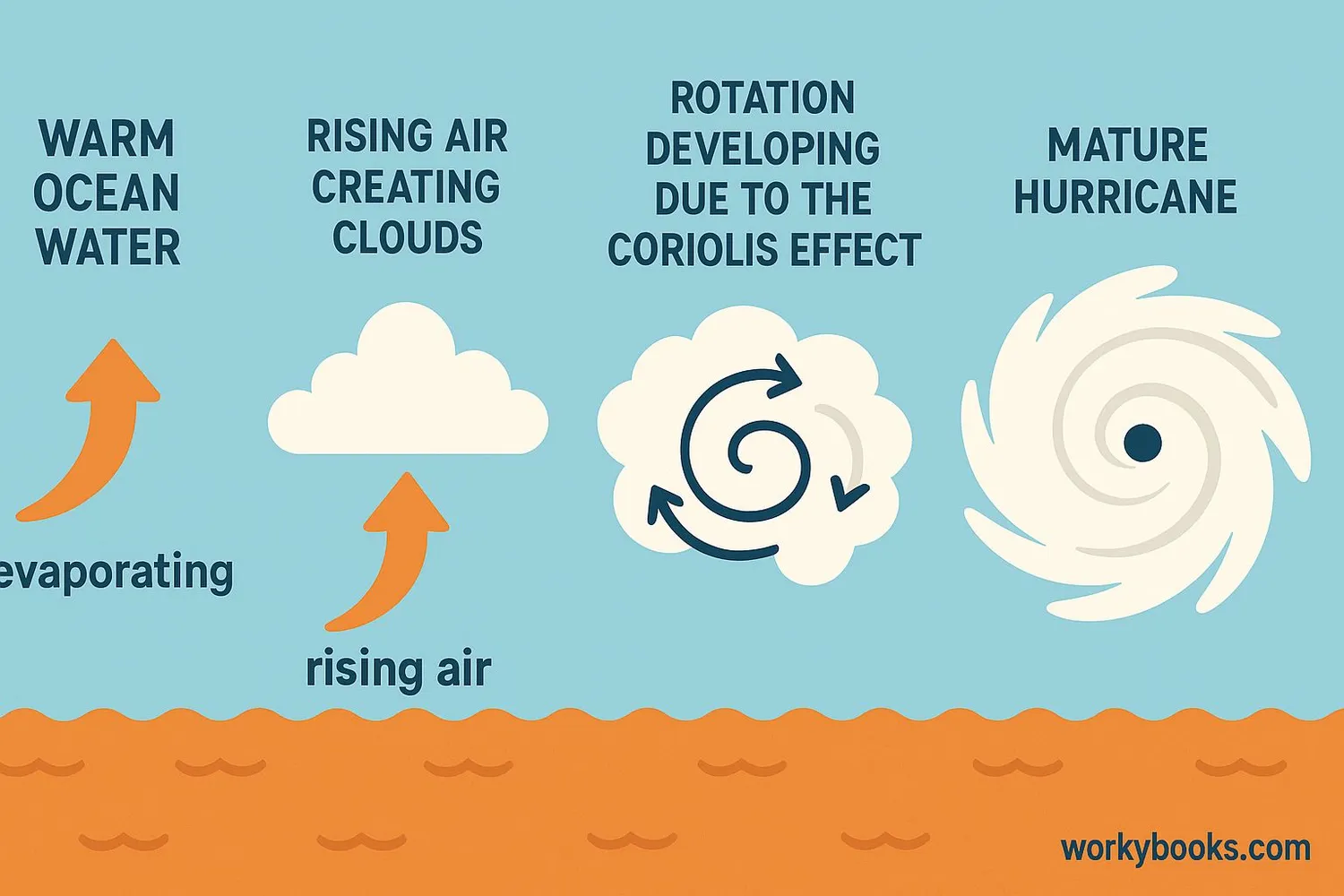
A tropical cyclone forms over warm ocean water (above 26°C or 79°F), usually at least 5 degrees away from the equator. Warm water provides energy for the storm, while the Coriolis effect—caused by Earth's rotation—helps the storm spin. Low wind shear (changes in wind speed or direction with height) and unstable, moist air are also necessary. As the storm grows, it develops a distinct structure: the eye (calm center), the eyewall (area of strongest winds and rain), and spiral rain bands extending outward. The Saffir-Simpson scale rates hurricanes from Category 1 (74–95 mph winds) to Category 5 (over 157 mph), based on wind speed.
Hazards and Impacts
When hurricanes make landfall, they bring several hazards. Storm surge is often the most deadly, as strong winds push ocean water onto shore, flooding low-lying areas. Hurricanes also produce heavy rainfall, which can cause widespread flooding far inland. High winds damage buildings, knock down trees, and disrupt power. Sometimes, hurricanes spawn tornadoes and dangerous rip currents. For example, Hurricane Katrina in 2005 caused over 1,800 deaths, mainly from storm surge and flooding.
Tracking, Forecasting, and Future Concerns
Scientists use satellites, reconnaissance aircraft, and computer models to track hurricanes and predict their paths. However, sudden changes in intensity or direction can make forecasting a challenge. Naming storms helps communicate warnings; names are chosen from rotating lists and retired for especially deadly storms. Research indicates that climate change may be leading to stronger hurricanes, more rainfall, and greater storm surges due to rising sea levels. This makes understanding and preparing for hurricanes even more important.
Hurricanes are complex systems that demonstrate the interplay between ocean, atmosphere, and climate. By studying their structure and behavior, scientists hope to improve forecasts and reduce their risks to people and property.
Interesting Fact:
The energy released by a single Category 5 hurricane in one day can be greater than the total electricity used by the entire United States in the same time.
Comprehension quiz (10 questions)
1. What is the main energy source for a hurricane's formation?
2. Which part of a hurricane has the strongest winds and rain?
3. What is storm surge?
4. What is the Coriolis effect responsible for in hurricanes?
5. Which scale is used to rate hurricane intensity based on wind speed?
6. What often makes predicting hurricane intensity and track difficult?
7. In the passage, what is noted as the deadliest hazard from hurricanes?
8. How can climate change affect hurricanes according to the passage?
9. True or False: The eye of a hurricane is always the most dangerous part.
10. True or False: Storm names are retired if a hurricane is very deadly.
Perfect for the way you teach
- Build comprehension skills
- Auto-graded quiz
- Differentiated reading
- Read together at home
- Improve fluency
- Quiet reading time
- Reading curriculum support
- Independent practice
- Track Lexile growth