Frequency and Pitch
Interactive passage with audio narration, comprehension questions, and printable PDF.
By completing this purchase you agree to our Terms of Use and Privacy Policy. Your subscription renews automatically until you cancel. You can cancel anytime from your account settings. All sales are final and non-refundable. Digital content is available for download in your account immediately upon purchase.
What's included
Frequency and Pitch preview and details
About this printable Frequency and Pitch science reading passage, NGSS-aligned (Grades 5-8)
Sample passage and quiz from Frequency and Pitch
Reading passage and comprehension quiz preview
Frequency and Pitch
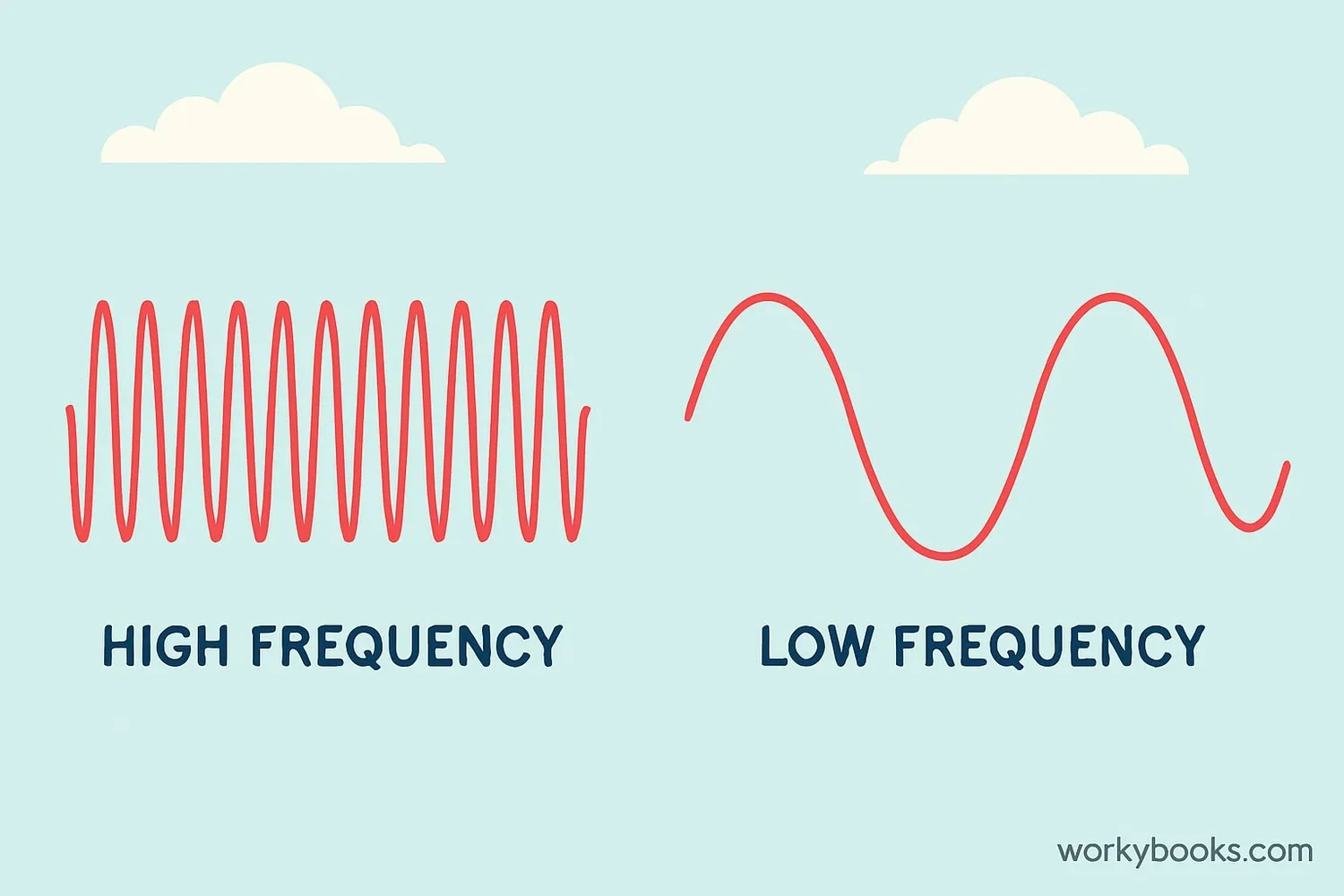
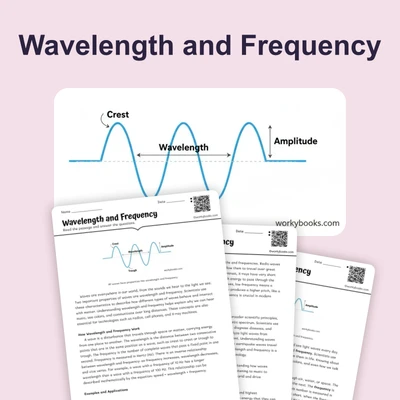
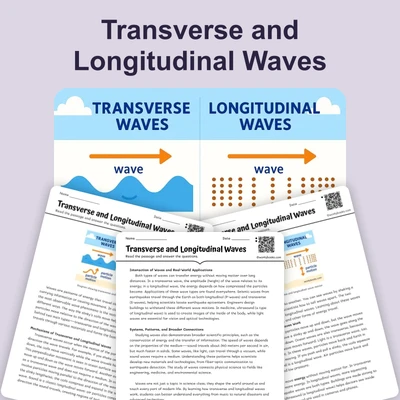
Sound is a form of energy that travels in waves through materials such as air, water, or solids. When an object vibrates, it creates sound waves that move outward from the source. The number of vibrations, or cycles, that happen every second is called the frequency, measured in hertz (Hz). Frequency is a key factor that determines how we perceive the pitch of a sound. Pitch tells us how high or low a sound seems to our ears. Understanding frequency and pitch helps scientists, musicians, and engineers design everything from music to medical devices.
How Frequency Creates Pitch
Each sound wave consists of repeating patterns of high and low pressure. The more times these patterns repeat per second, the higher the frequency. A sound with a frequency of 440 Hz, for example, vibrates 440 times each second. This specific frequency creates the musical note A above middle C on the piano. When frequency increases, we hear the sound as having a higher pitch. When frequency decreases, the pitch sounds lower. For instance, a piccolo produces very high-frequency sound waves, so its music sounds high-pitched. In contrast, a bass guitar creates low-frequency waves, resulting in a deep, low pitch. Human ears can detect frequencies from about 20 Hz (very low) to 20,000 Hz (very high). This range allows us to hear the low rumble of thunder as well as the squeak of a whistle.
Real-World Applications and Connections
The relationship between frequency and pitch affects many areas of life. Musicians tune instruments by adjusting the frequency of strings or air columns to get the right pitch. For example, a child’s voice usually has a higher pitch than an adult’s because their vocal cords vibrate faster, producing higher frequencies. Engineers use frequency measurements to design microphones, speakers, and even ultrasound machines for medicine. Some animals, such as dogs, can hear frequencies above 20,000 Hz, which humans cannot. This is why a dog whistle, which emits high frequencies, is silent to people but audible to dogs. Understanding frequency and pitch also helps protect our hearing, since exposure to very high or very low frequencies at loud volumes can damage our ears.
Complexities and Exceptions
While frequency is the main factor that determines pitch, other factors can influence how we perceive a sound. The amplitude of a sound wave affects its loudness, not its pitch. Sometimes, two sounds with the same frequency can seem to have different pitches if their wave shapes—called timbre—are different. This is why a piano and a violin playing the same note still sound different. Our brains use both frequency and timbre to recognize instruments, voices, and other sounds in the environment.
Understanding the connection between frequency and pitch reveals how sound shapes our world, from music and language to technology and nature. This knowledge helps us create new tools, enjoy music, and protect our hearing health.
Interesting Fact: The loudest animal on Earth, the blue whale, produces sounds as low as 10 Hz—below the range of human hearing, but their calls can travel hundreds of miles underwater.
Comprehension quiz (10 questions)
1. What is frequency measured in?
2. What is the human hearing range in frequency?
3. Which instrument is likely to produce higher-pitched sounds?
4. What happens to pitch when frequency decreases?
5. What does amplitude affect?
6. What is the main difference between the sound from a piano and a violin playing the same note?
7. Why can dogs hear a dog whistle that humans cannot?
8. Which of the following is TRUE based on the passage?
9. Pitch and frequency are not related. (True/False)
10. Exposure to very loud, high-frequency sounds can damage our hearing. (True/False)
Perfect for the way you teach
- Build comprehension skills
- Auto-graded quiz
- Differentiated reading
- Read together at home
- Improve fluency
- Quiet reading time
- Reading curriculum support
- Independent practice
- Track Lexile growth