This learning resource is available in interactive and printable formats. The interactive worksheet can be played online and assigned to students. The Printable PDF version can be downloaded and printed for completion by hand.
This passage explores the science of sound for middle school students, aligned with NGSS standards MS-PS4-1 and MS-PS4-2. Students learn that sound is a mechanical, longitudinal wave that transfers energy through vibrating particles in a medium, such as air, water, or solids. The text emphasizes key vocabulary like medium, compression, rarefaction, and frequency, and explains how sound cannot travel through a vacuum. Real-world applications discussed include communication, music, and alerts, highlighting the societal and technological importance of sound. The passage integrates the disciplinary core idea of energy transfer and properties of waves, and includes audio integration for accessibility. Activities and glossary support comprehension and vocabulary development, while graphic organizers help students analyze cause-and-effect relationships and compare concepts. This resource is ideal for grades 6-8 science units on waves and energy.
CONTENT PREVIEW
Expand content preview
What Is Sound?
Sound is a form of energy that moves through the world in the form of waves. It is essential for communication, music, and safety alerts. Sound is not just a random noise; it has a structure and follows certain rules. Every time you hear a bird sing, a car horn honk, or someone call your name, you are experiencing the science of sound in action.
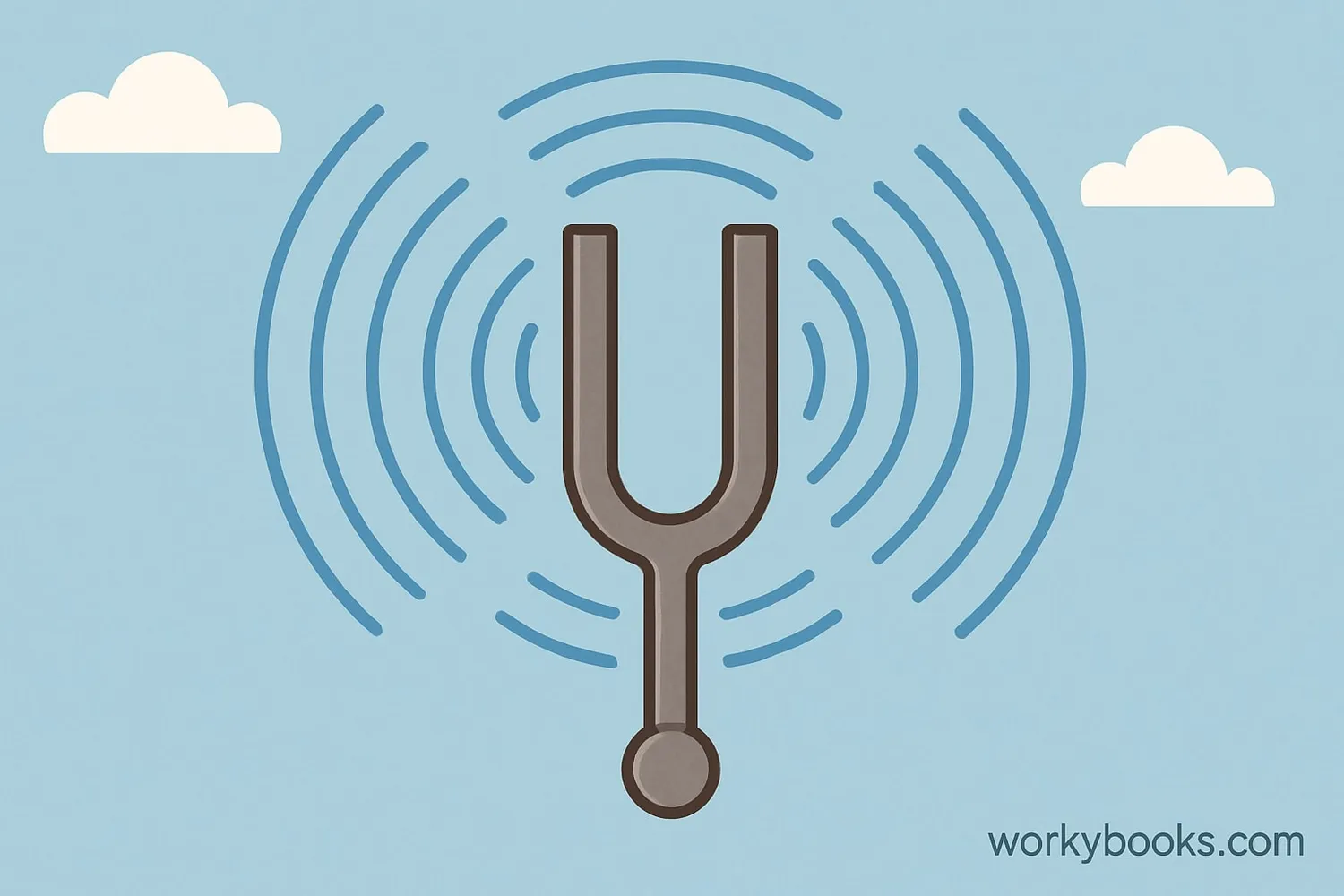
How Does Sound Travel? A sound wave is a type of mechanical wave. This means it needs a material—called a medium—to travel through. The medium can be a solid, a liquid, or a gas. When something vibrates, like a guitar string or your vocal cords, it causes the particles in the surrounding medium to move back and forth. These vibrations push particles together, creating areas called compressions, and pull particles apart, creating areas called rarefactions. This pattern moves away from the source in a chain reaction, transferring energy through the medium.
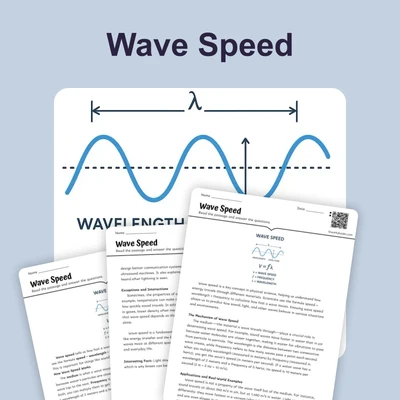
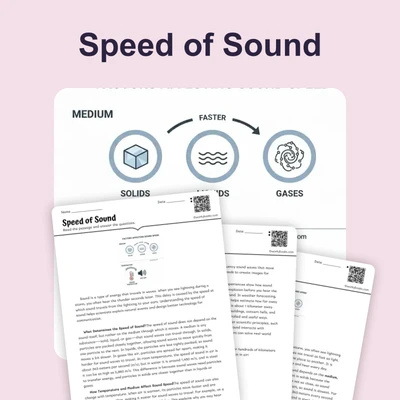
The speed of sound depends on the medium. For example, sound travels about 343 meters per second in air, much faster (about 1,480 meters per second) in water, and even quicker in most solids. The reason is that particles are packed closer together in solids, allowing vibrations to pass more efficiently.
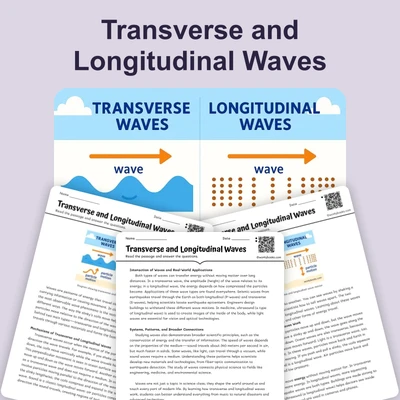
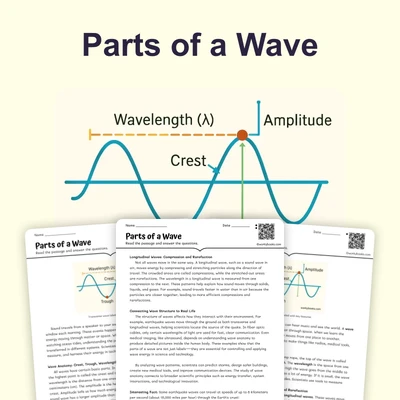
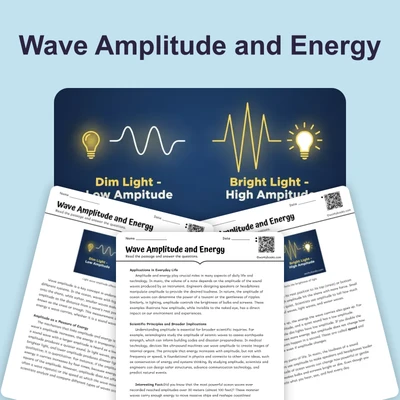
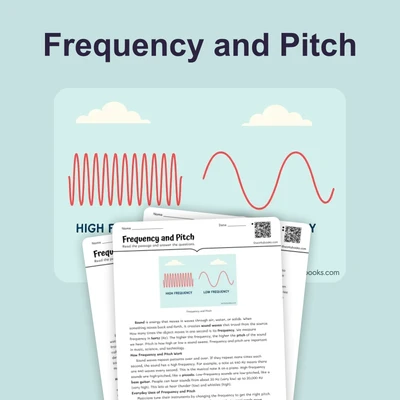
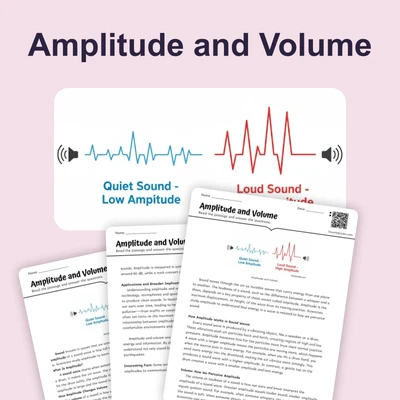
Properties of Sound Waves and Everyday Importance Sound waves are longitudinal waves, which means the particle vibrations are parallel to the direction the wave moves. This is different from light, which travels as a transverse wave. The main features of a sound wave include frequency—how often the particles vibrate—and amplitude—how big the vibrations are. Frequency determines pitch, so a high-frequency wave sounds higher to us. Amplitude affects loudness; greater amplitude means a louder sound.
Sound is vital in our daily lives. We use it to communicate through speech and music, and to receive important alerts such as alarms. Some animals, like bats and dolphins, use echolocation, a process where sound waves bounce off objects to help them navigate and find food. Technology has harnessed sound in many ways, such as in ultrasound imaging for medicine and in seismic surveys to explore Earth's interior.
Limits and Connections to Science One important fact is that sound cannot travel through a vacuum, because there are no particles to carry the vibrations. This is why space is completely silent. Scientists have used experiments in vacuum chambers to confirm this, showing the necessity of a medium for sound. The study of sound connects to broader scientific ideas about energy transfer, wave behavior, and the structure of matter.
Understanding sound helps us create technology, protect our hearing, and appreciate the music and voices that fill our lives. It also deepens our knowledge of how energy moves and changes form in the universe.
Interesting Fact: The loudest sound ever recorded on Earth was caused by the eruption of the Krakatoa volcano in 1883. The sound was heard over 3,000 miles away!
What is required for a sound wave to travel?
A medium, such as a solid, liquid, or gasA source of lightAn electric currentA vacuum
Which statement best describes a compression in a sound wave?
Particles are pushed togetherParticles are spread far apartNo particles are presentParticles move in circles
What is the main difference between a longitudinal wave and a transverse wave?
The direction particles move compared to the waveThe color of the waveThe wave's temperatureThe speed of light
Why can't sound travel through space?
There are no particles to carry the vibrationsThe temperature is too coldThere is too much lightSound waves move too slowly
What does 'frequency' mean in a sound wave?
How often the particles vibrateThe color of the waveThe amount of energy in a light beamThe temperature of the medium
What does the word 'medium' mean as used in the passage?
The material that sound travels throughA person who talks to spiritsA type of musicA loud noise
What would happen if you tried to ring a bell inside a vacuum chamber?
You would not hear the bellThe bell would sound louderThe bell would not vibrateYou would see light from the bell
How does sound help bats and dolphins in nature?
They use sound waves to locate objects and foodThey use sound to see colorsSound helps them fly fasterSound cools their bodies
Sound waves can travel through a vacuum. True or False?
TrueFalse
Amplitude affects the loudness of a sound. True or False?
TrueFalse
Perfect For:
👩🏫 Teachers
• Reading comprehension practice
• Auto-graded assessments
• Literacy skill development
👨👩👧👦 Parents
• Reading practice at home
• Comprehension improvement
• Educational reading time
🏠 Homeschoolers
• Reading curriculum support
• Independent reading practice
• Progress monitoring
Reading Features:
📖
Reading Passage
Engaging fiction or nonfiction text
❓
Comprehension Quiz
Auto-graded questions
📊
Instant Feedback
Immediate results and scoring
📄
Printable Version
Download for offline reading
🔊
Read Aloud
Voice-over with word highlighting
Reviews & Ratings
No reviews yet. Be the first to share your experience!
Related Content
Wavelength and Frequency
This engaging middle school science passage explores the concepts of wavelength and frequency, aligning with NGSS standa...
MS-PS4-1
Remote Sensing
This middle school science passage introduces students to the concept of remote sensing—the collection of information ab...
MS-ESS3-3MS-PS4-2MS-ETS1-1MS-ETS1-3
The Electromagnetic Spectrum
This comprehensive science reading passage introduces middle school students (grades 6-8) to the electromagnetic spectru...
MS-PS4-1MS-PS4-2
Transverse and Longitudinal Waves
This passage introduces middle school students to the fundamental concepts of transverse and longitudinal waves, in alig...
MS-PS4-1
Parts of a Wave
This informational passage, aligned with NGSS MS-PS4-1, introduces middle school students (grades 6-8) to the anatomy of...
MS-PS4-1
Wave Amplitude and Energy
This comprehensive middle school science passage explores the connection between wave amplitude and energy, aligned with...
MS-PS4-1
Wave Speed
This comprehensive middle school science passage explores the concept of wave speed, aligned with NGSS MS-PS4-1. Student...
MS-PS4-1
How Sound Is Produced
This comprehensive middle school science passage explores the fundamental question of how sound is produced, perfectly a...
MS-PS4-1
Frequency and Pitch
This comprehensive passage for grades 6-8 introduces students to the concepts of frequency and pitch, aligned to NGSS st...
MS-PS4-1
Amplitude and Volume
This comprehensive middle school science reading passage introduces students to the concepts of amplitude and volume in ...
MS-PS4-1
Speed of Sound
This comprehensive passage for grades 6-8 explores the science behind the speed of sound and how it varies depending on ...
MS-PS4-1MS-PS4-2
Measuring Sound in Decibels
This science reading passage introduces middle school students to the concept of measuring sound using decibels (dB). Al...
MS-PS4-1
Ultrasound and Infrasound
This engaging middle school science passage introduces students to the concepts of ultrasound and infrasound, frequencie...
MS-PS4-1
Musical Instruments and Sound
This comprehensive science passage for grades 6-8 explores how musical instruments create sound through vibration, align...
MS-PS4-1
Visible Light and Color
This comprehensive science passage for grades 6-8 explores visible light as the part of the electromagnetic spectrum tha...
MS-PS4-2
Light Waves
This middle school science passage introduces students in grades 6-8 to the concept of light as an electromagnetic wave,...
MS-PS4-2
Wave Absorption
This engaging science passage for grades 6-8 explores the mechanism of wave absorption, where waves transfer energy to m...
MS-PS4-2
Wave Behavior: Transmission
This informational science reading passage for grades 6-8 explores the concept of wave behavior, focusing on transmissio...
MS-PS4-2
Wave Refraction
This comprehensive science passage introduces middle school students to the concept of refraction, a key phenomenon in w...