This learning resource is available in interactive and printable formats. The interactive worksheet can be played online and assigned to students. The Printable PDF version can be downloaded and printed for completion by hand.
This middle school science passage introduces students to the concept of remote sensing—the collection of information about Earth from a distance using satellites, aircraft, and other platforms. Aligned with NGSS standards MS-ESS3-3 and MS-PS4-2, the passage explores scientific mechanisms behind remote sensing, including the use of the electromagnetic spectrum, multispectral imaging, and satellite imagery. Students learn about real-world applications such as weather monitoring, disaster response, and agricultural management, and are introduced to important programs like Landsat. The resource includes a glossary, differentiated reading version, Spanish translations, comprehension questions, writing prompts, and graphic organizers to support all learners. Audio integration and visual supports enhance accessibility. This resource is designed for grades 6-8 to build scientific literacy and support inquiry-based learning.
CONTENT PREVIEW
Expand content preview
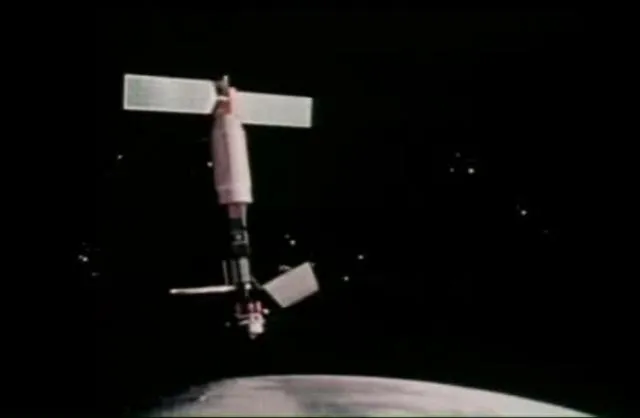
"Seasat Celebrates Landmark in Remote-Sensing History" / NASA (Public domain).
Remote sensing helps scientists observe and understand Earth’s surface and atmosphere without needing to be physically present. Every day, satellites, aircraft, and even balloons collect massive amounts of information about our planet. This process allows us to monitor land, water, and air, support disaster responses, and track environmental changes. By using remote sensing, scientists answer important questions about climate, resources, and human activities.
How Remote Sensing Works
Remote sensing uses special instruments on platforms like satellites, airplanes, drones, and balloons. These tools detect electromagnetic radiation—energy that travels in waves, including visible light, infrared, and radar. Each type of wave reveals unique information. For example, visible light lets us see forests and cities, while infrared identifies plant health and heat patterns. Instruments called sensors record data by capturing the amount and type of energy reflected or emitted from Earth’s surface. This information is turned into satellite imagery, which scientists analyze to detect changes over time.
Applications and Examples
Remote sensing has many important uses. Meteorologists use satellite images to monitor hurricanes and predict weather. Environmental scientists study land use changes, such as deforestation and urban growth, by comparing images from different years. The Landsat program has provided the longest continuous satellite imagery record since 1972, helping researchers track changes in forests, agriculture, and water bodies. In agriculture, multispectral imaging allows farmers to assess crop health by analyzing several wavelengths at once. Emergency responders use remote sensing to map flooded areas after storms, while military and national security agencies rely on these techniques for surveillance and reconnaissance.
Technologies, Accessibility, and Careers
Remote sensing uses the electromagnetic spectrum to collect data in different bands—like visible, infrared, and radar wavelengths. This allows for change detection, which means comparing images over time to spot differences, such as melting glaciers or new construction. Free tools like Google Earth, NASA WorldView, and Sentinel Hub make satellite imagery accessible to everyone, not just scientists. Careers in this field include geospatial analysts and remote sensing specialists, who use technology to solve environmental, agricultural, and security problems.
Remote sensing is a powerful example of how science and technology work together to help us understand our world. By observing Earth from afar, scientists can predict natural disasters, plan for climate change, and manage resources more wisely. As technology advances, remote sensing will become even more important for addressing global challenges.
Interesting Fact: The Landsat program has collected more than nine million images of Earth since 1972, making it the longest-running Earth observation mission in history.
What is the main purpose of remote sensing?
To collect information about Earth without direct contactTo travel to space and explore new planetsTo build new cities on landTo create computer games about Earth
Which of the following is NOT a platform used for remote sensing?
SatellitesAircraftUnderwater submarinesDrones
What type of electromagnetic wave is used to detect plant health in remote sensing?
Visible lightInfraredRadio wavesGamma rays
What does 'change detection' mean in remote sensing?
Counting the number of satellites in spaceComparing images over time to find differencesPredicting the weather for next weekBuilding new technology for drones
Which program has the longest continuous record of satellite imagery?
Google EarthLandsat programNASA WorldViewSentinel Hub
What is the function of a sensor in remote sensing?
It detects and measures energy from Earth's surfaceIt launches rockets into spaceIt creates new electromagnetic wavesIt grows plants in a laboratory
Which of these is a real-world use of remote sensing?
Predicting weather and tracking hurricanesMaking food recipesPainting landscapes by handProgramming video games
True or False: Multispectral imaging collects data using only one wavelength.
TrueFalse
True or False: Remote sensing data is only available to scientists.
TrueFalse
What career involves studying geographic data to solve environmental problems?
Geospatial analystCarpenterMusicianChef
Perfect For:
👩🏫 Teachers
• Reading comprehension practice
• Auto-graded assessments
• Literacy skill development
👨👩👧👦 Parents
• Reading practice at home
• Comprehension improvement
• Educational reading time
🏠 Homeschoolers
• Reading curriculum support
• Independent reading practice
• Progress monitoring
Reading Features:
📖
Reading Passage
Engaging fiction or nonfiction text
❓
Comprehension Quiz
Auto-graded questions
📊
Instant Feedback
Immediate results and scoring
📄
Printable Version
Download for offline reading
🔊
Read Aloud
Voice-over with word highlighting
Reviews & Ratings
No reviews yet. Be the first to share your experience!
Related Content
Natural Disaster: Volcanic Eruptions
Volcanoes can erupt with lava and ash, changing the landscape. While dangerous, they also create fertile land and new la...
RI.3.1RI.4.4RI.4.2RI.5.2
Human Impacts: Pollution
This middle school science reading passage, aligned with NGSS standards MS-LS2-4 and MS-ESS3-3, examines the mechanisms ...
MS-LS2-4MS-ESS3-3
Human Impacts: Habitat Destruction
This grade 6-8 science passage explores human impacts on ecosystems, focusing on habitat destruction as the leading caus...
MS-LS2-4MS-LS2-5MS-ESS3-3
Ecosystem Services
This engaging middle school science passage introduces students to the concept of ecosystem services, the vital benefits...
MS-LS2-5MS-ESS3-3
Environmental Problems and Solutions
This passage for grades 6-8 introduces major environmental problems such as habitat loss, pollution, climate change, inv...
MS-LS2-4MS-ESS3-3MS-ESS3-4
Geographic Information Systems (GIS)
This engaging middle school science passage introduces students to Geographic Information Systems (GIS), aligning with N...
MS-ESS3-3MS-ETS1-1MS-ETS1-2MS-ETS1-3
Renewable vs. Nonrenewable Energy
This engaging passage, aligned with NGSS standards MS-PS3-4, MS-ESS3-3, and MS-ESS3-4, helps middle school students diff...
MS-PS3-4MS-ESS3-3MS-ESS3-4
Fossil Fuels: Coal
This middle school science reading passage explores the science behind coal, a major fossil fuel. Students will learn ho...
MS-PS3-4MS-ESS3-3MS-ESS3-4
Solar Energy
This engaging passage for grades 6-8 explores the science of solar energy, focusing on how sunlight is converted into el...
MS-PS3-4MS-ESS3-3MS-ESS3-4
Wind Energy
This comprehensive middle school science passage explores the scientific principles behind wind energy and how wind turb...
MS-PS3-4MS-ESS3-3MS-ESS3-4
Hydroelectric Energy
This comprehensive passage introduces middle school students to the science behind hydroelectric energy, directly aligni...
MS-PS3-4MS-ESS3-3MS-ESS3-4
Geothermal Energy
This comprehensive science passage introduces middle school students to the mechanisms and applications of geothermal en...
MS-PS3-4MS-ESS3-3MS-ESS3-4
Biomass and Biofuels
This NGSS-aligned passage introduces grades 6-8 students to the science of biomass and biofuels, explaining how organic ...
MS-PS3-4MS-ESS3-3MS-ESS3-4
Nuclear Energy as a Resource
This NGSS-aligned informational science passage, designed for grades 6-8, explores nuclear energy as a resource in the c...
MS-PS3-4MS-ESS3-3MS-ESS3-4
Water Quality
This middle school science reading passage covers the topic of water quality, aligned with NGSS standards MS-ESS3-1 and ...
MS-ESS3-1MS-ESS3-3
Florida Everglades
This comprehensive passage introduces middle school students to the Florida Everglades, a distinctive wetland ecosystem ...
MS-LS2-1MS-LS2-4MS-ESS3-3MS-ESS3-4
Congo Rainforest
This middle school science passage explores the Congo Rainforest—Earth’s second-largest rainforest, located in Central A...
MS-LS2-1MS-ESS3-3
Nuclear Power Plants
This comprehensive reading passage introduces middle school students (grades 6-8) to the science of nuclear power plants...
MS-PS3-4MS-ESS3-3
Nuclear Safety and Waste
This middle school science passage explores the critical topic of nuclear safety and waste management, aligned with NGSS...