Ultrasound and Infrasound
Interactive passage with audio narration, comprehension questions, and printable PDF.
By completing this purchase you agree to our Terms of Use and Privacy Policy. Your subscription renews automatically until you cancel. You can cancel anytime from your account settings. All sales are final and non-refundable. Digital content is available for download in your account immediately upon purchase.
What's included
Ultrasound and Infrasound preview and details
About this printable Ultrasound and Infrasound science reading passage, NGSS-aligned (Grades 5-8)
Sample passage and quiz from Ultrasound and Infrasound
Reading passage and comprehension quiz preview
Ultrasound and Infrasound
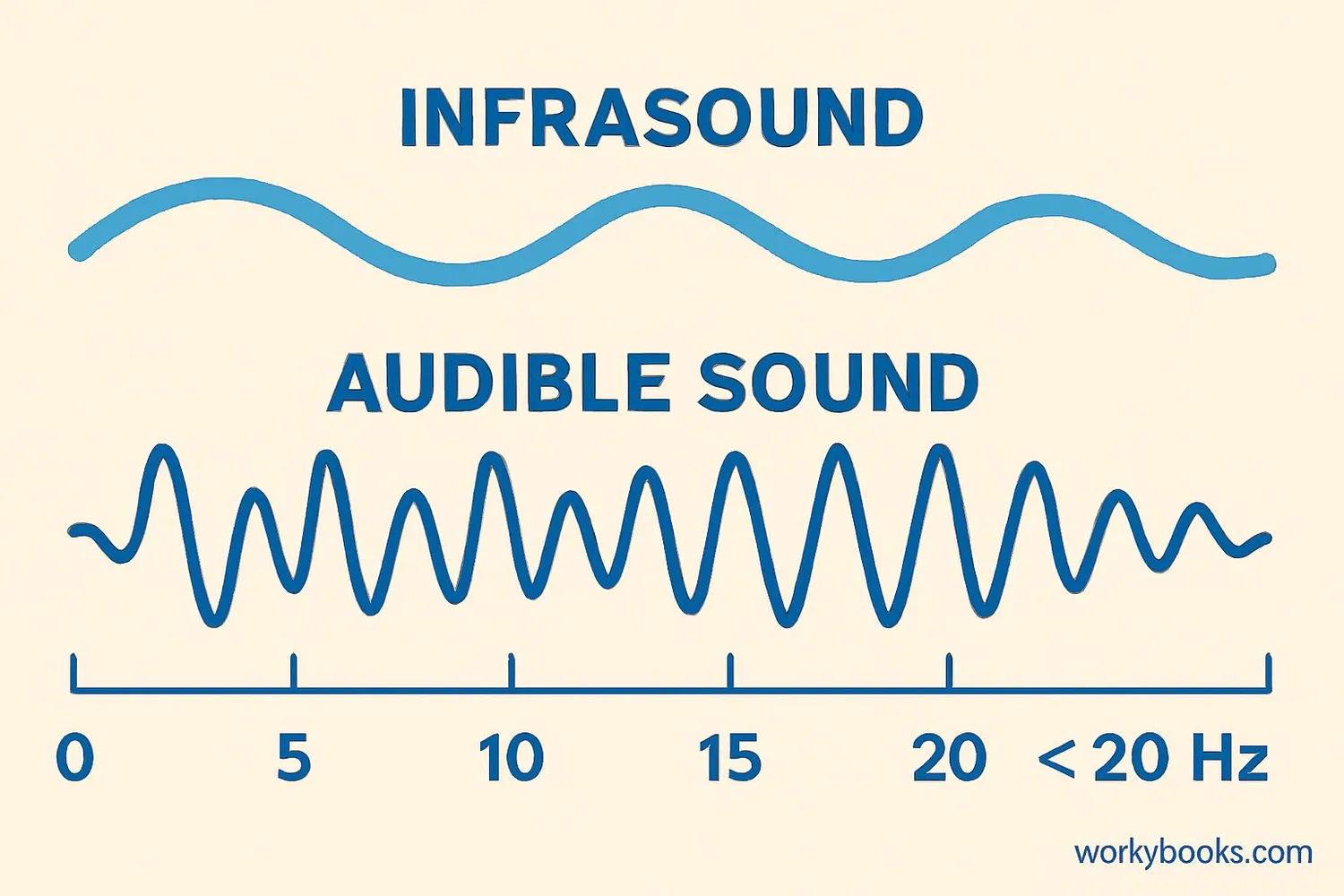
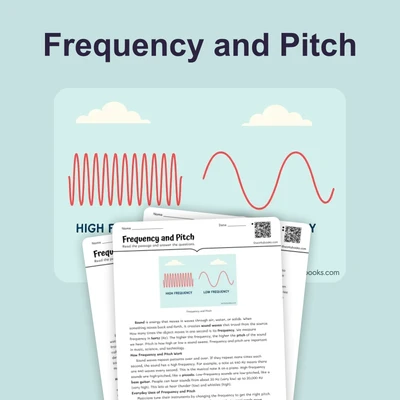
Sound waves are a form of energy that travel through air, water, or solids as vibrations. Humans can hear only a certain range of sound frequencies, typically from 20 Hz to 20,000 Hz. Frequencies above this range are called ultrasound, and those below are known as infrasound. Understanding these sounds beyond our hearing reveals important scientific principles and helps us solve real-world problems.
How Ultrasound and Infrasound Work
Ultrasound refers to sound waves with frequencies higher than 20,000 Hz. These waves have smaller wavelengths and can travel through many materials. Medical imaging devices, like ultrasound scanners, use these high-frequency waves to create pictures of organs inside the body. Bats also use ultrasound for echolocation. They emit ultrasonic calls and listen for the echoes to locate prey and navigate in the dark. In contrast, infrasound describes sound waves below 20 Hz. These waves have longer wavelengths and can travel over long distances. Elephants use infrasound to communicate across several kilometers, a system scientists have studied using sensitive instruments. Large natural events, such as earthquakes and volcanic eruptions, also produce infrasound that can be detected by specialized sensors.
Applications and Interactions in Nature and Technology
Ultrasound has many practical uses beyond animal behavior. In medicine, about 70% of pregnant women in the U.S. receive at least one ultrasound scan to monitor fetal development. Jewelers use ultrasonic cleaners, which vibrate at ultrasonic frequencies, to remove dirt from delicate pieces. Dog whistles produce ultrasound that dogs can hear, but humans cannot. Infrasound, meanwhile, helps scientists detect distant volcanic eruptions or approaching tsunamis by analyzing low-frequency signals. Some animals, like whales, communicate using infrasound across entire oceans. These examples show how sound frequency, animal physiology, and technology are interconnected.
Exceptions and Complexity
Not all animals hear the same frequency ranges as humans. Dogs can detect sounds up to 45,000 Hz, while some whales hear infrasound below 20 Hz. Human hearing can also change due to age or health conditions, affecting the perception of both high and low frequencies. Scientists use this knowledge to design devices that extend our senses. For example, seismometers convert infrasound from earthquakes into data humans can understand. These interactions show how understanding sound expands our abilities to sense and respond to the environment.
In summary, ultrasound and infrasound are types of sound waves outside human hearing. They play crucial roles in animal communication, medical technology, and environmental monitoring. By studying these waves, scientists unlock new ways to observe, communicate, and solve problems in our world.
Interesting Fact: The loudest animal on Earth, the blue whale, communicates using infrasound that can travel over 1,000 kilometers underwater!
Comprehension quiz (10 questions)
1. What is the frequency range of sounds that humans can hear?
2. What is ultrasound?
3. Which animal uses infrasound to communicate over long distances?
4. What do bats use ultrasound for?
5. What does the word 'frequency' mean as used in the passage?
6. What is a seismometer?
7. Why do jewelers use ultrasound cleaners?
8. True or False: Infrasound has a shorter wavelength than ultrasound.
9. True or False: Dog whistles use ultrasound, which humans cannot hear.
10. Which of the following is NOT an application of infrasound?
Perfect for the way you teach
- Build comprehension skills
- Auto-graded quiz
- Differentiated reading
- Read together at home
- Improve fluency
- Quiet reading time
- Reading curriculum support
- Independent practice
- Track Lexile growth