Musical Instruments and Sound
Interactive passage with audio narration, comprehension questions, and printable PDF.
What's included
Musical Instruments and Sound preview and details
About this printable Musical Instruments and Sound science reading passage, NGSS-aligned (Grades 5-8)
Sample passage and quiz from Musical Instruments and Sound
Reading passage and comprehension quiz preview
Musical Instruments and Sound
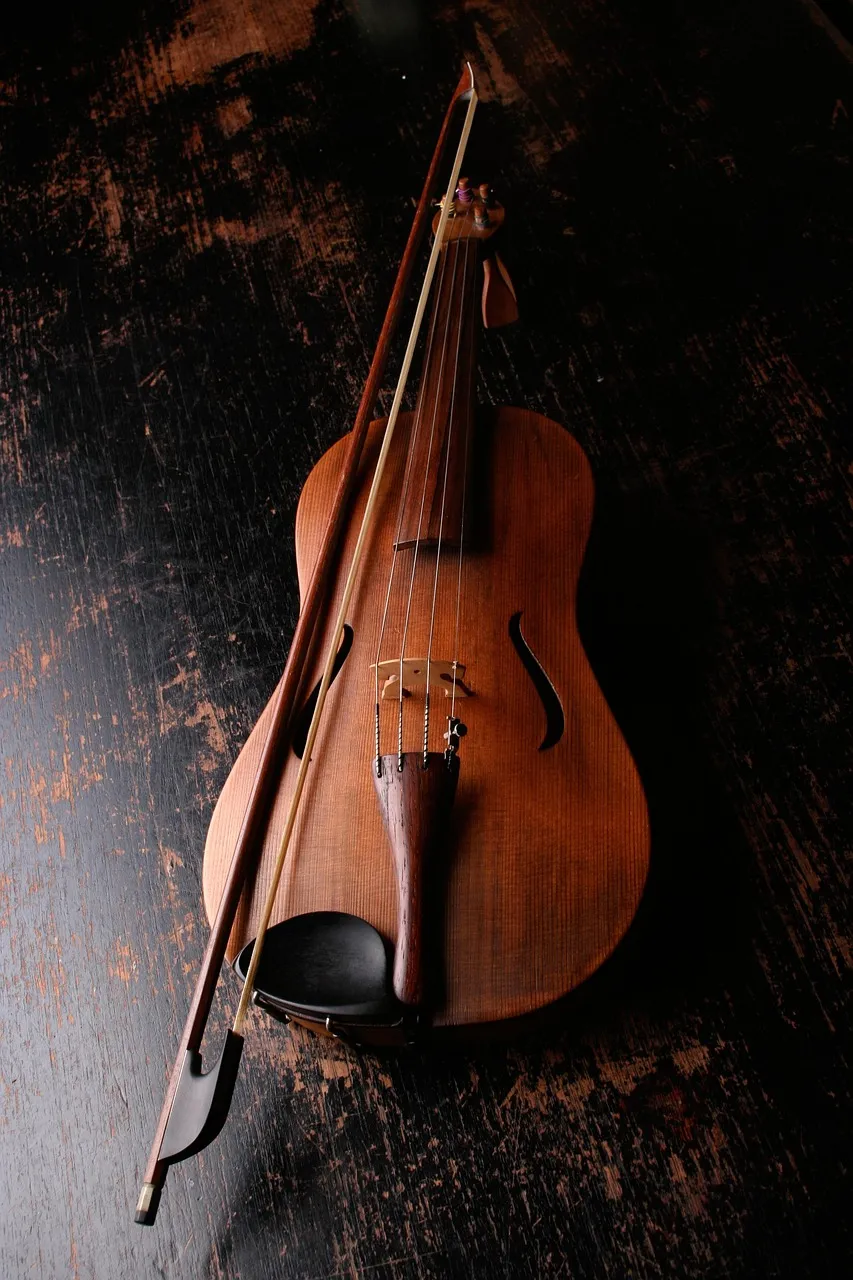
Source: Pixabay.
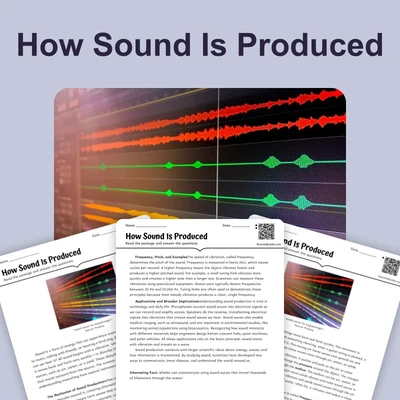
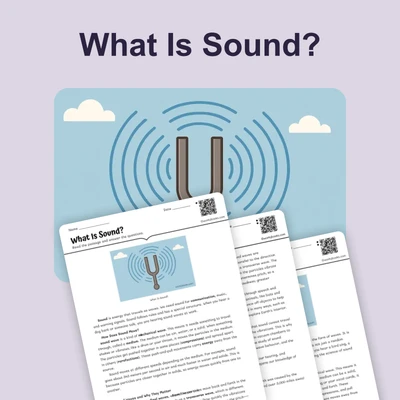
Sound is produced when objects vibrate, causing the air around them to move in waves. These vibrations are the foundation of all musical instruments. Across cultures and history, people have designed instruments to create specific sounds using different materials and methods. Understanding how musical instruments work helps us see the connections between physics, engineering, and music.
How Instruments Create Sound
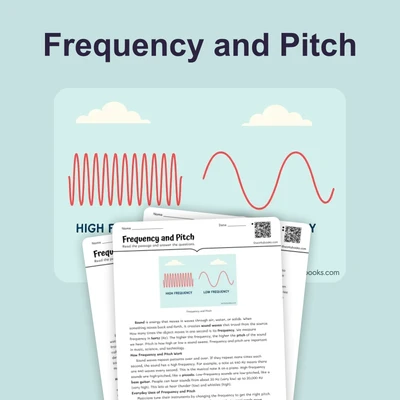
Each family of musical instruments produces sound through a unique mechanism. String instruments like guitars and violins use vibrating strings to generate sound. The pitch of a string instrument depends on the length, thickness, and tension of the string. For example, a short, tight, thin string vibrates quickly, producing a high pitch, while a long, loose, thick string vibrates slowly, producing a low pitch. Wind instruments such as flutes and clarinets create sound by vibrating columns of air inside tubes. Musicians change the pitch by opening or closing holes, making the air column longer or shorter. Percussion instruments like drums and xylophones make sound when a surface or object is struck, causing it to vibrate. The material, size, and shape of the percussion instrument affect the sound and pitch it produces.
Controlling Pitch, Volume, and Resonance
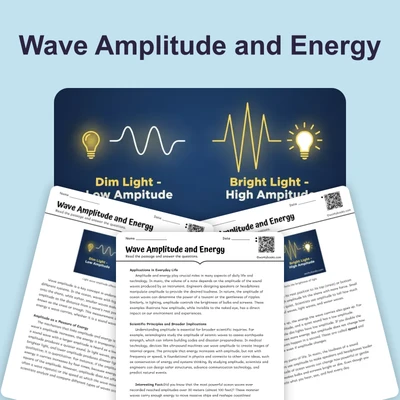
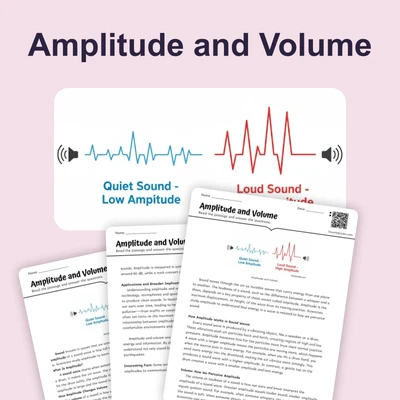
Musicians control the pitch and volume of an instrument through technique and instrument design. Pitch is changed by altering the vibration speed—for example, pressing a guitar string against the fretboard shortens the vibrating length and raises the note. Volume is increased by striking, plucking, or blowing harder, which creates larger vibrations and stronger sound waves. Resonance occurs when the body of the instrument vibrates with the same frequency as the source, amplifying the sound. For instance, the wooden body of a violin acts as a resonator, making the sound louder and richer. Proper design and material choice are essential for producing clear, strong sounds.
Real-World Applications and Broader Connections
The principles behind musical instruments apply to many areas of science and technology. Microphones, speakers, and even medical devices use vibration and resonance to operate. Scientists study sound waves to understand animal communication and human hearing. In acoustics, engineers design concert halls for optimal sound by managing resonance and vibrations. The study of musical instruments connects to broader scientific ideas about energy transfer, matter, and the behavior of waves. By investigating how instruments work, we gain insights into both art and science, improving technology and our understanding of the world.
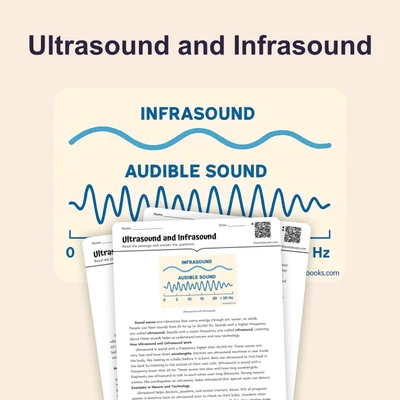
Interesting Fact: Some string instruments, like the double bass, can produce notes as low as 41 Hz, while piccolo flutes can reach pitches above 4,000 Hz. This range demonstrates the power of vibration and design in shaping sound.
Comprehension quiz (10 questions)
1. What is the main way musical instruments produce sound?
2. Which instrument family uses vibrating columns of air to create sound?
3. What happens to the pitch when a string is tightened on a guitar?
4. What does the term 'resonance' mean as used in the passage?
5. What is the function of a resonator in an instrument?
6. How do wind instrument players change the pitch?
7. Which real-world technology uses principles similar to musical instruments?
8. True or False: The size and material of percussion instruments do not affect the sound they make.
9. True or False: Scientists only study sound to make better musical instruments.
10. What broader scientific principle is connected to how musical instruments work?
Perfect for the way you teach
- Build comprehension skills
- Auto-graded quiz
- Differentiated reading
- Read together at home
- Improve fluency
- Quiet reading time
- Reading curriculum support
- Independent practice
- Track Lexile growth