Gharial Habitat and Conservation Status
Interactive passage with audio narration, comprehension questions, and printable PDF.
What's included
Gharial Habitat and Conservation Status preview and details
About this printable Gharial Habitat and Conservation Status science reading passage, NGSS-aligned (Grade 6)
Sample passage and quiz from Gharial Habitat and Conservation Status
Reading passage and comprehension quiz preview
Gharial Habitat and Conservation Status
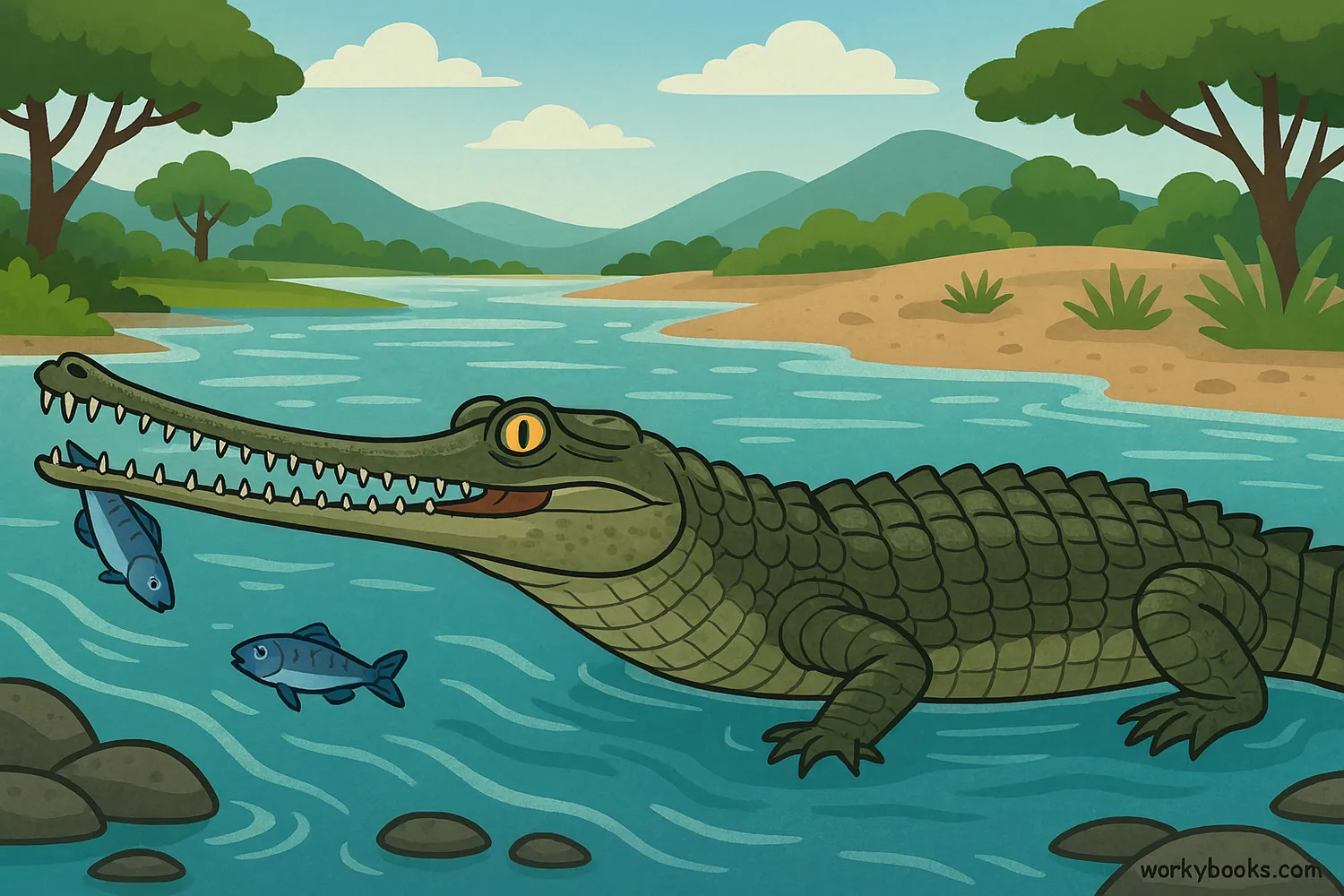
Imagine a creature with a snout like a long, slender pair of tongs, perfectly adapted for snatching slippery fish from swift river currents. This is the gharial, one of the most unique and ancient crocodilians on Earth. These fascinating reptiles are a vital part of the biodiversity of South Asian river ecosystems, but they are also critically endangered, facing a desperate fight for survival.
Gharials, scientifically known as Gavialis gangeticus, are easily distinguished from other crocodiles and alligators by their remarkably long, narrow snouts. This specialized snout is lined with 110 sharp, interlocking teeth, making them incredibly efficient fish-eaters. Unlike their more robust cousins, gharials are not equipped for hunting large land animals. Their slender jaws and weaker leg muscles mean they spend almost all their time in the water, only coming ashore to bask in the sun or for females to nest.
The natural habitat of the gharial consists of clean, fast-flowing rivers with deep pools, sandy banks for nesting, and good fish populations. Historically, their range extended across the Indian subcontinent, including countries like India, Nepal, Bangladesh, Pakistan, Bhutan, and Myanmar. Today, however, their populations are severely fragmented and significantly reduced, primarily confined to a few protected river stretches in India and Nepal. Major rivers like the Chambal, Girwa, and Gandak in India, and the Rapti and Narayani rivers in Nepal, are now critical strongholds for the remaining gharials. These specific river ecosystems provide the deep, clear waters and abundant fish resources essential for their survival.
The primary reasons for the gharial's critically endangered status are complex and interconnected. Habitat loss and degradation are significant threats, driven by human activities such as dam construction, sand mining, and agricultural run-off that pollutes their waters. Overfishing reduces their main food source, while entanglement in fishing nets often leads to drowning. Poaching for their skins and body parts, though less common now due to strict protection, also contributed to their decline in the past. Climate change, leading to altered river flows and increased flooding, poses an emerging threat to their nesting sites.
Recognizing the dire situation, extensive conservation efforts are underway. These include captive breeding programs where young gharials are raised in protected environments before being released into suitable river habitats. Establishing protected areas and national parks along critical river stretches helps to safeguard their breeding grounds and food sources. Community engagement and education are also vital, raising awareness among local populations about the importance of gharials and sustainable river management practices. Protecting the gharial is not just about saving one species; it's about preserving the health of entire river ecosystems and maintaining the rich biodiversity of our planet.
Interesting Fact: Adult male gharials develop a distinctive, bulbous growth on the tip of their snout called a 'ghara', which is thought to be used for vocalizing and attracting mates.
Comprehension quiz (10 questions)
1. Which feature distinguishes gharials from other crocodilians?
2. What is the primary food source for gharials?
3. Why are gharials considered critically endangered?
4. What does 'fragmented' mean in the context of gharial populations?
5. How do dams contribute to gharial habitat loss?
6. Which activity is NOT a direct threat to gharials?
7. Based on the passage, what is a likely consequence if gharial conservation fails?
8. Why is community engagement important for gharial conservation?
9. Gharials spend almost all their time on land.
10. What does the term 'biodiversity' refer to?
Perfect for the way you teach
- Build comprehension skills
- Auto-graded quiz
- Differentiated reading
- Read together at home
- Improve fluency
- Quiet reading time
- Reading curriculum support
- Independent practice
- Track Lexile growth