Premium
Glacial Retreat Consequences
Interactive passage with audio narration, comprehension questions, and printable PDF.
Just this resource
$1.50
One-time purchase
Best value
Unlock everything
$19.99/yr
5,000+ resources, AI tools
Unlock above to use these actions
- Format
- Interactive (Online), Printable (PDF)
- Grades
- 6
- Subjects
- science
- Languages
- English, Spanish
What's included
Reading passage
Reading comprehension
Audio narration
With word word highlighting
Comprehension quiz
Auto-graded
Writing activity
Open-ended response
Glossary & flashcards
Vocabulary practice
Differentiated version
Adapted for varied levels
Spanish translation
Bilingual support
About this reader
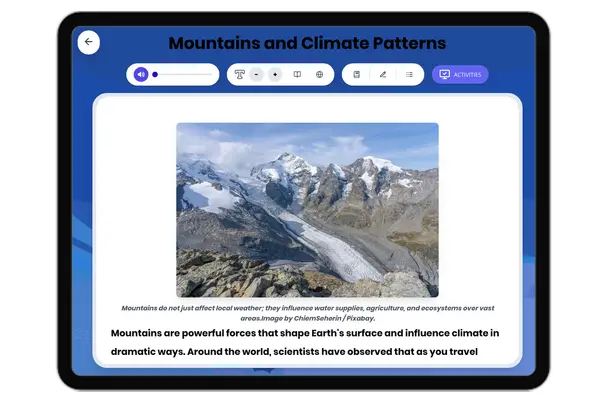
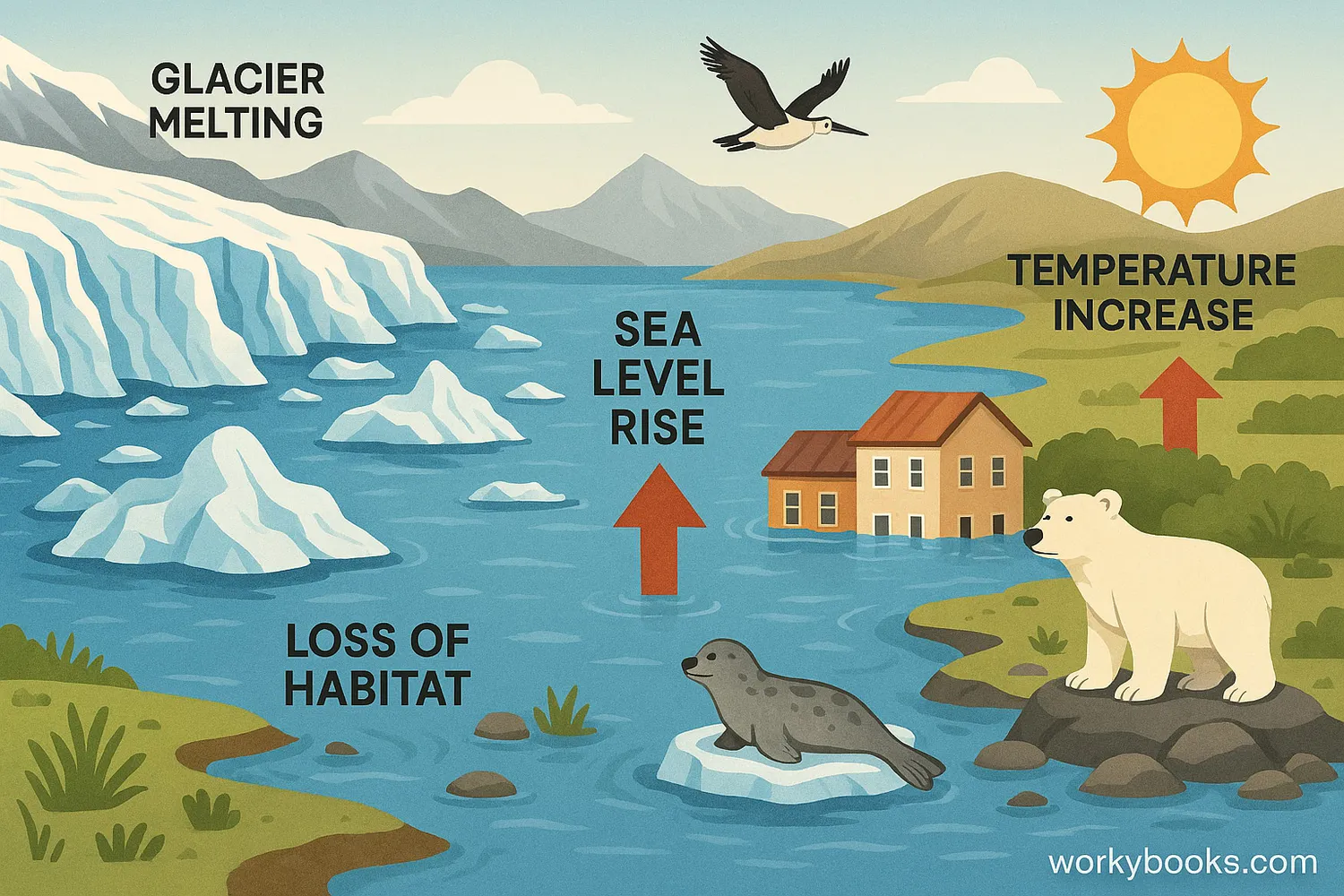
This engaging and audio-integrated passage, "Glacial Retreat Consequences," helps students in grade 6 understand the significant impact of melting glaciers on our planet. Aligned with NGSS standard MS-ESS3-5, it explores how the retreat of glaciers contributes to the rise in global temperatures. Key topics include sea level rise, its effects on coastal communities, and the loss of habitats for various species. Students will learn about the interconnectedness of Earth's systems and the urgent need to address climate change through easy-to-understand language and relevant scientific concepts. This passage is perfect for introducing students to the complex topic of climate change and its real-world consequences.
Written by Workybooks TeamPublished by Workybooks
Preview
Sample passage and quiz content
Who it's for
Perfect for the way you teach
Teachers
- Build comprehension skills
- Auto-graded quiz
- Differentiated reading
Parents
- Read together at home
- Improve fluency
- Quiet reading time
Homeschoolers
- Reading curriculum support
- Independent practice
- Track Lexile growth
Topics
glacial retreatclimate changeglobal warmingsea level risehabitat lossclimate crisis