God, Gold, and Glory: The Three Motives for Exploration
Interactive passage with audio narration, comprehension questions, and printable PDF.
By completing this purchase you agree to our Terms of Use and Privacy Policy. Your subscription renews automatically until you cancel. You can cancel anytime from your account settings. All sales are final and non-refundable. Digital content is available for download in your account immediately upon purchase.
What's included
God, Gold, and Glory: The Three Motives for Exploration preview and details
About this printable God, Gold, and Glory: The Three Motives for Exploration reading passage (Grades 3-5)
Sample passage and quiz from God, Gold, and Glory: The Three Motives for Exploration
Reading passage and comprehension quiz preview
God, Gold, and Glory
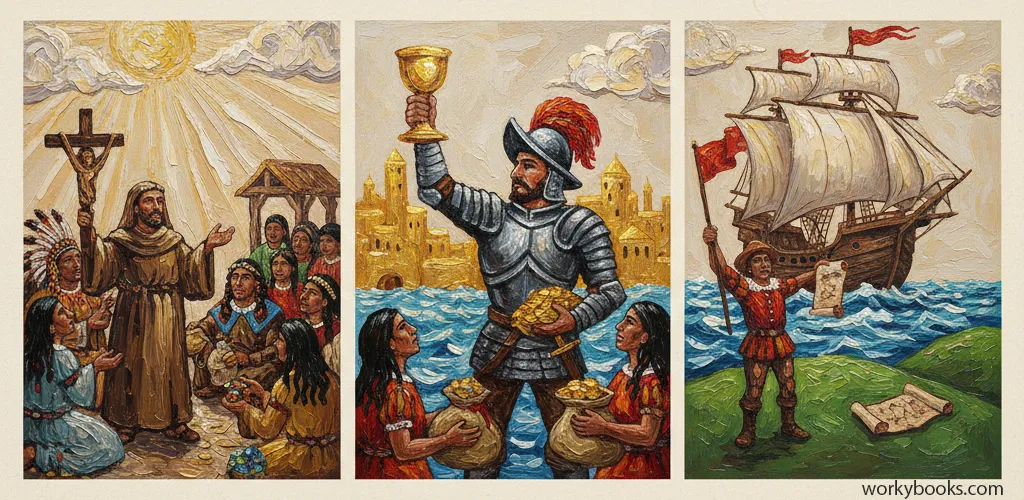
The phrase God, Gold, and Glory describes the three main reasons Europeans explored the world in the 1400s and 1500s. These goals changed history. They sent brave men and ships across the ocean to lands they had never seen before.
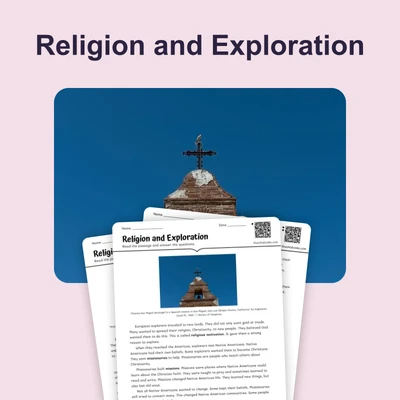
First, 'God' was a strong reason for exploration. Many European kings and queens wanted to spread their Christian faith. They believed it was important to teach others about their religion. Explorers, like Christopher Columbus, hoped to bring Christianity to new places. They wanted to build churches and share their beliefs with Native Americans and others.
Next, 'Gold' meant more than just coins or treasure. Europeans wanted to become rich. They searched for gold, silver, and valuable spices. These riches could make their countries powerful. Kings and queens paid for ships and crews in hopes of finding great wealth across the seas. New trade routes and goods could help their country grow strong and successful.
The third reason was 'Glory.' Glory means fame and honor. Explorers wanted their names to be remembered. They hoped to claim new lands for their country. If they found new places, they would become heroes back home. Kings and queens also wanted glory for their nations. They wanted to show that their country was the best and most powerful.
These three reasons led Europeans to explore North and South America. When they arrived, they met Native Americans. The meeting of these groups changed both Europe and the Americas forever. Some explorers traded with Native Americans. Others, sadly, took land and resources. This contact between different cultures began a new chapter in world history.
The search for God, Gold, and Glory created new maps and knowledge. It brought new foods, animals, and ideas to both Europe and the Americas. But it also caused problems, such as the loss of land for Native Americans and new diseases. Still, this time in history is remembered for great bravery and for changing our world.
Interesting Fact: Some explorers, like Hernán Cortés and Francisco Pizarro, became famous for finding gold and claiming land, but they also changed the lives of millions of Native Americans forever.
Comprehension quiz (8 questions)
1. What are the three main reasons for exploration?
2. Who wanted to spread Christianity?
3. What did explorers hope to find?
4. What does 'Glory' mean in the passage?
5. How did exploration change the world?
6. What was one effect on Native Americans?
7. Explorers wanted to become famous. True or false?
8. What does 'explore' mean?
Common Core standards for God, Gold, and Glory: The Three Motives for Exploration
Explain events, procedures, ideas, or concepts in a historical, scientific, or technical text, including what happened and why, based on specific information in the text.
Determine the meaning of general academic and domain-specific words or phrases in a text relevant to a grade 4 topic or subject area.
Write informative/explanatory texts to examine a topic and convey ideas and information clearly.
Perfect for the way you teach
- Build comprehension skills
- Auto-graded quiz
- Differentiated reading
- Read together at home
- Improve fluency
- Quiet reading time
- Reading curriculum support
- Independent practice
- Track Lexile growth