This learning resource is available in interactive and printable formats. The interactive worksheet can be played online and assigned to students. The Printable PDF version can be downloaded and printed for completion by hand.
This comprehensive science passage introduces students in grades 6-8 to the fascinating characteristics of the grassland biome, aligning with NGSS standards. The passage explains key scientific concepts such as climate, biodiversity, adaptations, and food webs, while defining important vocabulary terms for easy understanding. Real-world examples, including African savannas and North American prairies, help students connect science to the world around them. The resource includes a Spanish translation, glossary, multiple-choice quiz, and writing activities that foster scientific thinking, analysis, and connections to everyday life. Audio integration supports diverse learners. Teachers and students can use this resource to deepen understanding of biomes and ecosystems, preparing students for further studies in environmental and life sciences.
CONTENT PREVIEW
Expand content preview
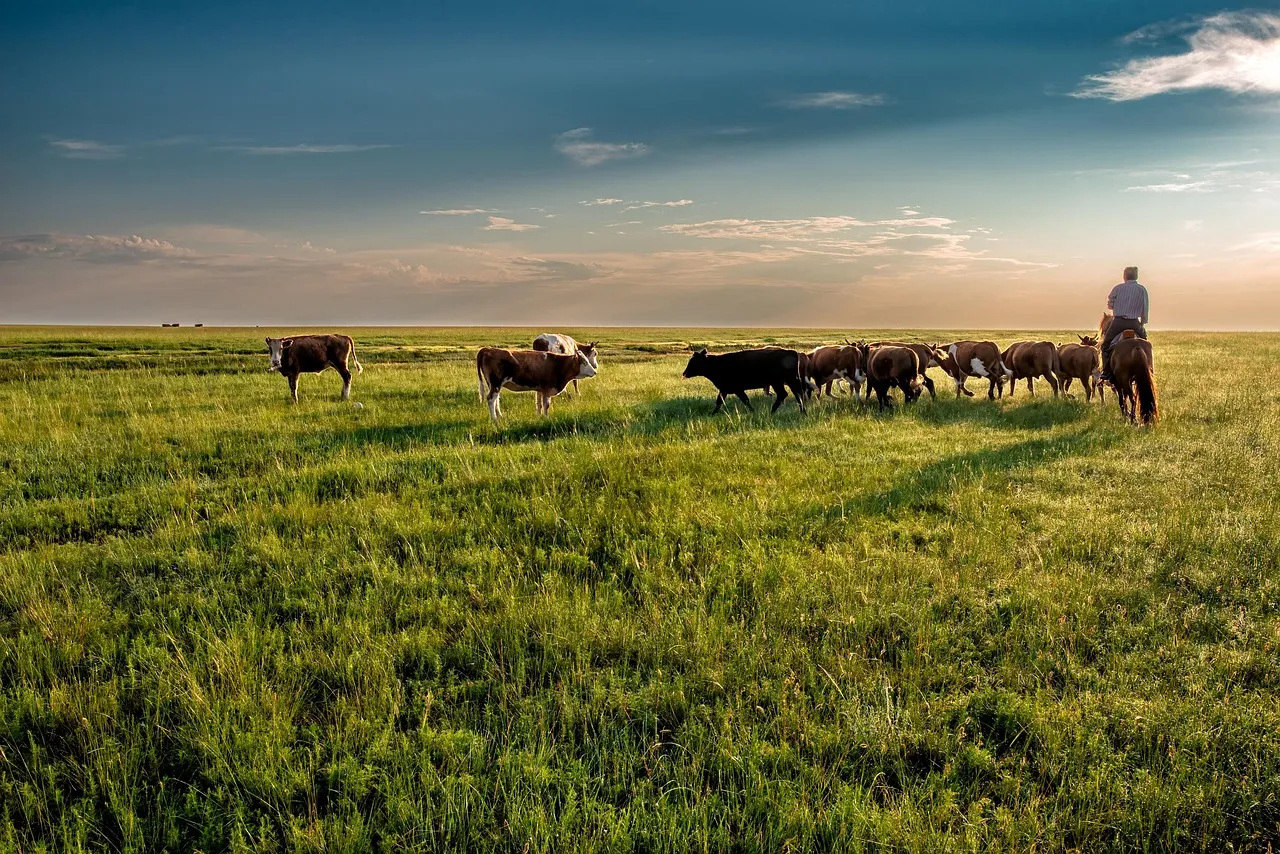
Grassland Biome. Imge by Kanenori / Pixabay.
The grassland biome is a large area of land where the main plants are grasses instead of trees or shrubs. Grasslands are found on every continent except Antarctica. There are two main types: temperate grasslands and tropical savannas. Temperate grasslands, like the North American prairies, have warm summers, cold winters, and moderate rainfall. Tropical savannas, such as those in Africa, are warm all year with a wet and dry season.
Grasslands have a special climate that makes them different from forests and deserts. They receive enough rain to support grasses but not enough for many trees to grow. The soil in grasslands is often rich and deep, which makes it good for farming. Because there are few trees, most of the sunlight reaches the ground, helping grasses and wildflowers grow thick and tall.
Many different organisms live in grasslands. Some examples are large herbivores like bison, zebras, and antelope. These animals eat the grasses and move in groups called herds. There are also many predators, such as lions and cheetahs in the savannas, and wolves in the prairies. Birds, insects, and small mammals like prairie dogs also play important roles in the grassland ecosystem.
Plants and animals in grasslands have special adaptations to survive. Grasses have deep roots to find water and survive fires. Some animals, like prairie dogs, dig burrows to escape heat and predators. Large animals may migrate to find food during dry seasons. Fires are common in grasslands and help new grasses grow by clearing away old plants.
The food web in grasslands shows how energy moves between plants, herbivores, and carnivores. Grasses use sunlight to make food through photosynthesis. Herbivores eat the grasses, and carnivores eat the herbivores. When plants and animals die, decomposers break them down and return nutrients to the soil.
Grasslands are important for people, too. They are often used for growing crops like wheat and corn or for raising cattle. However, grasslands are at risk from overgrazing, farming, and climate change. Protecting grasslands helps keep these ecosystems healthy for both wildlife and humans.
Interesting Fact: Some grassland fires happen naturally, but many are started by lightning or humans. These fires are important because they help keep grasslands from turning into forests!
What is the main plant in grasslands?
GrassesTreesShrubsFerns
Which animal is NOT found in savannas?
BisonZebraLionCheetah
What helps grasses survive fires?
Deep rootsThick barkWide leavesTall stems
What happens if too many trees grow in grasslands?
Grasslands turn into forestsGrasslands get more animalsGrasslands get drierGrasslands get colder
Why do some animals migrate in grasslands?
To find foodTo escape rainTo sleepTo find trees
How do decomposers help the soil?
Return nutrientsEat live plantsMake rainGrow tall
Grasslands have rich, deep soil. True or false?
TrueFalse
What is adaptation?
A survival featureA kind of soilA type of grassA weather pattern
Perfect For:
👩🏫 Teachers
• Reading comprehension practice
• Auto-graded assessments
• Literacy skill development
👨👩👧👦 Parents
• Reading practice at home
• Comprehension improvement
• Educational reading time
🏠 Homeschoolers
• Reading curriculum support
• Independent reading practice
• Progress monitoring
Reading Features:
📖
Reading Passage
Engaging fiction or nonfiction text
❓
Comprehension Quiz
Auto-graded questions
📊
Instant Feedback
Immediate results and scoring
📄
Printable Version
Download for offline reading
🔊
Read Aloud
Voice-over with word highlighting
Reviews & Ratings
No reviews yet. Be the first to share your experience!
Related Content
Climate and weather activity
This worksheet is perfect for understanding the differences between climate and weather. Students will read the phrases ...
Climate and Weather — Distinguishing Characterstics
This worksheet highlights the differences between climate and weather. The chart format makes comparing and contrasting ...
Comparing Weather and Climate Texts
This reading comprehension worksheet has 5th graders read two informational texts about Weather and Climate. Students th...
RI.5.9
Tools and Technology in Earth Science
This middle school science reading passage explores the wide range of tools and technologies used in Earth science, from...
MS-ESS2-2MS-ESS3-2MS-ETS1-1MS-PS4-3
What Is Space Weather and How Does It Affect the Earth?
This NGSS-aligned science passage for middle school explains what space weather is and how it affects Earth. Students le...
MS-ESS2-2
What Is Earth Science?
This engaging middle school science passage introduces students to the field of Earth science, aligning with NGSS standa...
MS-ESS1MS-ESS2MS-ESS3SEP
Extreme Weather and Climate Change
This Grade 6-8 science passage, aligned to NGSS standards, explores the impact of climate change on extreme weather even...
What Is The Difference Between Climate Model And Weather Model?
This reading passage delves into the fundamental differences between weather models and climate models, explaining their...
Scientific Inquiry in Earth Science
This passage explores scientific inquiry in Earth science for grades 6-8, aligned with NGSS standards MS-ESS1-4, MS-ESS2...
MS-ESS1-4MS-ESS2-1MS-ESS3-5SEP
Earth's Major Climate Zones Explained
This engaging science passage for grades 6-8 explains Earth's major climate zones, including tropical, temperate, and po...
Climate Through Earth's History
This engaging passage for grades 6-8 explores how Earth's climate has naturally changed over millions of years, highligh...
MS-ESS1-4MS-ESS2-6
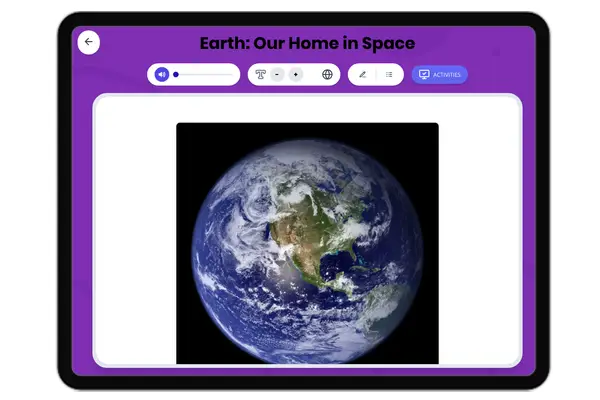
Earth: Our Home in Space
This engaging Grade 4-5 science passage, aligned to NGSS, introduces students to Earth's special place in the solar syst...
Weather vs. Climate
This comprehensive passage for grades 6-8 explores the difference between weather and climate, aligning with NGSS standa...
MS-ESS2-6
How is Climate Different from Weather?
This passage distinguishes climate from weather for young readers. It defines climate as the usual weather patterns over...
RI.3.1RI.4.14.ESS2.D
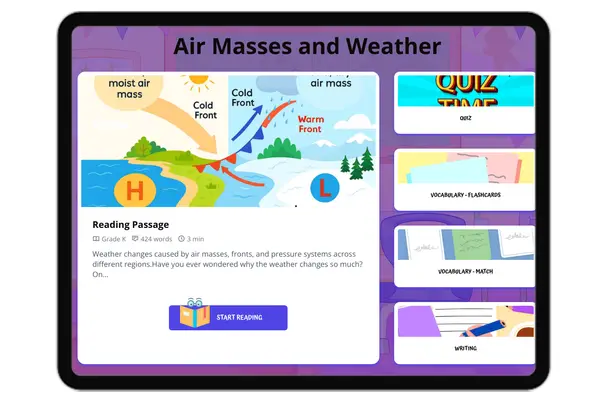
Air Masses and Weather
This audio-integrated passage, "Air Masses and Weather," is designed for 6th-grade students to understand how the moveme...
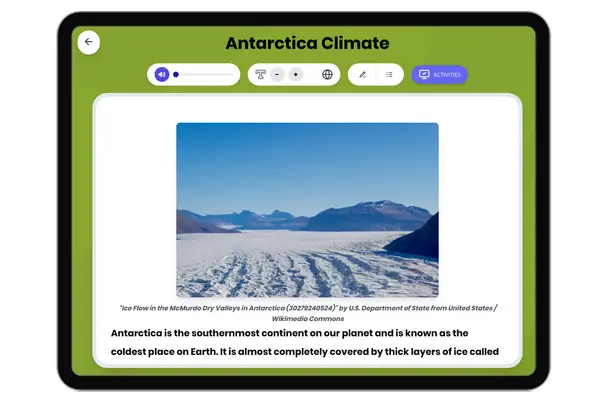
Antarctica Climate
This engaging science passage for grades 6-8 explores Antarctica, the coldest climate zone on Earth. Students will learn...
Climate Zones Word Sort
This word sort activity helps students understand different climate zones through real-world locations. Students classif...
How Climate Change Affects Weather
This middle school science passage explores how and why weather patterns are changing globally. Students will learn abou...
MS-ESS3-5
Polar Bears and Climate
This informational text on polar bears is a great way to practice reading comprehension. Students will read the passage ...
RI.4.1W.4.72-LS4-1RF.4.4
Escape Velocity and Space Travel
This middle school science passage introduces students to the concept of escape velocity—the minimum speed required to b...