Heatwave Safety and Health Risks
Interactive passage with audio narration, comprehension questions, and printable PDF.
By completing this purchase you agree to our Terms of Use and Privacy Policy. Your subscription renews automatically until you cancel. You can cancel anytime from your account settings. All sales are final and non-refundable. Digital content is available for download in your account immediately upon purchase.
What's included
Heatwave Safety and Health Risks preview and details
About this printable Heatwave Safety and Health Risks science reading passage, NGSS-aligned (Grade 6)
Sample passage and quiz from Heatwave Safety and Health Risks
Reading passage and comprehension quiz preview
Heatwave Safety and Health Risks
Imagine the air feeling thick and heavy, the sun beating down intensely, and even a fan only moving hot air around. This is what a heatwave feels like: a period of unusually hot weather that lasts for several days. These extreme heat events are becoming more common and intense, posing serious health risks to everyone, especially children, the elderly, and people with certain medical conditions.
Understanding the dangers of heatwaves is crucial for staying safe. Our bodies need to maintain a steady temperature. When it's very hot, our bodies try to cool down by sweating. But if it's too hot and humid, or if we don't drink enough water, our bodies can't cool down effectively. This can lead to dehydration, which means your body doesn't have enough fluids to work properly. Early signs of heat stress include feeling thirsty, tired, or dizzy.
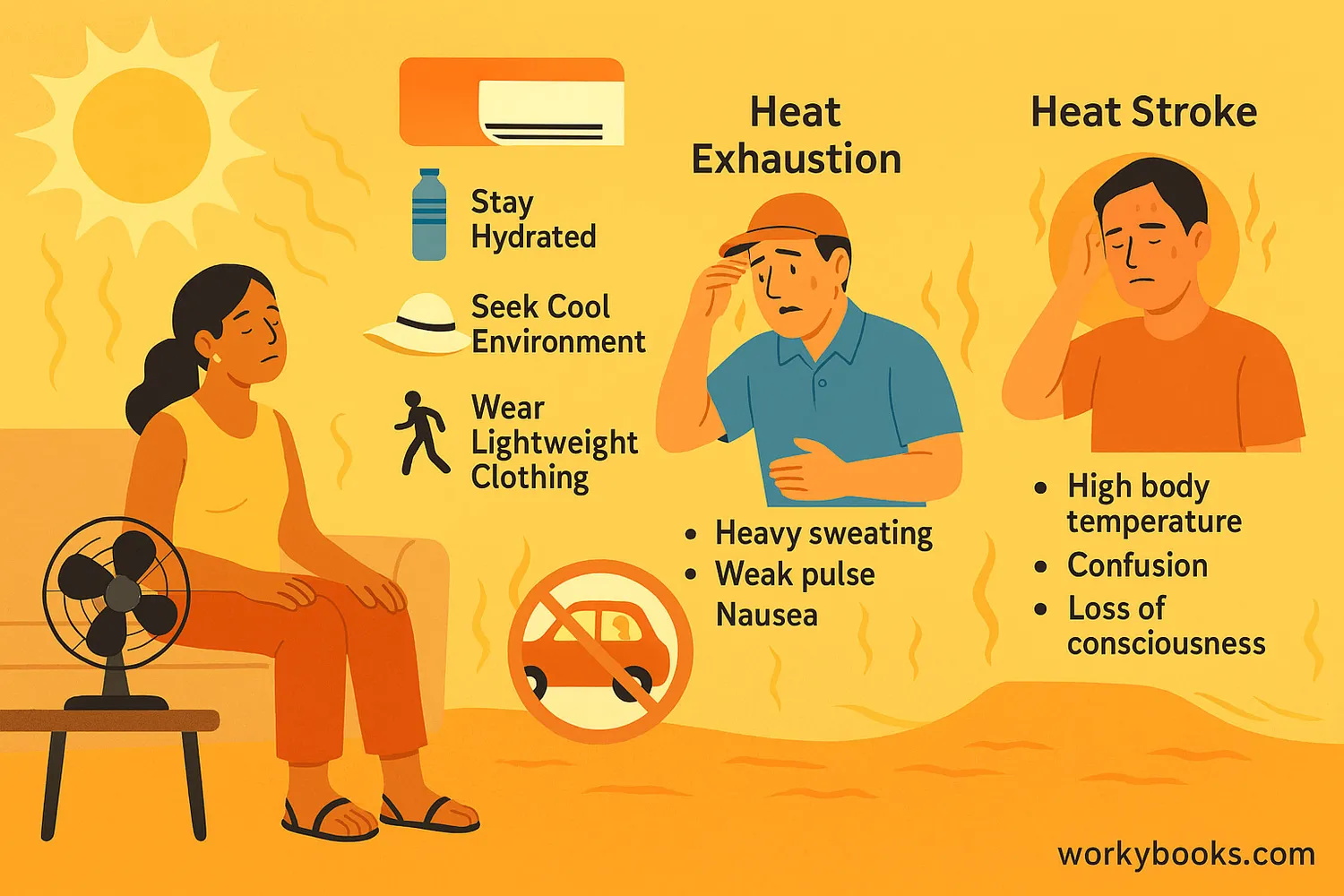
More serious conditions can develop quickly. Heat exhaustion happens when your body overheats. Symptoms include heavy sweating, cold, clammy skin, fast weak pulse, nausea, muscle cramps, and fainting. If you experience these symptoms, it's important to move to a cool place, lie down, loosen your clothes, and drink water. The most dangerous condition is heatstroke, which is a medical emergency. Symptoms include a very high body temperature (over 103°F), hot, red, dry or damp skin, fast strong pulse, headache, dizziness, nausea, confusion, and even loss of consciousness. If you suspect heatstroke, call for emergency help immediately.
To minimize these risks during a heatwave, there are several key steps for heatwave safety. Stay hydrated by drinking plenty of water, even if you don't feel thirsty. Avoid sugary drinks or alcohol. Seek cool environments, such as air-conditioned buildings, or take cool showers. Wear light-colored, loose-fitting clothing and a wide-brimmed hat if you must go outside. Limit strenuous outdoor activities, especially during the hottest parts of the day (usually 10 AM to 4 PM). Never leave children or pets in a parked car, as temperatures inside can rise very quickly. By following these preventive measures, we can protect ourselves and our communities during periods of extreme heat.
Interesting Fact: The hottest temperature ever recorded on Earth was 134°F (56.7°C) in Death Valley, California, on July 10, 1913.
Comprehension quiz (10 questions)
1. What is a heatwave?
2. What is a common sign of dehydration?
3. Which group is most vulnerable to heatwaves?
4. Why is sweating important during hot weather?
5. Why avoid sugary drinks in heatwaves?
6. What does 'dehydration' mean?
7. Why is leaving pets in cars dangerous?
8. Heatstroke is a medical emergency.
9. Which is a symptom of heatstroke?
10. What clothing is best for heatwaves?
Perfect for the way you teach
- Build comprehension skills
- Auto-graded quiz
- Differentiated reading
- Read together at home
- Improve fluency
- Quiet reading time
- Reading curriculum support
- Independent practice
- Track Lexile growth