How Barometers Predict Weather
Interactive passage with audio narration, comprehension questions, and printable PDF.
By completing this purchase you agree to our Terms of Use and Privacy Policy. Your subscription renews automatically until you cancel. You can cancel anytime from your account settings. All sales are final and non-refundable. Digital content is available for download in your account immediately upon purchase.
What's included
How Barometers Predict Weather preview and details
About this printable How Barometers Predict Weather science reading passage, NGSS-aligned (Grade 6)
Sample passage and quiz from How Barometers Predict Weather
Reading passage and comprehension quiz preview
How Barometers Predict Weather
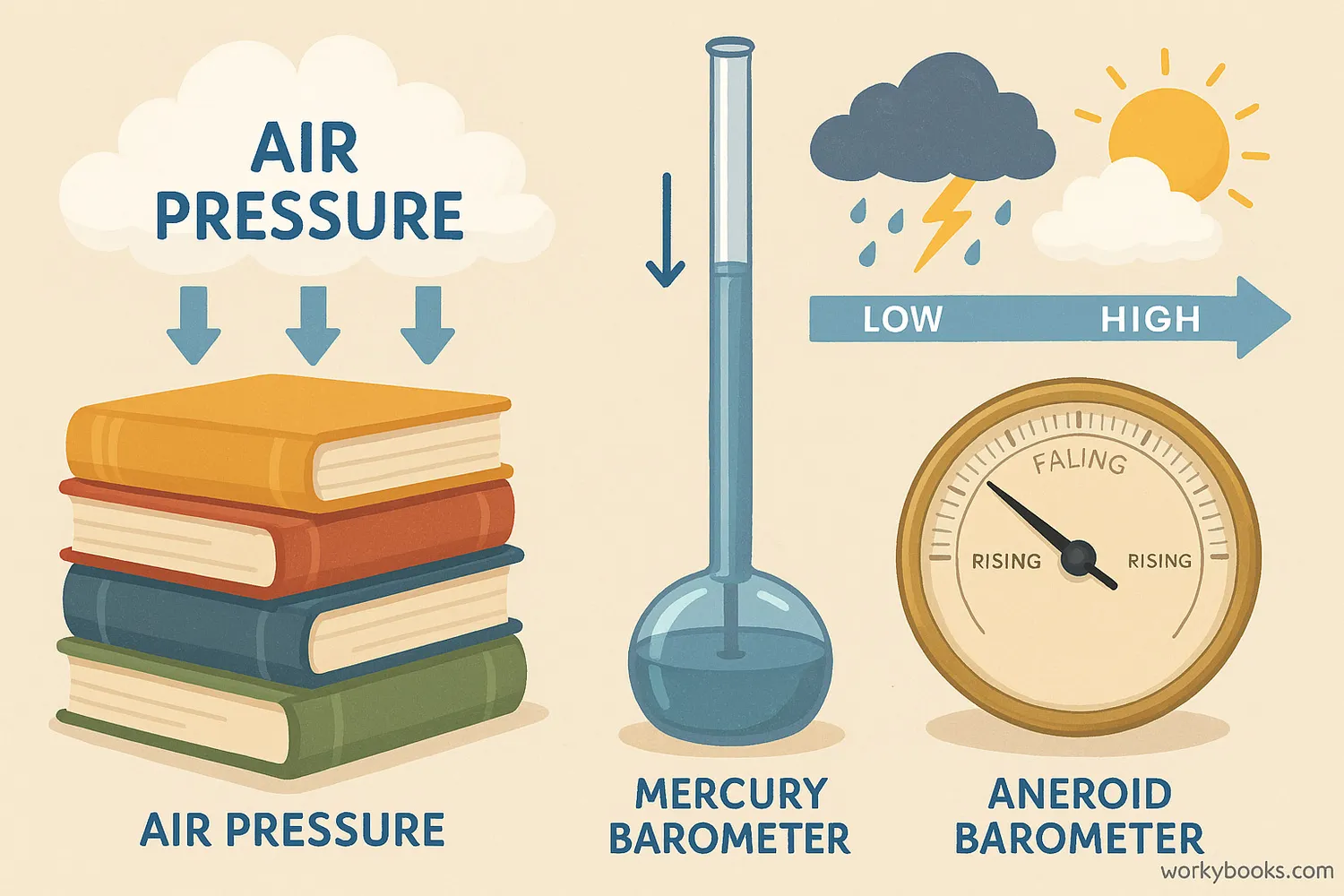
Imagine the air all around you. It might seem light and invisible, but it actually has weight! This weight creates air pressure, also known as atmospheric pressure. Air pressure is the force exerted on a surface by the weight of the air above it. Just like a stack of books, the air above us presses down. When the amount of air above a location changes, so does the pressure. Weather scientists, often called meteorologists, use a special tool called a barometer to measure these changes in air pressure. Understanding how barometers work is key to predicting weather!
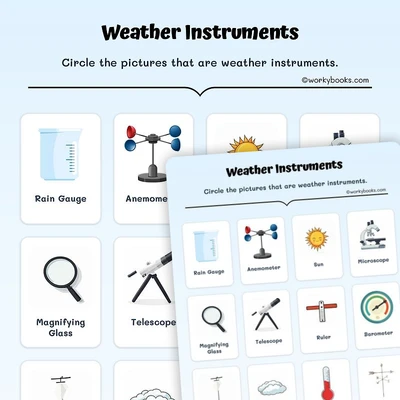
There are two main types of barometers. The mercury barometer, an older design, uses a column of mercury that rises or falls with changes in air pressure. A more common type today is the aneroid barometer. This device uses a sealed metal box, or capsule, that expands and contracts as air pressure changes. These tiny movements are then translated into needle movements on a dial, showing whether the pressure is rising or falling. It's a fantastic tool for weather prediction.
So, what do these changes in air pressure tell us about the weather? Generally, high-pressure systems are associated with clear, calm, and fair weather. When a barometer shows rising pressure, it often means that good weather is on its way or will continue. The air in a high-pressure system sinks, preventing clouds from forming and leading to sunny skies. This is why knowing about atmospheric pressure helps with understanding weather patterns.
On the other hand, low-pressure systems often bring stormy or cloudy weather. When a barometer shows falling pressure, it suggests that wet, windy, or unsettled weather is approaching. In a low-pressure system, air rises, cools, and forms clouds and precipitation. Therefore, a significant drop in air pressure can be a warning sign for upcoming rain or storms. By observing these changes in air pressure, barometers provide valuable clues for forecasting weather, helping us prepare for what's ahead.
Interesting Fact: The world record for the highest recorded air pressure was in Agata, Siberia, at 1083.8 millibars (32.01 inches of mercury) on December 31, 1968.
Comprehension quiz (10 questions)
1. What is air pressure?
2. What tool measures air pressure?
3. Which system often brings clear weather?
4. What does falling pressure usually mean?
5. What happens to air in a low-pressure system?
6. What does a rising barometer suggest?
7. An aneroid barometer uses what?
8. Meteorologists use barometers.
9. What is another name for air pressure?
10. Why is understanding air pressure important?
Perfect for the way you teach
- Build comprehension skills
- Auto-graded quiz
- Differentiated reading
- Read together at home
- Improve fluency
- Quiet reading time
- Reading curriculum support
- Independent practice
- Track Lexile growth