How Geography Shaped the Colonies
Interactive passage with audio narration, comprehension questions, and printable PDF.
By completing this purchase you agree to our Terms of Use and Privacy Policy. Your subscription renews automatically until you cancel. You can cancel anytime from your account settings. All sales are final and non-refundable. Digital content is available for download in your account immediately upon purchase.
What's included
Part of this bundle

How Geography Shaped the Colonies preview and details
About this printable How Geography Shaped the Colonies reading passage (Grades 3-5)
Sample passage and quiz from How Geography Shaped the Colonies
Reading passage and comprehension quiz preview
How Geography Shaped the Colonies
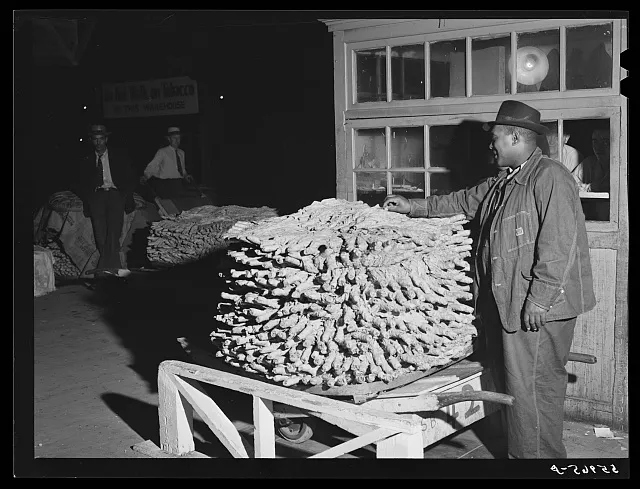
"Weighing-in tobacco on scales in warehouse in Danville, Virginia, where many Caswell County farmers sell their tobacco at auction. North Carolina" by Wolcott, Marion Post, 1910-1990 / Library of Congress.
The geography of the American colonies shaped how people lived, worked, and built their communities. The land and climate were very different in each region. These differences made the colonies develop in unique ways.
In the north, the colony of Massachusetts had cold winters and rocky soil. The land was covered with thick forests and many rivers. It was hard to grow large crops, so colonists planted small farms. They grew crops like corn, beans, and squash. Many people fished or cut down trees for wood. The forests gave them natural resources to build homes and ships. The cold weather meant colonists needed warm houses and plenty of firewood.
In the south, the colony of Virginia had hot summers and rich, soft soil. The land was flat and open, with many rivers. This made it easy to grow large crops like tobacco and corn. Colonists in Virginia started big farms called plantations. These farms needed many workers. People came from different places to work on the land. The warm climate helped crops grow well, but it also brought more insects and diseases.
Because of these differences, the way of life in Massachusetts and Virginia was not the same. In Massachusetts, towns were close together. People worked together and built schools and churches in the center of town. In Virginia, farms were far apart. Families lived on their own land. Some children learned at home, and churches were often far away. People in Virginia depended on their land and crops to earn money.
Natural resources like trees, rivers, and soil helped each colony grow. Colonists used what was around them to meet their needs. In New England, people became shipbuilders, fishers, and traders. In the south, people grew rich from selling crops like tobacco and cotton. The geography made each colony special.
Geography also affected how people solved problems. Cold winters in Massachusetts meant colonists had to store food and stay warm. In Virginia, people worked to protect their crops from heat and insects. Over time, these challenges brought people together and helped shape strong communities.
In the end, geography was one of the most important reasons why colonies in America were so different from each other.
Interesting Fact: The first public school in America was started in Massachusetts in 1635. It was built so children could learn to read and write in their community.
Comprehension quiz (8 questions)
1. What was the climate in Massachusetts?
2. What did colonists in Virginia grow?
3. Why were towns close in Massachusetts?
4. How did geography shape the colonies?
5. What was a natural resource in Massachusetts?
6. Why did Virginia have big farms?
7. Colonists in Massachusetts built the first public school.
8. What does 'plantation' mean?
Common Core standards for How Geography Shaped the Colonies
Explain events, procedures, ideas, or concepts in a historical, scientific, or technical text, including what happened and why, based on specific information in the text.
Determine the meaning of general academic and domain-specific words or phrases in a text relevant to a grade 4 topic or subject area.
Write informative/explanatory texts to examine a topic and convey ideas and information clearly.
Perfect for the way you teach
- Build comprehension skills
- Auto-graded quiz
- Differentiated reading
- Read together at home
- Improve fluency
- Quiet reading time
- Reading curriculum support
- Independent practice
- Track Lexile growth