How Animal Hearts Work
Interactive passage with audio narration, comprehension questions, and printable PDF.
What's included
Part of this bundle

How Animal Hearts Work preview and details
About this printable How Animal Hearts Work science reading passage, NGSS-aligned (Grades 3-5)
Sample passage and quiz from How Animal Hearts Work
Reading passage and comprehension quiz preview
How Animal Hearts Work
The heart is an internal organ inside your body that works like a pump. A pump is a machine that pushes liquid from one place to another. Your heart pumps blood, which is the red liquid that flows through your body. Blood is important because it carries oxygen and nutrients to every cell in your body. Oxygen is the gas you breathe in from air, and nutrients are substances from food that help you grow and stay healthy.
Your heart beats all day and all night without stopping. Each beat pushes blood through tubes called blood vessels that reach every part of your body. Think of your heart like a delivery truck that never stops working. It delivers oxygen and nutrients to your cells and picks up waste products that cells need to get rid of. Without your heart constantly pumping, your cells would not get what they need to survive.
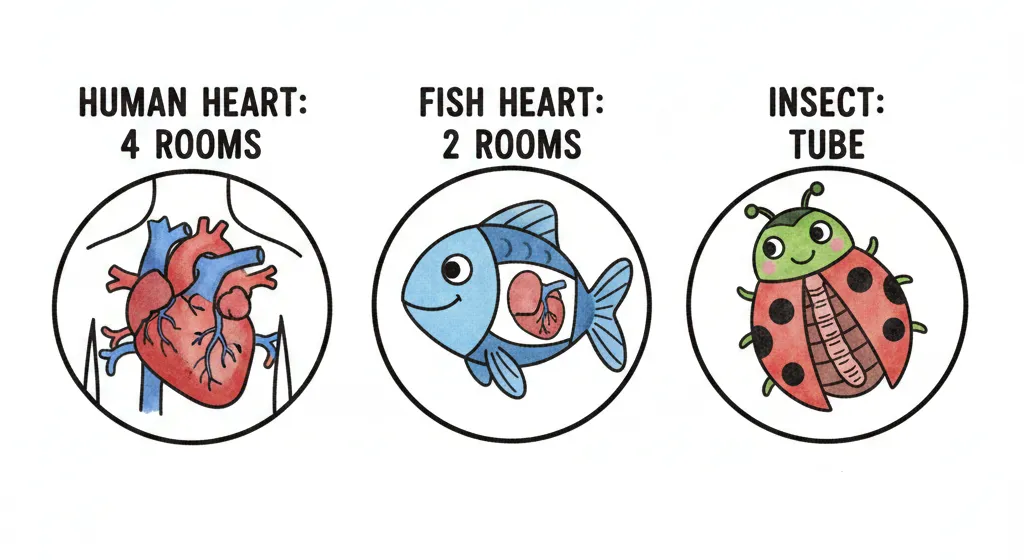
Different animals have different types of hearts. Humans have a four-chambered heart, which means our heart has four separate rooms inside it. Fish have a two-chambered heart with only two rooms. Insects have a very simple tube-like heart that pumps blood in a different way. Even though hearts look different in different animals, they all do the same important job: keeping blood moving so the body gets what it needs.
Interesting Fact: Your heart beats about 100,000 times every single day! That means it will beat more than 2.5 billion times during your lifetime.
Comprehension quiz (8 questions)
1. What does the heart pump?
2. What does blood carry to cells?
3. How many chambers does a human heart have?
4. Why must the heart beat continuously?
5. What type of heart do fish have?
6. How does blood travel through your body?
7. The heart stops beating at night.
8. What is oxygen?
Perfect for the way you teach
- Build comprehension skills
- Auto-graded quiz
- Differentiated reading
- Read together at home
- Improve fluency
- Quiet reading time
- Reading curriculum support
- Independent practice
- Track Lexile growth