How Scientists Classify Living Things — Reading Comprehension
Rate this
Premium Resource
Present
Present in classroom. No work saved
Assign
Classroom with student accounts, Track progress
Quick Play
No student accounts, assign with a link
Grades
6
PRINT+DIGITAL RESOURCE
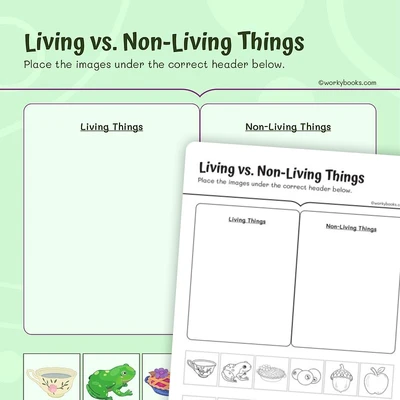
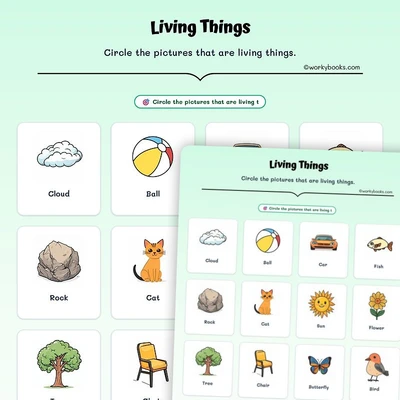
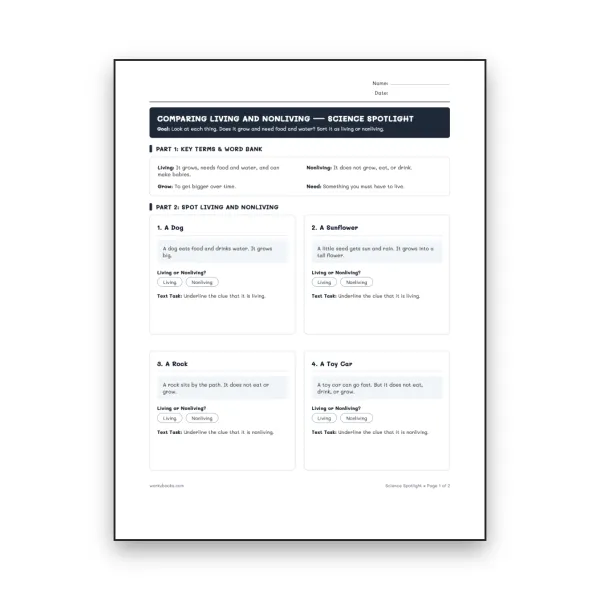
This learning resource is available in interactive and printable formats. The interactive worksheet can be played online and assigned to students. The Printable PDF version can be downloaded and printed for completion by hand.
This educational passage, audio integrated, delves into the fascinating world of how scientists classify living things. Students will learn about taxonomy, the hierarchical system used to organize life, and explore key concepts like kingdoms, phyla, and species. The content introduces the importance of scientific classification for understanding biodiversity and evolutionary relationships. It aligns with NGSS standard MS-LS4-5, providing foundational knowledge about how we organize the natural world, which connects to understanding how technologies influence desired traits in organisms. Key terms like 'taxonomy,' 'classification,' 'kingdom,' and 'species' are defined and explained, making complex ideas accessible for grade 6 readers.
CONTENT PREVIEW
Expand content preview
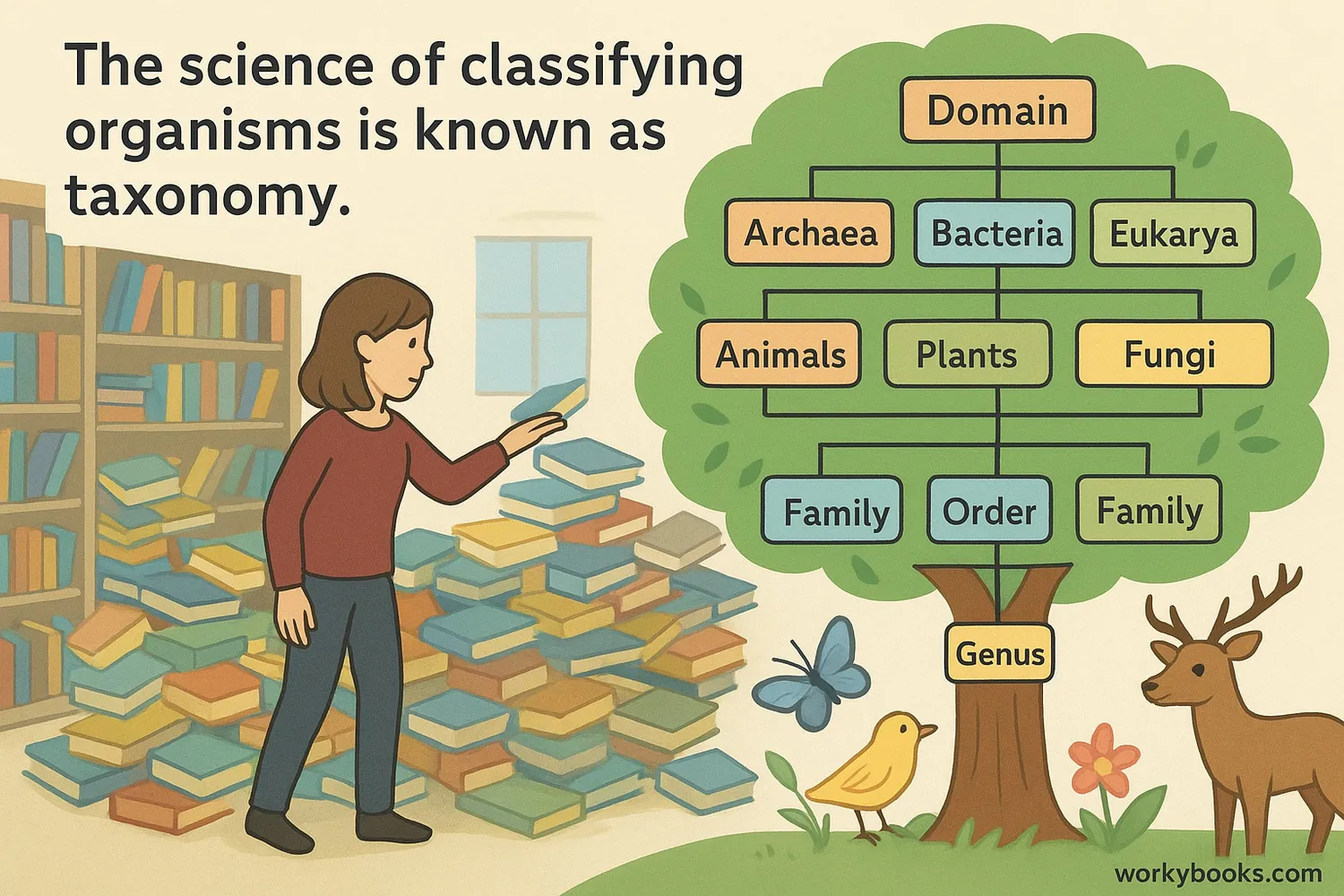
Taxonomy organizes life into domains, kingdoms, and species.
How Scientists Classify Living Things
There are over two million known living things on Earth. To make sense of this huge variety, scientists organize all living things into groups. This process is called classification. It is like sorting books in a library or organizing your closet. Scientists use classification to help them study and describe the many forms of life.
Classification is important for several reasons. First, with so many living things, we need a system to keep track of them all. Second, it helps scientists from around the world communicate clearly without confusion. Third, it shows how living things are related to each other. Finally, it makes it easier to learn about life on Earth.
Scientists use a special system called taxonomy to group living things. There are eight main levels, from the largest group to the smallest: Domain, Kingdom, Phylum, Class, Order, Family, Genus, and Species. You can remember the order with the sentence: "Dear King Philip Came Over For Good Soup."
The largest group is the Domain. There are three domains: Bacteria, Archaea, and Eukarya. Next is Kingdom. Some kingdoms you should know are:
Animals: Multicellular, eat food, and can move.
Plants: Usually green, make their own food from sunlight.
Fungi: Like mushrooms and mold, break down dead things.
Protists: Mostly single-celled, like amoebas.
Bacteria: Tiny, single-celled organisms.
Each level gets more specific until you reach species, which is the smallest group. A species contains only living things that are very similar and can have babies together.
Scientists use special two-part names, called scientific names, to identify each species. These names use Latin words. For example, humans are called Homo sapiens. This system was invented by a Swedish scientist named Carolus Linnaeus in the 1700s. Scientific names are used everywhere in the world, so there is no confusion between languages.
Classifying living things is like sorting your whole school into grades, then classes, then tables, and finally individual desks—from the biggest group to the smallest!
Interesting Fact: The honey bee's scientific name is Apis mellifera, which means "honey-bearing bee" in Latin!
What is classification?
Sorting living things into groupsNaming only animalsWriting descriptions of plantsCounting all the species
Which is the largest group in taxonomy?
DomainKingdomSpeciesOrder
Who invented the naming system?
Carolus LinnaeusCharles DarwinJane GoodallIsaac Newton
Why do scientists use scientific names?
So everyone uses the same nameBecause they sound fancyTo confuse peopleTo use only English
What is an example of a kingdom?
AnimalsLatinSpeciesSoup
What does a species have in common?
Can have babies togetherSame number of legsLive in same placeEat the same food
There are five main kingdoms. True or false?
TrueFalse
What does taxonomy mean?
Science of classifying living thingsFinding fossilsStudying weatherMaking soup
Perfect For:
👩🏫 Teachers
• Reading comprehension practice
• Auto-graded assessments
• Literacy skill development
👨👩👧👦 Parents
• Reading practice at home
• Comprehension improvement
• Educational reading time
🏠 Homeschoolers
• Reading curriculum support
• Independent reading practice
• Progress monitoring
Reading Features:
📖
Reading Passage
Engaging fiction or nonfiction text
❓
Comprehension Quiz
Auto-graded questions
📊
Instant Feedback
Immediate results and scoring
📄
Printable Version
Download for offline reading
🔊
Read Aloud
Voice-over with word highlighting
Reviews & Ratings
No reviews yet. Be the first to share your experience!
Related Content
Understanding Biological Evolution and Diversity
This passage addresses the NGSS standard 3-LS4-2 focusing on biological evolution and the unity and diversity of life. T...
RI.3.3RI.4.3RI.5.33-LS4-2
Theory of Evolution
This middle school science passage explains the theory of evolution and the concept of common ancestry, aligning with NG...
MS-LS4-1MS-LS4-2
Evidence for Evolution: Comparative Anatomy
This middle school science reading passage explores the evidence for evolution through comparative anatomy, aligning wit...
MS-LS4-2MS-LS4-3
The Nature of Life Science
This passage, aligned with NGSS MS-LS1-1, introduces students in grades 6-8 to the foundational concepts of life science...
MS-LS1-1
Human Evolution
This middle school science passage explains the scientific evidence for human evolution, aligning with NGSS standards MS...
MS-LS4-1MS-LS4-2
Science Vocabulary
This worksheet on domain-specific words will help students learn some science vocabulary. Students will be asked to matc...
L.3.6L.3.4.A
The Giant Isopod: Biological Evolution
This NGSS passage examines how giant isopods evolved for deep-sea survival, including slow metabolism for food scarcity,...
MS-LS4-4RI.6.3RI.7.3RI.8.8
Evidence for Evolution: The Fossil Record
This middle school science passage explains the importance of fossils as preserved evidence of ancient life and their ro...
MS-LS4-1
Simple Machines Science Report
This science writing task requires students to clearly explain how three simple machines work using precise domain-speci...
W.5.4
The Science of Hibernation
This educational module, featuring an audio-integrated reading passage titled 'The Science of Hibernation,' is designed ...
What is an amphibian
This audio-integrated reading passage, "The Life of Amphibians," is designed for 4th-grade students to explore the fasci...
The Levels of Australopithecus
This educational content offers an engaging, audio-integrated reading passage titled 'The Levels of Biological Classific...
The Nature of Science
This passage explores the nature of science for middle school students, aligning with NGSS standards MS-ETS1-4, MS-PS1-1...
MS-ETS1-4MS-PS1-1MS-LS1-1
The Pumpkin Life Cycle
This informational worksheet explores the pumpkin lifecycle, guiding students through procedural steps in a scientific t...
RI.2.3RI.2.10
What Is Earth Science?
This engaging middle school science passage introduces students to the field of Earth science, aligning with NGSS standa...
MS-ESS1MS-ESS2MS-ESS3SEP
Citizen Science and Ecological Monitoring
This engaging passage for grades 6-8 introduces the concept of citizen science and its critical role in ecological monit...
MS-LS2-1
The Life Cycle of an Angiosperm
This educational content package delves into the intriguing world of angiosperms and their complex life cycles, perfectl...
Tools and Technology in Earth Science
This middle school science reading passage explores the wide range of tools and technologies used in Earth science, from...
MS-ESS2-2MS-ESS3-2MS-ETS1-1MS-PS4-3
Barnacle Life Cycle
This audio-integrated reading passage, "Barnacle Life Cycle," delves into the intriguing growth and development of barna...
History of Life on Earth
This comprehensive middle school science reading passage provides an engaging overview of the history of life on Earth, ...