Wind
Interactive passage with audio narration, comprehension questions, and printable PDF.
By completing this purchase you agree to our Terms of Use and Privacy Policy. Your subscription renews automatically until you cancel. You can cancel anytime from your account settings. All sales are final and non-refundable. Digital content is available for download in your account immediately upon purchase.
What's included
Wind preview and details
About this printable Wind science reading passage, NGSS-aligned (Grades 5-8)
Sample passage and quiz from Wind
Reading passage and comprehension quiz preview
Wind
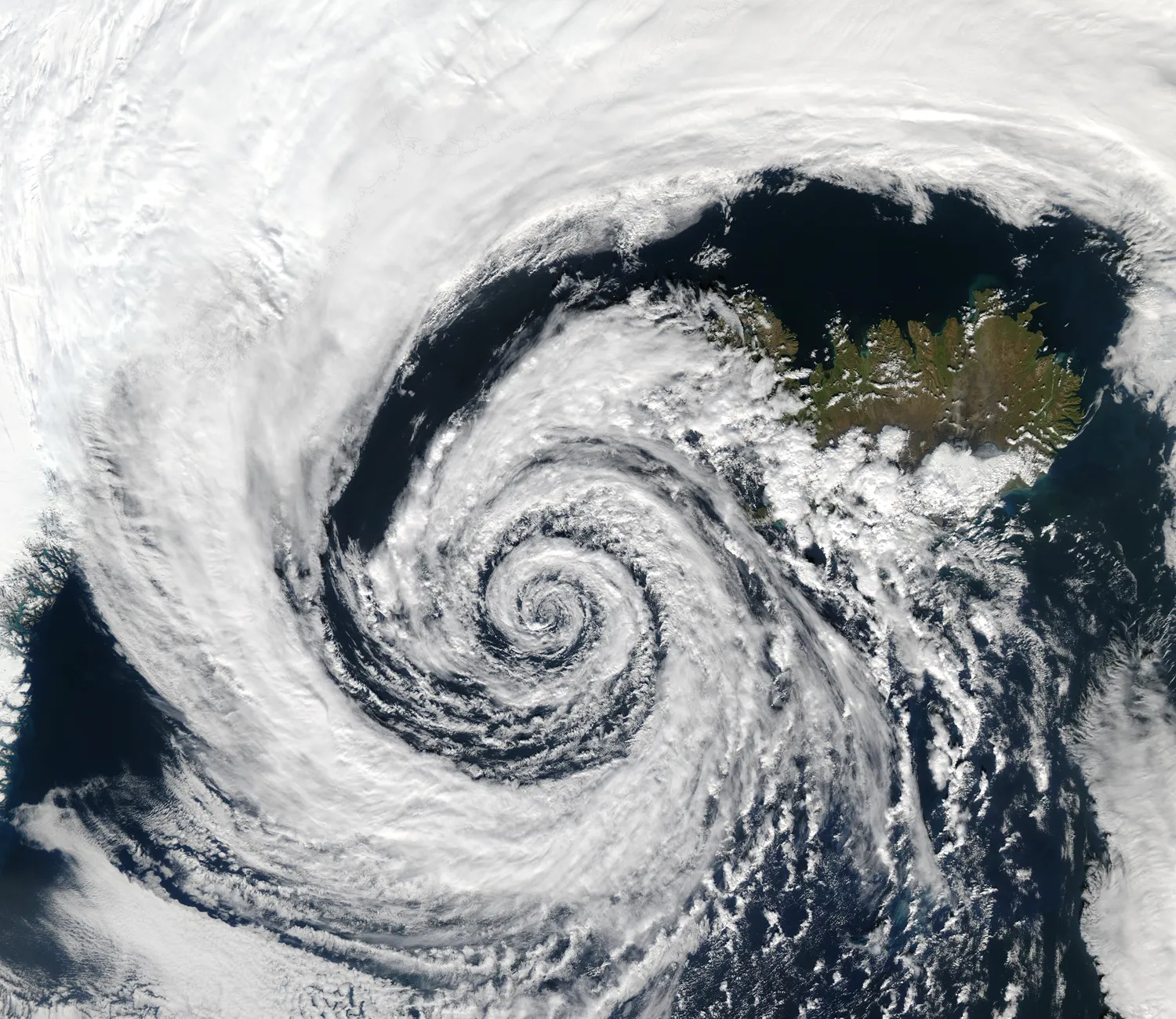
A beautifully-formed low-pressure system swirls off the southwestern coast of Iceland, illustrating the maxim that "nature abhors a vacuum." The vacuum in this case would be a region of low atmospheric pressure. In order to fill this void, air from a nearby high-pressure system moves in, in this case bringing clouds along for the ride. And because this low-pressure system occurred in the Northern Hemisphere, the winds spun in toward the center of the low-pressure system in a counter-clockwise direction; a phenomenon known as the Coriolis force (in the Southern Hemisphere, the Coriolis force would be manifested in a clockwise direction of movement). The image was taken by the Aqua MODIS instrument on September 4, 2003. by NASA/GSFC, MODIS Rapid Response Team, Jacques Descloitres / Wikimedia Commons (Public domain).
Wind is the horizontal movement of air across Earth's surface and is a key factor in shaping both weather and climate. The movement of air is driven by differences in air pressure, which are caused by uneven heating of the planet by the sun. Understanding why wind blows and how it interacts with Earth's systems is essential for predicting weather, generating energy, and studying the environment.
How Wind Forms and Moves
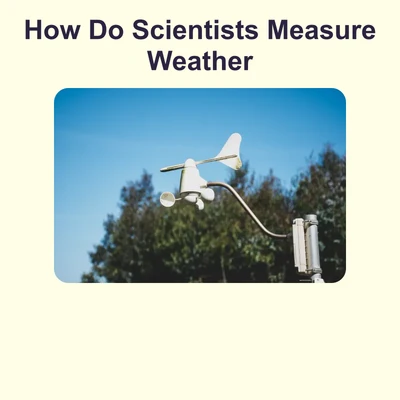
Wind always moves from areas of higher air pressure to areas of lower air pressure. This movement is called a pressure gradient. The greater the difference in air pressure between two areas, the stronger the wind will be. For example, during a strong storm, the pressure gradient can be very steep, resulting in wind speeds over 100 kilometers per hour. The direction of wind is named for where it comes from. A north wind blows from the north toward the south. Scientists measure wind speed with an instrument called an anemometer, which usually has spinning cups that turn faster in stronger winds. A wind vane shows the direction the wind is blowing from, helping meteorologists track weather patterns.
The Coriolis Effect and Global Wind Patterns
One of the most important influences on wind is the Coriolis effect. Because Earth rotates, moving air is deflected: to the right in the Northern Hemisphere and to the left in the Southern Hemisphere. This deflection causes large-scale patterns called global winds. These include the trade winds that blow from east to west near the equator, the westerlies that blow from west to east in mid-latitudes, and the polar easterlies near the poles. These wind belts help distribute heat and moisture around the globe, affecting climate and ocean currents. Without the Coriolis effect, winds would simply move straight from high to low pressure, but Earth's rotation adds complexity to these patterns.
Local Winds and Real-World Applications
Besides global winds, there are many types of local winds that form due to differences in heating in specific areas. For example, sea breezes happen when land heats up faster than water during the day, causing cool air from the sea to move inland. At night, the reverse occurs, creating a land breeze. In mountainous regions, valley breezes and mountain breezes develop as air moves up or down slopes due to temperature differences. Scientists and engineers use knowledge of wind to design wind turbines, which convert wind energy into electricity. In 2022, wind energy supplied about 10% of the world’s electricity, showing the growing importance of understanding wind patterns for renewable energy and environmental sustainability.
Wind is a dynamic part of Earth's atmosphere, linking local and global systems and influencing weather, climate, and human technology. By studying how wind forms, moves, and interacts with other Earth systems, scientists can make better predictions and develop new ways to harness wind as a clean energy source.
Interesting Fact: The fastest wind speed ever recorded on Earth was 407 kilometers per hour (253 miles per hour) during a tornado in Oklahoma, USA!
Comprehension quiz (10 questions)
1. What causes wind to move across Earth's surface?
2. How is wind direction named?
3. Which instrument measures wind speed?
4. What is the Coriolis effect?
5. What is a pressure gradient?
6. Which of these is a global wind pattern?
7. Why do sea breezes form during the day?
8. Wind turbines are used to:
9. True or False: The Coriolis effect makes winds curve to the right in the Northern Hemisphere.
10. True or False: Wind always moves from areas of low pressure to high pressure.
Perfect for the way you teach
- Build comprehension skills
- Auto-graded quiz
- Differentiated reading
- Read together at home
- Improve fluency
- Quiet reading time
- Reading curriculum support
- Independent practice
- Track Lexile growth