Ice Age: When Glaciers Covered Land — Reading Comprehension
Rate this
Premium Resource
Present
Present in classroom. No work saved
Assign
Classroom with student accounts, Track progress
Quick Play
No student accounts, assign with a link
Grades
3
4
5
6
PRINT+DIGITAL RESOURCE
This learning resource is available in interactive and printable formats. The interactive worksheet can be played online and assigned to students. The Printable PDF version can be downloaded and printed for completion by hand.
This engaging science passage for grades 4-5 explores the fascinating Ice Age, a time when much of Earth's land was covered by thick glaciers. Students will learn about the causes of the Ice Age, how glaciers form and move, and how these giant ice sheets shaped the land around us. Key vocabulary terms are highlighted and defined to support learning. The passage also discusses real-world evidence of the Ice Age, such as rocks and valleys carved by glaciers, and explains why understanding our planet's past is important for the future. Designed to meet NGSS science standards, this resource encourages students to think critically about cause and effect in nature and to connect scientific ideas to everyday experiences. Audio integration ensures accessibility for all learners. Includes a glossary, a Spanish translation, an 8-question multiple choice quiz, and thought-provoking writing activities. Perfect for science classrooms and independent study.
CONTENT PREVIEW
Expand content preview
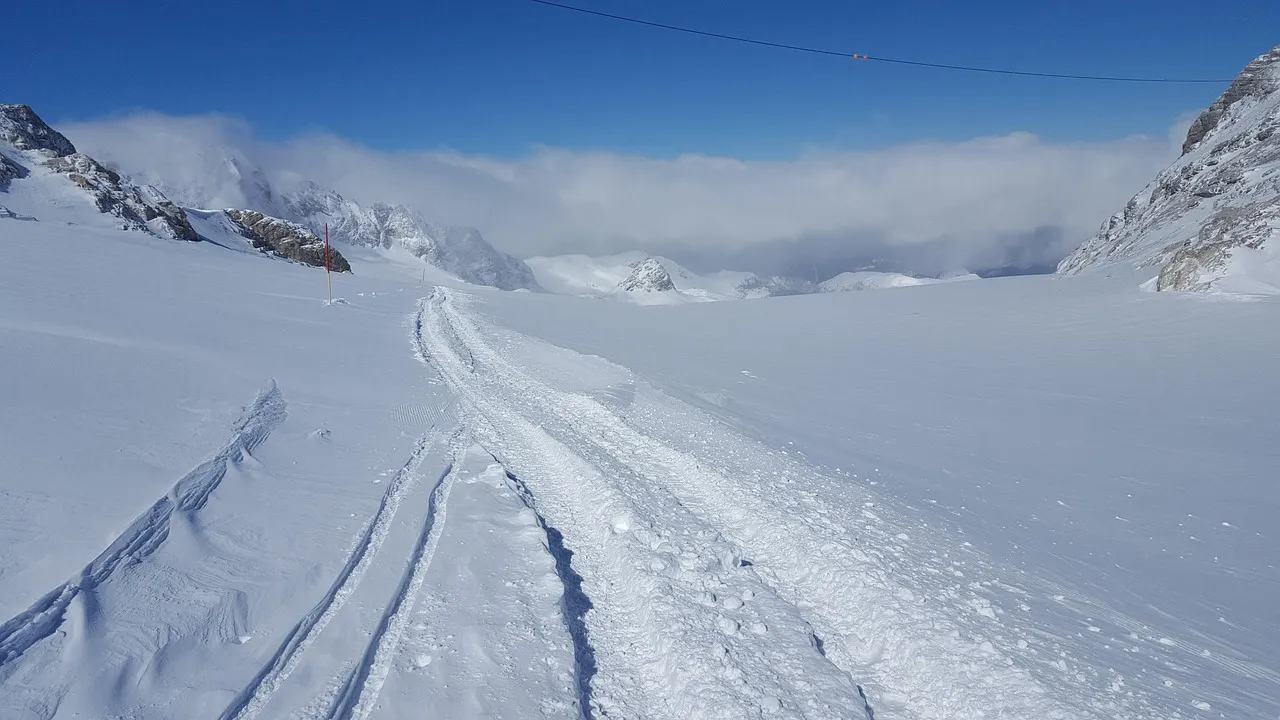
Huge parts of the land were covered by thick sheets of ice called glaciers in Ice Age. Image by tbasien / Source: Pixabay.
An ice age is a time when Earth's climate becomes much colder than normal and huge sheets of ice cover large parts of the land. These enormous sheets of ice are called glaciers. A glacier is a thick mass of ice that forms when snow piles up year after year and gets packed down into solid ice. Throughout Earth's history, there have been several ice ages.
During the most recent ice age, which ended about 10,000 years ago, glaciers covered much of North America, Europe, and Asia. Some of these ice sheets were more than a mile thick! Glacial movement happens when glaciers become so heavy that they slowly slide across the land, kind of like a very slow river of ice. As glaciers moved, they acted like giant bulldozers. They scraped the land beneath them, carved deep valleys, and pushed huge piles of rock and soil ahead of them.
When the climate warmed up and the glaciers melted, they left behind completely changed landscapes. The melting ice created new lakes, formed hills made of the rocks and soil the glaciers had pushed, and left behind wide valleys. Many familiar features we see today were shaped by glaciers. The Great Lakes, many valleys in the northern United States, and rounded hills were all created by glacial activity. This evidence of ice ages shows us that Earth's climate and surface have changed many times throughout history.
Interesting Fact: During the last ice age, so much water was frozen in glaciers that the ocean level was about 400 feet lower than it is today. You could have walked from Asia to North America across a land bridge that is now underwater!
What is a glacier?
A thick mass of packed iceA type of snow stormA frozen lakeA cold wind
When did the most recent ice age end?
About 1,000 years agoAbout 10,000 years agoAbout 100,000 years agoAbout 1 million years ago
Which continents were covered by glaciers?
Africa, Australia, and South AmericaOnly North AmericaNorth America, Europe, and AsiaAntarctica only
How did glaciers change the landscape?
They only made it colderThey carved valleys and created lakesThey made mountains tallerThey had no effect
What landforms were created by glaciers?
Deserts and canyonsVolcanoes and hot springsGreat Lakes, valleys, and rounded hillsRivers and waterfalls only
Why did glaciers move across land?
Wind pushed themThey were so heavy they slidEarthquakes moved themPeople pushed them
Earth has had only one ice age.
TrueFalse
What does 'evidence' mean in the passage?
Information that proves something is trueA type of glacierVery cold weatherA scientific tool
Perfect For:
👩🏫 Teachers
• Reading comprehension practice
• Auto-graded assessments
• Literacy skill development
👨👩👧👦 Parents
• Reading practice at home
• Comprehension improvement
• Educational reading time
🏠 Homeschoolers
• Reading curriculum support
• Independent reading practice
• Progress monitoring
Reading Features:
📖
Reading Passage
Engaging fiction or nonfiction text
❓
Comprehension Quiz
Auto-graded questions
📊
Instant Feedback
Immediate results and scoring
📄
Printable Version
Download for offline reading
🔊
Read Aloud
Voice-over with word highlighting
Reviews & Ratings
No reviews yet. Be the first to share your experience!
Related Content
Tools and Technology in Earth Science
This middle school science reading passage explores the wide range of tools and technologies used in Earth science, from...
MS-ESS2-2MS-ESS3-2MS-ETS1-1MS-PS4-3
Scientific Inquiry in Earth Science
This passage explores scientific inquiry in Earth science for grades 6-8, aligned with NGSS standards MS-ESS1-4, MS-ESS2...
MS-ESS1-4MS-ESS2-1MS-ESS3-5SEP
What Is Earth Science?
This engaging middle school science passage introduces students to the field of Earth science, aligning with NGSS standa...
MS-ESS1MS-ESS2MS-ESS3SEP
Earth: Our Home in Space
This engaging Grade 4-5 science passage, aligned to NGSS, introduces students to Earth's special place in the solar syst...
Earth's Spheres
This middle school science passage introduces students to Earth's four major spheres: the geosphere, hydrosphere, atmosp...
MS-ESS2-4MS-ESS2-6
What Is Space Weather and How Does It Affect the Earth?
This NGSS-aligned science passage for middle school explains what space weather is and how it affects Earth. Students le...
MS-ESS2-2
Earth's Energy Balance
This engaging, NGSS-aligned science passage for grades 6–8 explores Earth's energy balance, a key process that keeps our...
MS-ESS2-6
Earth's Rotation
This middle school science passage, aligned with NGSS standard MS-ESS1-1, focuses on Earth's rotation—how Earth spins on...
MS-ESS1-1
Earth's Land and Water
This 250-word reading passage introduces fourth-grade students to the fundamental concept of how land and water are dist...
NGSS 4-ESS2-2ESS2.B
Earth's Interior
This comprehensive passage for grades 6-8 explores Earth's layered interior, including the crust, mantle, outer core, an...
MS-ESS2-1MS-ESS2-2
Facts About Earth
This engaging science reading passage introduces Grade 4 and 5 students to Earth, our home planet. Aligned with NGSS sta...
Meteorite Impacts on Earth
This engaging science reading passage for Grades 4-5 explores meteorite impacts on Earth, aligning with NGSS standards. ...
Venus: Earth's Twin?
This comprehensive science passage for grades 6-8 examines Venus—often called Earth's twin—by exploring its similarities...
MS-ESS1-2MS-ESS1-3
Earth Changes Over Millions of Years
This engaging, audio-integrated science passage for Grade 4-5 students explores how Earth has changed over millions of y...
Volcano Patterns on Earth
This Grade 4 science reading passage introduces students to volcano patterns on Earth, aligned with NGSS standard 4-ESS2...
NGSS 4-ESS2-2
Earth's Moon Facts
This engaging science passage, 'The Moon: Earth's Companion,' is designed for Grade 4-5 students and aligns with NGSS ge...
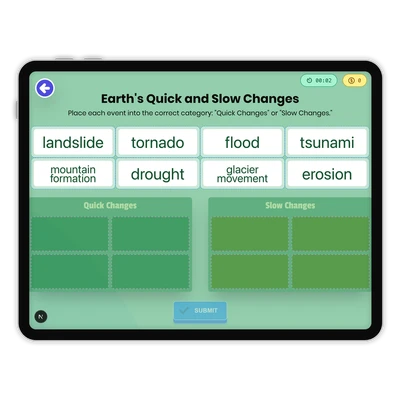
Earth's Quick and Slow Changes
In 'Earth's Quick and Slow Changes,' students categorize 12 Earth events by their speed of occurrence, enhancing underst...
Earth: Our Home Planet
This comprehensive science passage for grades 6-8 explores Earth’s unique characteristics and the interconnected systems...
MS-ESS1-2
Earth's Revolution
This middle school science passage explores the science behind Earth's revolution around the Sun, closely aligned with N...
MS-ESS1-1
Earthquake Patterns on Earth
This engaging 250-word reading passage introduces fourth-grade students to earthquake patterns on Earth, aligned with NG...