This learning resource is available in interactive and printable formats. The interactive worksheet can be played online and assigned to students. The Printable PDF version can be downloaded and printed for completion by hand.
This engaging, NGSS-aligned science passage for grades 6–8 explores Earth's energy balance, a key process that keeps our planet's climate stable. Students will learn how Earth absorbs energy from the Sun and radiates heat back into space, and why equilibrium is essential. The passage explains the science behind the current energy imbalance, how scientists measure it, and what happens to the excess energy, including impacts on the oceans, melting ice, and the atmosphere. Real-world examples and data illustrate cause-and-effect relationships, while a glossary, quiz, writing prompts, and graphic organizers support learning. The resource is audio integrated for accessibility and supports differentiated instruction, with a Spanish translation and a simplified version for struggling readers. Designed for use in classrooms, science labs, or independent study, this comprehensive package meets MS-ESS2-6 standards and builds foundational climate science understanding.
Earth's energy balance is a fundamental process that helps determine the planet's temperature and climate. The Sun sends a constant stream of energy to Earth, warming its surface and atmosphere. For Earth's climate to remain stable, the planet must radiate about as much energy back into space as it receives from the Sun. This balance is crucial because even a small difference can cause significant changes in global temperatures over time.
How Energy Flows and Balances
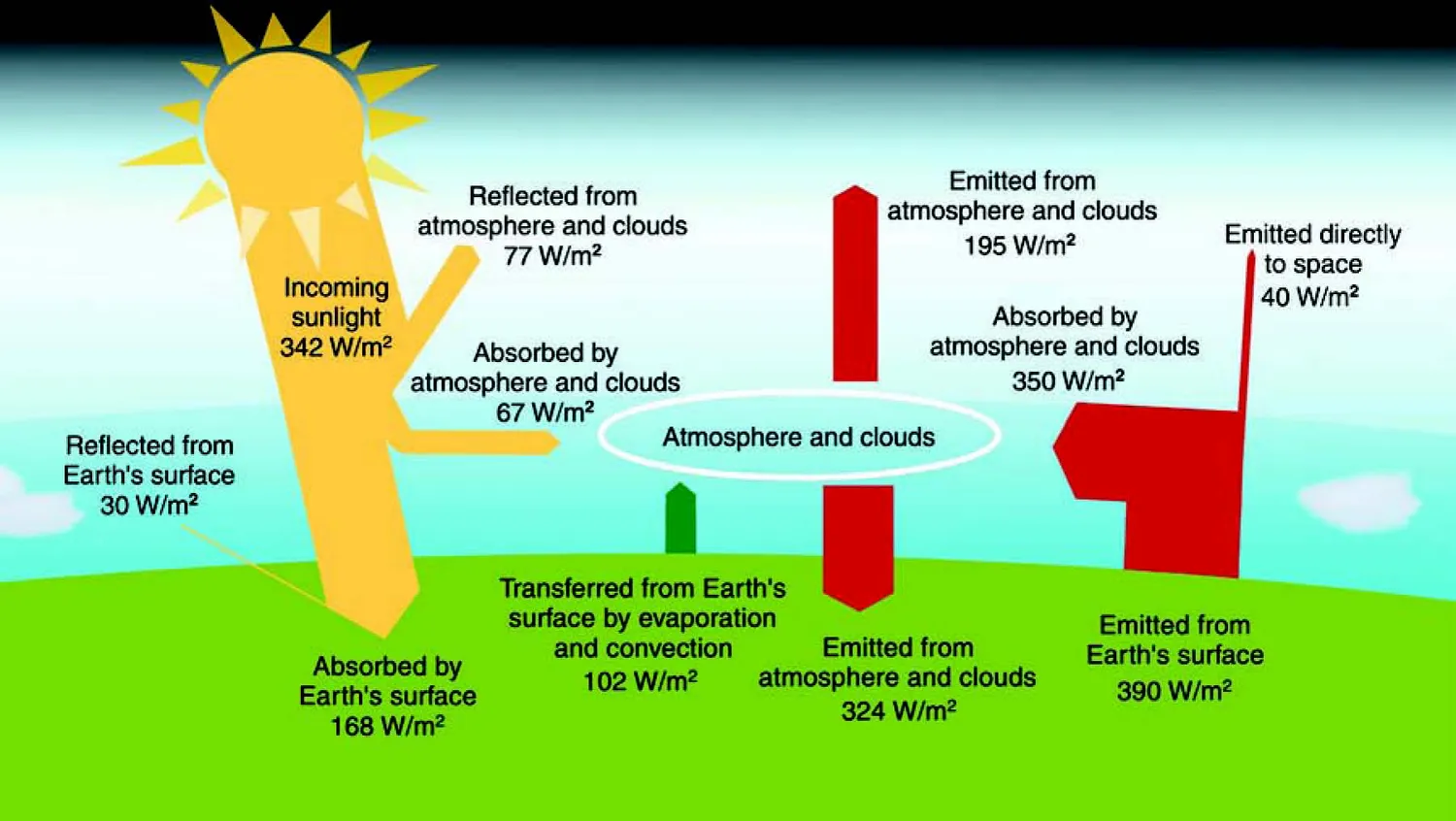
When sunlight reaches Earth, some is reflected back into space by clouds, ice, and bright surfaces. The rest is absorbed by land, water, and air, heating our planet. Earth cannot keep absorbing energy without consequence, so it releases energy back out in the form of infrared radiation, which is a type of heat energy invisible to our eyes. Scientists have found that, on average, about 30% of incoming solar energy is reflected, and 70% is absorbed. However, the energy Earth radiates back must match what it absorbs for temperatures to stay steady. Instruments on satellites and ground stations measure these flows, confirming the energy exchange.
Current Imbalance and Its Effects
Recently, measurements show that Earth is absorbing more energy than it radiates, creating an energy imbalance. This imbalance, even if it is less than 1%, is enough to cause global warming. The extra heat does not stay only in the air. Scientists estimate that about 90% of the excess energy is absorbed by the oceans, raising sea temperatures and causing water to expand. Some energy melts ice caps and glaciers, while a smaller portion heats the atmosphere. This process leads to rising sea levels, reduced ice cover, and more extreme weather events worldwide.
Feedback Loops, Human Impact, and Scientific Understanding
Feedback loops can make the energy imbalance worse. For example, as ice melts, less sunlight is reflected, and more is absorbed, which increases warming. Human activities such as burning fossil fuels add greenhouse gases to the atmosphere, trapping even more infrared radiation and strengthening the imbalance. Scientists use mathematical models, satellite data, and laboratory experiments to understand these changes and predict future impacts. Understanding Earth's energy balance is key to developing solutions for climate change, such as reducing emissions or finding ways to reflect more sunlight.
Earth's energy balance demonstrates the interconnectedness of Earth's systems: atmosphere, land, oceans, and living things. By studying cause and effect within this system, scientists can make informed decisions to protect the planet.
Interesting Fact: In just one hour, the Sun gives Earth enough energy to power all human civilization for a year!
Which statement best describes Earth's energy balance?
It is when Earth radiates as much energy as it absorbs from the Sun.It is when the Sun gives more energy than Earth can handle.It is when Earth's temperature never changes.It is when Earth reflects all sunlight back into space.
What is the primary way Earth loses energy?
By reflecting sunlight as visible lightBy radiating heat as infrared radiationBy sending energy to the MoonBy absorbing more sunlight
According to the passage, where does most of the extra energy go when there is an energy imbalance?
Into the ice capsInto the landInto the oceansInto the plants
Which term describes gases that trap heat in Earth's atmosphere?
What does the word 'imbalance' mean as used in the passage?
A perfect match between incoming and outgoing energyA difference between the energy Earth receives and sends outMore sunlight is reflected than absorbedNo energy is absorbed by Earth
What does the passage suggest happens when ice melts on Earth's surface?
More sunlight is reflectedLess energy is absorbed by the oceansLess sunlight is reflected and more is absorbed, causing more warmingEarth loses all its heat
If humans reduce greenhouse gas emissions, what is a likely result according to the passage?
The energy imbalance may decrease, slowing global warming.The oceans will freeze.Earth will reflect less sunlight.There will be more energy trapped on Earth.
Why is Earth's energy balance important for life on our planet?
It keeps Earth's temperature stable, supporting life.It makes sure Earth has no clouds.It creates more sunlight for plants.It causes earthquakes.
True or False: Earth's energy balance never changes.
TrueFalse
True or False: Infrared radiation is a type of energy Earth sends back into space.
TrueFalse
Perfect For:
👩🏫 Teachers
• Reading comprehension practice
• Auto-graded assessments
• Literacy skill development
👨👩👧👦 Parents
• Reading practice at home
• Comprehension improvement
• Educational reading time
🏠 Homeschoolers
• Reading curriculum support
• Independent reading practice
• Progress monitoring
Reading Features:
📖
Reading Passage
Engaging fiction or nonfiction text
❓
Comprehension Quiz
Auto-graded questions
📊
Instant Feedback
Immediate results and scoring
📄
Printable Version
Download for offline reading
🔊
Read Aloud
Voice-over with word highlighting
Reviews & Ratings
No reviews yet. Be the first to share your experience!
Related Content
How Rainforests Help the Planet
This NGSS-aligned reading passage for middle school students explains how rainforests help regulate Earth’s climate and ...
MS-ESS2-6MS-LS2-5
Understanding the Koppen Climate Classification System
This NGSS-aligned science reading passage explains the Köppen Climate Classification System, a scientific method used to...
MS-ESS2-6MS-LS2-5
What Is a Temperate Climate?
This NGSS-aligned science reading passage introduces middle school students to temperate climates, which have moderate t...
MS-ESS2-6
What Is the Temperate Zone?
This NGSS-aligned reading passage explains the location and characteristics of the temperate zone. Students learn that t...
MS-ESS2-6
Humid Continental Climate Characteristics
This NGSS-aligned reading passage introduces middle school students to the humid continental climate zone. It explains t...
MS-ESS2-6
Humid Continental Climate Countries
This NGSS-aligned reading passage introduces students to countries that have a humid continental climate, including part...
MS-ESS2-6
How Do Highland Climates Differ from Polar Climates?
This NGSS-aligned reading passage helps middle school students compare and contrast highland and polar climates. It expl...
MS-ESS2-6
Which Factor Controls the Water Cycle?
This NGSS-aligned science reading passage explores the question: Which factor controls the water cycle? Students will le...
MS-ESS2-6
What Is Condensation in the Water Cycle?
This NGSS-aligned reading passage introduces students to the role of condensation in the water cycle. Written for middle...
MS-ESS2-6
What Are Natural Causes That Lead to Increased CO₂ Levels in the Carbon Cycle?
This NGSS-aligned middle school science passage explains natural causes that increase carbon dioxide levels in the carbo...
MS-ESS2-6
Earth's Spheres
This middle school science passage introduces students to Earth's four major spheres: the geosphere, hydrosphere, atmosp...
MS-ESS2-4MS-ESS2-6
Weather vs. Climate
This comprehensive passage for grades 6-8 explores the difference between weather and climate, aligning with NGSS standa...
MS-ESS2-6
Factors Affecting Climate
This informative science passage for grades 6-8 explains the main factors that determine climate in different regions of...
MS-ESS2-6
Climate Zones
This passage provides an in-depth look at Earth’s climate zones using the Köppen classification system, covering tropica...
MS-ESS2-6
The Greenhouse Effect
This comprehensive middle school science passage explores the greenhouse effect, a process essential to maintaining Eart...
MS-ESS2-6MS-ESS3-5
Global Wind Patterns
This comprehensive passage introduces middle school students to global wind patterns and atmospheric circulation, aligni...
MS-ESS2-6
Wind
This comprehensive science passage introduces middle school students to the mechanisms of wind formation, focusing on ai...
MS-ESS2-5MS-ESS2-6
El Niño
This middle school science passage provides an in-depth exploration of El Niño, the warm phase of the El Niño-Southern O...
MS-ESS2-6MS-ESS3-5
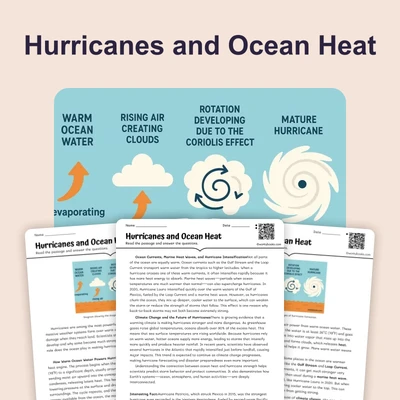
Hurricanes and Ocean Heat
This middle school science passage explores the relationship between hurricanes and ocean heat, aligning with NGSS stand...
MS-ESS2-6MS-ESS3-2
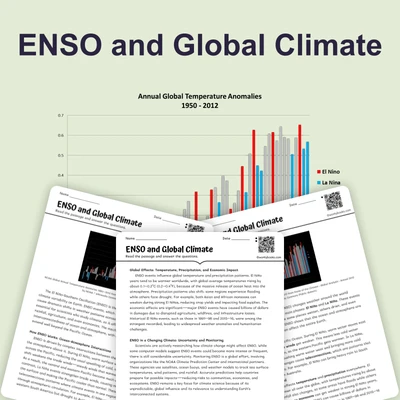
ENSO and Global Climate
This comprehensive passage explores the El Niño-Southern Oscillation (ENSO), a crucial driver of global climate variabil...