This learning resource is available in interactive and printable formats. The interactive worksheet can be played online and assigned to students. The Printable PDF version can be downloaded and printed for completion by hand.
This science reading passage, 'Magnetic or Not? The Power of Magnets,' introduces Grade 4-5 students to the world of magnets and magnetism. Aligned with NGSS standards, it explains what magnets are, how they work, and which materials are magnetic. Students learn the meanings of key vocabulary words like 'magnetic field,' 'poles,' and 'repel,' with each glossary word highlighted for easy reference. The passage describes how magnets are used in everyday life, from fridge doors to recycling centers, and includes an 'Interesting Fact' to spark curiosity. The resource features a Spanish translation, a glossary of key terms, multiple-choice comprehension questions, and writing prompts encouraging critical thinking and connections to real life. The passage is audio integrated for accessibility and supports reading, vocabulary, and scientific reasoning skills. Ideal for classroom or independent study.
CONTENT PREVIEW
Expand content preview
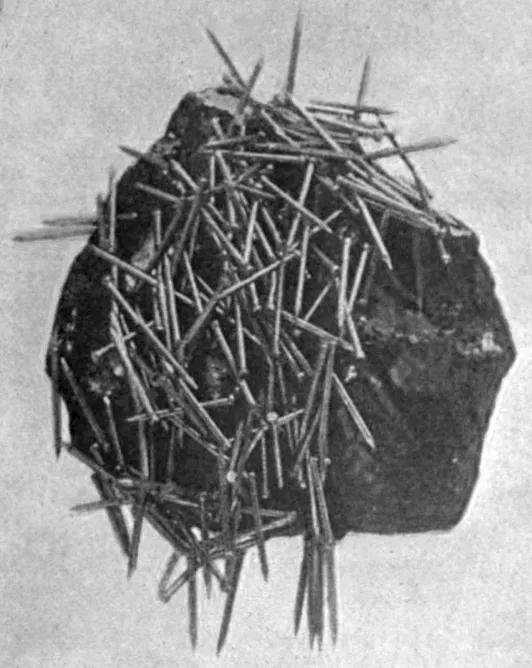
Magnets are special objects that can attract certain materials, like iron, nickel, and cobalt.Image by Fred Anzley Annet / Wikimedia Commons
A magnet is an object that can pull certain materials toward itself. This pulling force is called magnetism. Scientists use magnetism as a property to identify and sort materials. When you test objects with a magnet, you can quickly discover which materials have magnetic properties and which do not.
Not all materials are attracted to magnets. Only materials that contain iron, a type of metal, or certain iron mixtures are magnetic. Iron is a silvery-gray metal found in many everyday objects. Steel, which is made mostly from iron, is also magnetic. Steel is a strong metal used to make items like scissors, paper clips, and nails. When you bring a magnet close to these objects, the magnet pulls them because they contain iron.
Many other materials are not magnetic at all. Wood, plastic, paper, aluminum, and copper do not contain iron, so magnets cannot attract them. A magnet will not pull a wooden pencil, a plastic ruler, or an aluminum can. Even though these objects might be in your classroom, they lack the property that makes something magnetic. This is why scientists say that magnetism is a useful property for sorting materials into two groups: magnetic and non-magnetic.
You can conduct a simple investigation to discover which classroom objects are magnetic. First, make predictions about which items you think a magnet will attract. Then, test each object by bringing a magnet close to it. If the object moves toward the magnet or sticks to it, the object is magnetic. If nothing happens, the object is non-magnetic. This process helps you practice using a single property—magnetism—to classify materials.
Understanding magnetic properties is important in everyday life. Refrigerator magnets stick to refrigerator doors because the doors are made of steel. Magnetic strips on credit cards store information. Compasses use magnets to help people find directions. By learning which materials are magnetic, you develop skills in observation, prediction, and classification that scientists use every day.
Interesting Fact: The Earth itself acts like a giant magnet! Its magnetic field helps protect us from harmful particles from the sun and allows compass needles to point north.
What is the pulling force of magnets called?
GravityMagnetismElectricityFriction
Which metal makes materials magnetic?
CopperAluminumIronPlastic
What is steel mostly made from?
WoodIronPaperCopper
Why won't a magnet attract a wooden pencil?
Wood is too heavyWood contains no ironWood is too lightWood is too long
What should you do first in the investigation?
Test objects immediatelyBuy more magnetsMake predictionsWrite a report
Why do refrigerator magnets stick to doors?
Doors are made of woodDoors are made of plasticDoors are made of steelDoors are made of paper
Aluminum cans are attracted to magnets.
TrueFalse
What does 'magnetic' mean in this passage?
Very heavy objectsAttracted to magnetsMade of plasticVery light objects
Perfect For:
👩🏫 Teachers
• Reading comprehension practice
• Auto-graded assessments
• Literacy skill development
👨👩👧👦 Parents
• Reading practice at home
• Comprehension improvement
• Educational reading time
🏠 Homeschoolers
• Reading curriculum support
• Independent reading practice
• Progress monitoring
Reading Features:
📖
Reading Passage
Engaging fiction or nonfiction text
❓
Comprehension Quiz
Auto-graded questions
📊
Instant Feedback
Immediate results and scoring
📄
Printable Version
Download for offline reading
🔊
Read Aloud
Voice-over with word highlighting
Reviews & Ratings
No reviews yet. Be the first to share your experience!
Related Content
Physical Properties of Matter
This comprehensive reading passage introduces grades 6-8 students to the concept of physical properties of matter, perfe...
MS-PS1-1
Changes in Matter
This engaging science passage introduces Grade 4-5 students to the concept of how matter can change, meeting NGSS standa...
What Are Physical Changes?
This engaging Grade 4-5 science passage introduces students to the concept of physical changes in matter, aligning with ...
Kinetic Theory of Matter
This middle school science reading passage introduces students to the kinetic theory of matter, aligning with NGSS MS-PS...
MS-PS1-4
The Nature of Science
This passage explores the nature of science for middle school students, aligning with NGSS standards MS-ETS1-4, MS-PS1-1...
MS-ETS1-4MS-PS1-1MS-LS1-1
Particle Model of Matter
This comprehensive science reading passage for grades 6-8 explores the particle model of matter, aligning with NGSS stan...
MS-PS1-1MS-PS1-4
Evaporation as Physical Change
This middle school science passage examines the process of evaporation, a fundamental physical change where a liquid tur...
MS-PS1-4
Physical Changes: Deposition
This middle school science passage explores the concept of deposition, a type of physical change where matter transition...
MS-PS1-4
Sublimation as Physical Change
This educational passage for grades 6-8 explores the science of sublimation—a physical change where a solid transforms d...
MS-PS1-4
Physical Changes: Condensation
This middle school science passage explores the process of condensation, the physical change where a gas becomes a liqui...
MS-PS1-4
Is Evaporation a Physical Change
"This reading passage is designed for middle school students to explore the concept of evaporation and its classificatio...
Chemical Properties of Matter
This engaging middle school science passage explores the chemical properties of matter, focusing on how these properties...
MS-PS1-2
Science Vocabulary
This worksheet on domain-specific words will help students learn some science vocabulary. Students will be asked to matc...
L.3.6L.3.4.A
Simple Machines Science Report
This science writing task requires students to clearly explain how three simple machines work using precise domain-speci...
W.5.4
Matter States Word Sort
This interactive word sort focuses on helping students understand the different states of matter through real-world exam...
PS1.A
The Idea of the Atom
This informational science passage introduces middle school students (grades 6-8) to the concept that all matter is made...
MS-PS1-1
Matter States Word Sort
This classification activity helps students understand how particles are arranged in different states of matter. Student...
5-PS1-1
What Is Density?
This comprehensive science passage introduces middle school students (grades 6-8) to the concept of density, aligned wit...
MS-PS1-1
What Is Earth Science?
This engaging middle school science passage introduces students to the field of Earth science, aligning with NGSS standa...
MS-ESS1MS-ESS2MS-ESS3SEP
Citizen Science and Ecological Monitoring
This engaging passage for grades 6-8 introduces the concept of citizen science and its critical role in ecological monit...