Wind Erosion and Deposition — Reading Comprehension
Rate this
Premium Resource
Present
Present in classroom. No work saved
Assign
Classroom with student accounts, Track progress
Quick Play
No student accounts, assign with a link
Grades
5
6
7
8
Standards
MS-ESS2-1
PRINT+DIGITAL RESOURCE
This learning resource is available in interactive and printable formats. The interactive worksheet can be played online and assigned to students. The Printable PDF version can be downloaded and printed for completion by hand.
This comprehensive science reading passage for grades 6-8 explores the processes of wind erosion and deposition, aligning with NGSS standard MS-ESS2-1. Students will discover how wind acts as a powerful erosional force, especially in dry environments, and learn about mechanisms such as deflation and abrasion. The passage details the formation of landforms like desert pavement, ventifacts, yardangs, and various types of dunes. It also covers the importance of loess deposits and the environmental impact of dust storms. Rich in academic vocabulary and context, the text integrates scientific thinking and real-world applications, helping students understand the dynamic interactions between Earth's systems. The resource includes a glossary, differentiation for struggling readers, Spanish translations, multiple-choice and writing activities, and graphic organizers, with audio support for accessibility. Keywords: wind erosion, deposition, dunes, loess, NGSS, middle school science.
CONTENT PREVIEW
Expand content preview
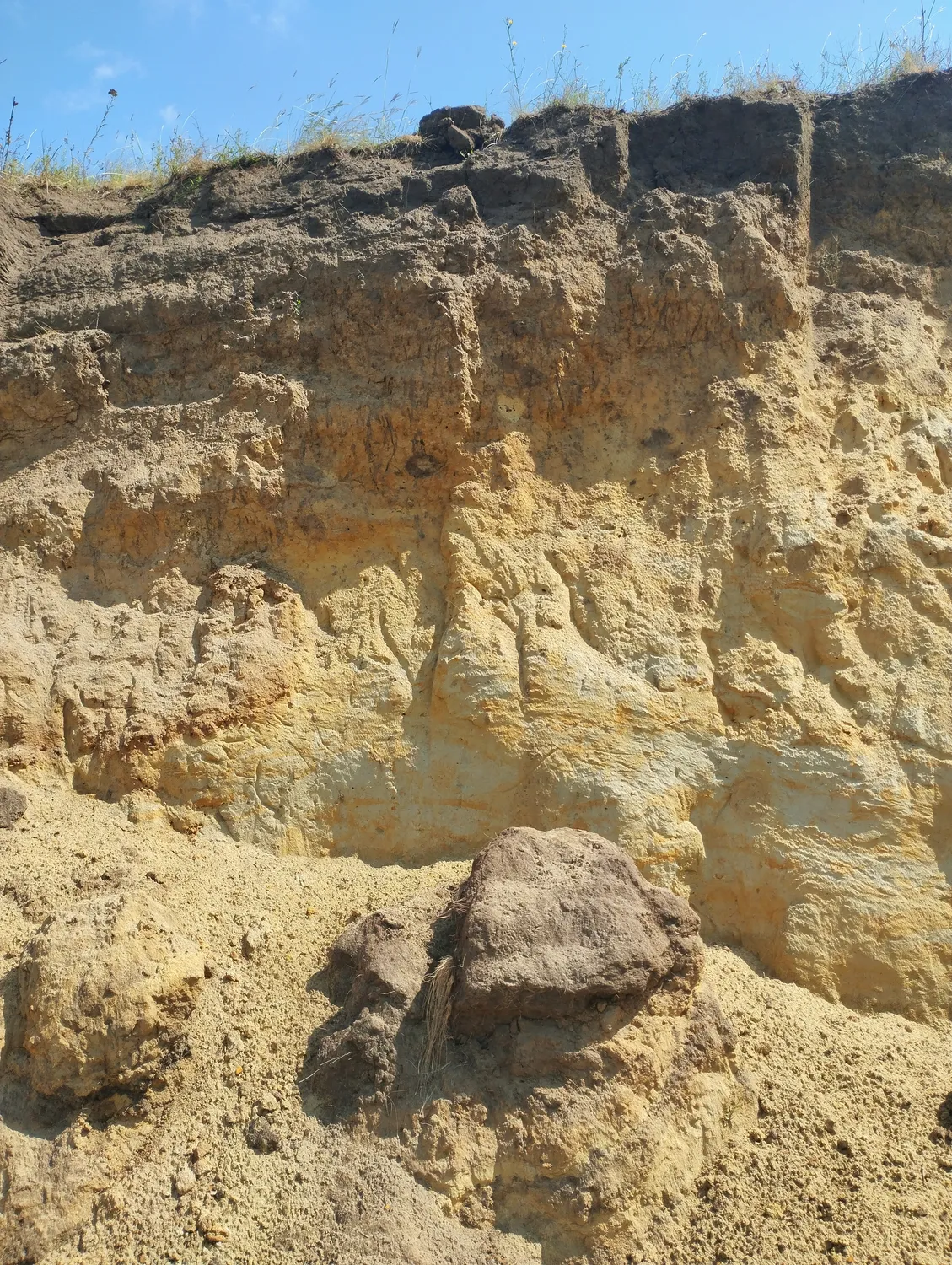
Wind erosion happens through two main processes: deflation and abrasion. / Wikimedia Commons (CC0).
Wind erosion is a process that changes how Earth's surface looks, especially in dry regions such as deserts and grasslands. Scientists have observed that wind can move large amounts of sediment and shape unique landforms. By studying these changes, we learn about Earth's dynamic systems and the powerful role of wind as an agent of erosion and deposition.
How Wind Causes Erosion Wind erosion happens through two main processes: deflation and abrasion. Deflation occurs when wind lifts and removes loose particles like sand, silt, and clay from the surface. Over time, this process can lower the land and leave behind a surface covered with larger rocks, called desert pavement. Abrasion happens when windblown sand grains hit and scrape against rocks, gradually wearing them down. This can create ventifacts, which are rocks with smooth, flat surfaces shaped by the wind, and yardangs, which are streamlined hills carved by constant wind direction. Studies show that wind erosion is most intense where vegetation is sparse, and the ground is dry and loose.
Deposition by Wind: Dunes and Loess When the wind slows, it loses energy and can no longer carry as much sediment. This is called deposition. Wind deposits the particles it once carried, creating various landforms. Sand dunes are hills of sand formed by wind deposition. The shape and size of dunes depend on wind direction, speed, and the amount of sand available. For example, barchan dunes are crescent-shaped and form where winds are steady, while star dunes have pointed arms due to changing wind directions. Another important deposit is loess—fine silt and clay carried long distances by wind. Loess forms thick, fertile soils in places like China and the Midwest United States, supporting productive agriculture. Data from soil studies show that loess deposits can be over 30 meters thick in some areas.
Wind Erosion Hazards and Broader Impacts Wind erosion can also cause environmental hazards. Dust storms occur when strong winds pick up large amounts of fine sediment and carry it over great distances. These storms can reduce air quality, block sunlight, and cause health problems for humans and animals. Scientists monitor dust storms with satellites and weather stations to understand their effects on climate and agriculture. Wind erosion and deposition illustrate how Earth's systems are interconnected: changes in vegetation, climate, or land use can quickly alter how wind affects the land.
Understanding wind erosion and deposition helps us predict changes in landscapes, manage farmland, and protect the environment. These processes are key examples of how Earth's surface is shaped by natural forces, showing the ongoing relationship between Earth's air, land, and living things.
Interesting Fact: Some loess deposits in China are so thick and stable that entire villages and ancient cities were carved into them, creating homes and structures underground.
What is wind erosion?
The process where wind removes and moves soil and sand.The process where water freezes in rocks.The process of plants growing in soil.The process where rocks melt from heat.
Which landform is created when wind leaves behind larger rocks after removing fine particles?
Desert pavementSand duneLoessRiver delta
What happens during abrasion?
Windblown sand grains scrape and wear down rocks.Wind forms new soil layers.Water carves deep valleys.Plants break apart rocks.
What is the main reason that wind erosion is more intense in deserts?
There is little vegetation and the ground is dry and loose.There is a lot of rainfall.The ground is covered in dense forests.There are many lakes and rivers.
What does the word 'loess' mean in the passage?
Fine, wind-blown silt and clay that forms thick, fertile soil deposits.A type of wind-shaped rock.A sharp, pointed sand dune.A storm caused by wind.
In the context of the passage, what is a 'ventifact'?
A rock shaped by wind abrasion.A sand dune with a pointed arm.A thick deposit of loess.A type of dust storm.
Why are dust storms considered hazardous?
They reduce air quality and cause health problems.They make the soil more fertile.They help plants grow faster.They create more sand dunes.
How are dunes and loess deposits similar?
Both are created by wind depositing sediment.Both are formed by rivers.Both are made of large rocks.Both are found only in forests.
True or False: Star dunes are formed by steady winds blowing in one direction.
TrueFalse
True or False: Loess deposits can form very thick and fertile soils.
TrueFalse
Perfect For:
👩🏫 Teachers
• Reading comprehension practice
• Auto-graded assessments
• Literacy skill development
👨👩👧👦 Parents
• Reading practice at home
• Comprehension improvement
• Educational reading time
🏠 Homeschoolers
• Reading curriculum support
• Independent reading practice
• Progress monitoring
Reading Features:
📖
Reading Passage
Engaging fiction or nonfiction text
❓
Comprehension Quiz
Auto-graded questions
📊
Instant Feedback
Immediate results and scoring
📄
Printable Version
Download for offline reading
🔊
Read Aloud
Voice-over with word highlighting
Reviews & Ratings
No reviews yet. Be the first to share your experience!
Related Content
Frost Wedging: How Ice Splits Rock
This passage explains frost wedging as a mechanical weathering process. Aligned with NGSS MS-ESS2-1 (Earth’s systems) a...
MS-ESS2-1MS-ESS2-2RST.6-8.3
Limestone Caves: Nature’s Underground Wonders
This passage explains limestone cave formation through carbonation, aligned with NGSS MS-ESS2-1 (Earth’s systems) and L...
MS-ESS2-1LS2.CRST.6-8.7
Chemical Weathering: The Breakdown of Rocks Through Chemical Reactions
This passage explains chemical weathering processes, aligned with NGSS MS-ESS2-1 (Earth’s systems) and ESS2-2 (surface ...
MS-ESS2-1MS-ESS2-2RST.6-8.4
Talus Slopes: Formation and Features
This earth science passage explains talus slope formation through mechanical weathering processes, aligning with NGSS MS...
MS-ESS2-1MS-ESS2-2RST.6-8.4
Biological Weathering: Types and Examples
This passage details biological weathering processes, connecting to NGSS MS-ESS2-1 (Earth's systems) and LS2.B (ecosyste...
MS-ESS2-1MS-PS1-2RST.6-8.3
The Coldest City in the World: Yakutsk
This NGSS-aligned science passage introduces middle school readers to Yakutsk, the coldest city on Earth. Students will ...
MS-ESS2-1
Igneous Rocks
This comprehensive passage introduces middle school students to igneous rocks, focusing on how these rocks form from mol...
MS-ESS2-1MS-ESS3-1
Sedimentary Rocks
This comprehensive middle school science passage introduces students to sedimentary rocks, detailing their step-by-step ...
MS-ESS2-1MS-ESS2-3MS-ESS3-1
Metamorphic Rocks
This engaging middle school science passage introduces students to the fascinating world of metamorphic rocks. Aligned w...
MS-ESS2-1MS-ESS3-1
Scientific Inquiry in Earth Science
This passage explores scientific inquiry in Earth science for grades 6-8, aligned with NGSS standards MS-ESS1-4, MS-ESS2...
MS-ESS1-4MS-ESS2-1MS-ESS3-5SEP
Contour Lines and Elevation
This passage, designed for grades 6-8 and aligned with NGSS standards MS-ESS2-2 and MS-ESS2-1, introduces students to th...
MS-ESS2-2MS-ESS2-1SEP.4SEP.8
Weathering
This comprehensive science reading passage for grades 6-8 focuses on the concept of weathering, aligning with NGSS stand...
MS-ESS2-1
Erosion
This comprehensive middle school science passage explains erosion—the process that transports weathered rock and soil fr...
MS-ESS2-1
Stream Erosion and Deposition
This middle school science passage, aligned to NGSS MS-ESS2-1, introduces students to the dynamic processes of stream er...
MS-ESS2-1
Glacial Erosion and Deposition
This middle school science passage explores glacial erosion and deposition, focusing on the mechanisms by which glaciers...
MS-ESS2-1
Mass Movements
This NGSS-aligned passage introduces middle school students to the science of mass movements—gravity-driven motions of r...
MS-ESS2-1MS-ESS3-2
Soil Formation and Composition
This comprehensive middle school science passage explores soil formation and composition, perfectly aligned to NGSS stan...
MS-ESS2-1
Constructive and Destructive Forces
This middle school science passage explores how Earth's surface is constantly shaped by the interplay of constructive an...
MS-ESS2-1
Mountains and Mountain Building
This NGSS-aligned passage for grades 6-8 covers the fascinating processes that create Earth's highest landforms—mountain...