Mountains and Mountain Building
Interactive passage with audio narration, comprehension questions, and printable PDF.
By completing this purchase you agree to our Terms of Use and Privacy Policy. Your subscription renews automatically until you cancel. You can cancel anytime from your account settings. All sales are final and non-refundable. Digital content is available for download in your account immediately upon purchase.
What's included
Mountains and Mountain Building preview and details
About this printable Mountains and Mountain Building science reading passage, NGSS-aligned (Grades 5-8)
Sample passage and quiz from Mountains and Mountain Building
Reading passage and comprehension quiz preview
Mountains and Mountain Building
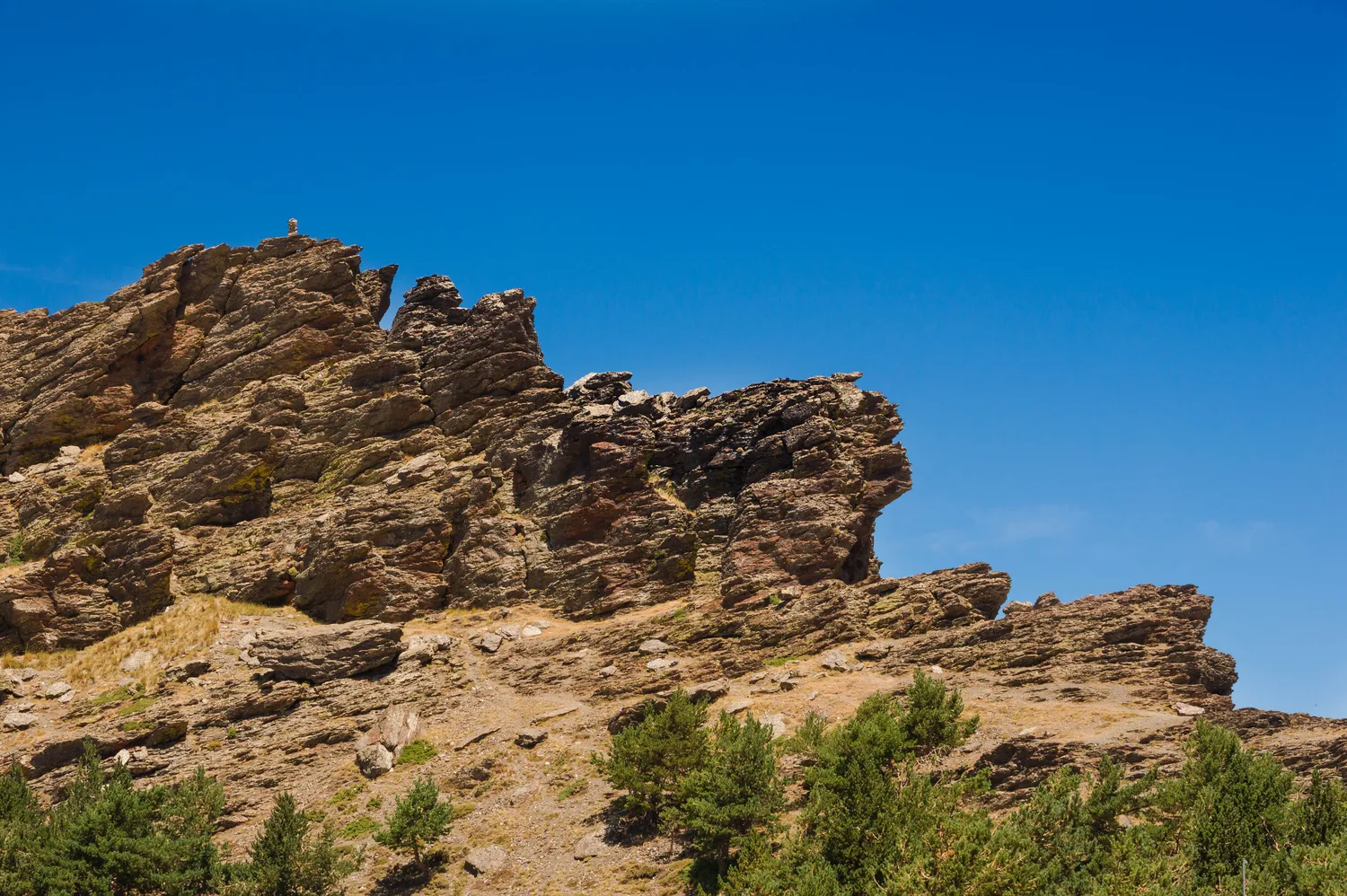
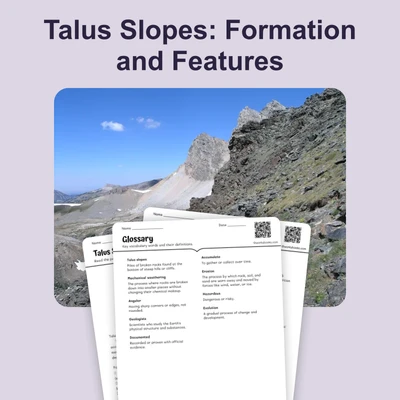
"Rocks Sierra Nevada Spain. Image by Jebulon / Wikimedia Commons (CC0).
Mountains are among the planet’s most impressive landforms, rising high above the surrounding landscape. These towering structures can shape climates, influence where people live, and hold valuable clues about Earth's history. Understanding how mountains form helps scientists explain why continents look the way they do and how forces beneath Earth’s surface affect what we see above ground.
Forces Beneath the Surface: The Mechanism of Mountain Building
Most mountains are created by the movement of large slabs of rock called tectonic plates. When these plates push against each other, the Earth's crust can crumple, break, or melt, resulting in different types of mountain building. Folded mountains form where plates collide and compress, causing layers of rock to buckle and fold. The Himalayas and the Alps are famous examples. Fault-block mountains form where the crust cracks and large blocks are pushed up or down along faults. The Sierra Nevada and the Tetons show this process. Volcanic mountains develop when molten rock, or magma, erupts through the surface and piles up in layers, seen in the Cascades and Andes. Dome mountains are created when magma pushes the crust upward but does not break through, forming rounded hills like the Black Hills.
Features, Erosion, and the Life Cycle of Mountains
Mountains have distinctive features: sharp peaks, long ridges, deep valleys, and narrow passes. Over millions of years, weather and water wear down mountains. Young mountains, like the Himalayas, are high and rugged, while older mountains, such as the Appalachians, are lower and more rounded due to erosion. Scientists determine the age and history of mountains by studying the rocks and landforms. Mountain belts often form at convergent boundaries where plates meet, creating long chains across continents.
Mountains, Climate, and Earth's Systems
Mountains play a key role in shaping climate. When moist air rises up a mountain, it cools and drops its moisture as rain or snow—a process called orographic precipitation. The other side of the mountain, called the rain shadow, is often dry. Mountain building, also known as orogeny, has occurred in major periods throughout Earth's history, producing mountain ranges that influence weather patterns and habitats. The interactions between tectonic forces, erosion, and climate make mountains important parts of Earth's dynamic systems.
Mountains are vital for life on Earth, providing water sources, habitats, and natural barriers. By studying how mountains form and change, scientists gain insight into Earth's past and future. The processes that build and shape mountains are still active today, showing that our planet is always changing.
Interesting Fact: The Himalayas are growing taller each year because the Indian plate is still pushing into the Eurasian plate at a rate of about 5 centimeters (2 inches) per year!
Comprehension quiz (10 questions)
1. What causes most mountains to form?
2. Which type of mountain forms when magma erupts and piles up on the surface?
3. What is a rain shadow?
4. Which feature is described as the pointed top of a mountain?
5. What does the word 'orogeny' mean as used in the passage?
6. What is a 'convergent boundary'?
7. Why are older mountains usually lower and more rounded than younger mountains?
8. How do mountains influence climate?
9. True or False: Dome mountains are formed when magma pushes up but never erupts through the surface.
10. True or False: The Himalayas are getting shorter every year because of erosion.
Perfect for the way you teach
- Build comprehension skills
- Auto-graded quiz
- Differentiated reading
- Read together at home
- Improve fluency
- Quiet reading time
- Reading curriculum support
- Independent practice
- Track Lexile growth