This learning resource is available in interactive and printable formats. The interactive worksheet can be played online and assigned to students. The Printable PDF version can be downloaded and printed for completion by hand.
This passage examines the history and significance of the Inuit kayak, an advanced invention developed by Arctic peoples for hunting and transportation in extreme environments. Students will explore the kayak’s unique materials, such as sealskin and driftwood, and learn how its design reflects the ingenuity and adaptability of the Inuit in response to geographic challenges. The text includes primary and archaeological evidence and highlights the kayak’s impact on daily life and cross-cultural exchanges. Activities support historical thinking, including multiple-choice questions, evidence-based writing, and graphic organizers. Materials are aligned with CA HSS 6.1 and RH.6-8.2, and include a Spanish translation and read aloud audio for accessibility. This resource is ideal for building content knowledge and academic vocabulary related to world history, inventions, and Native American cultures.
CONTENT PREVIEW
Expand content preview
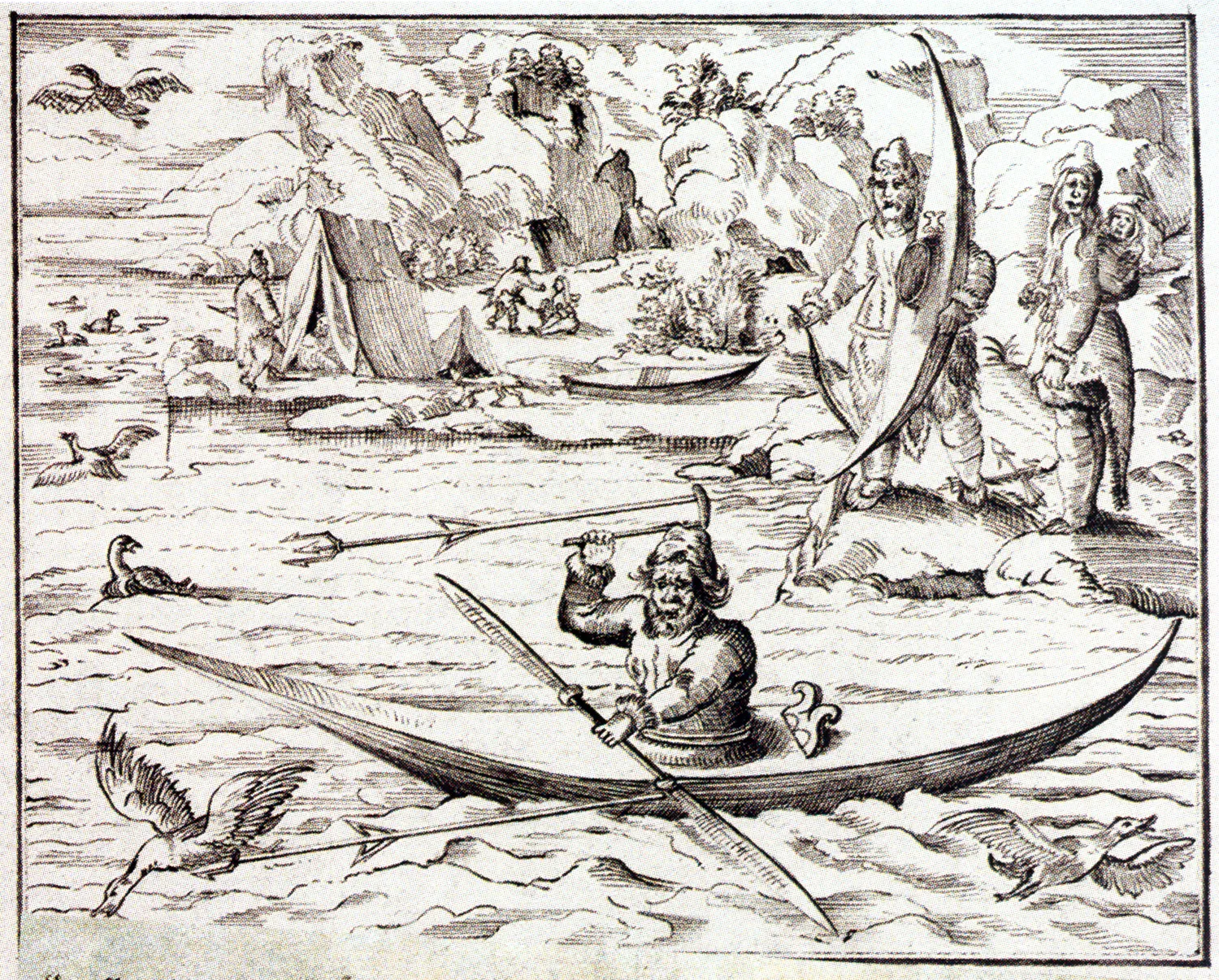
"Inuit hunting" by / Wikimedia Commons (Public domain).
The Inuit kayak stands as one of the most remarkable inventions of Arctic peoples. Developed thousands of years ago by the Inuit, Yup'ik, and Aleut peoples, the kayak was crucial for survival in the icy regions of North America, especially in present-day Alaska, Canada, and Greenland. These boats were not just tools for travel, but also for hunting, fishing, and connecting distant communities scattered across frozen landscapes.
The design of the kayak reflects deep adaptation to the Arctic environment. Kayaks were constructed from materials available in the region: a frame of driftwood or whalebone, covered tightly with sealskin to keep out water. The lightweight frame allowed the kayak to move swiftly over icy seas and maneuver around floating ice. Archaeological evidence, such as preserved kayaks found in Greenland dating back over 2,000 years, shows that these designs changed little over centuries, demonstrating their effectiveness. One famous primary source is the 1577 drawing by explorer Martin Frobisher, which depicts Inuit hunters in kayaks near Baffin Island. Such sources give historians clues about the daily lives and skills of Arctic peoples.
Kayaks were essential for hunting marine animals like seals, whales, and fish, which were key to the Inuit diet. The waterproof design kept hunters dry and safe, even in freezing temperatures. Traditional kayaks were built to fit their owners exactly, making them easy to control and almost silent in the water. This allowed hunters to approach animals without being noticed. Some kayaks had special compartments for storing tools, harpoons, or caught animals. Young Inuit learned kayak skills from an early age, and expert builders held respected roles in the community, reflecting a social hierarchy based on skill and experience.
Over time, the kayak’s technology spread beyond the Arctic. European explorers in the 16th and 17th centuries recorded encounters with Inuit kayaks and brought knowledge of their construction back to Europe. In the 19th and 20th centuries, kayaks influenced boat designs for sport and recreation worldwide. Despite changes in materials—modern kayaks are often made from plastic or fiberglass—the basic form and function remain similar. Today, kayaks continue to connect people to water, both as a symbol of Indigenous innovation and as a popular watercraft globally.
The significance of the Inuit kayak lies in its demonstration of human ingenuity and engineering. The kayak shows how culture, geography, and resourcefulness intersect to solve environmental challenges. Its history helps us understand how societies adapt, innovate, and share technologies across cultures and generations.
By studying the Inuit kayak, we can see how environments shape human creativity and how inventions from diverse cultures influence the world. This theme is central to world history, connecting the past to present-day technology and global interaction.
Interesting Fact: Some traditional Inuit kayaks were so expertly crafted that they could be flipped and righted again even if capsized, a skill called an "Eskimo roll."
What material covered traditional kayak frames?
SealskinCanvasBirch barkCotton
Where did Inuit develop the kayak?
Arctic regionsTropical forestsDesertsMountains
Who drew Inuit kayaks in 1577?
Martin FrobisherLeif EriksonJohn SmithSakagawea
Why were kayaks built to fit their owners?
For better controlFor decorationTo carry more peopleTo be heavier
What effect did kayaks have on hunting?
Allowed silent approachMade hunting harderScared animalsWere only for travel
Why do historians study primary sources?
To get firsthand evidenceTo guess about the pastFor funBecause they are new
Kayaks are only used today in the Arctic. (True/False)
FalseTrue
What does 'adaptation' mean in the passage?
Change to fit new conditionsA type of animalA kind of boatA hunting tool
Perfect For:
👩🏫 Teachers
• Reading comprehension practice
• Auto-graded assessments
• Literacy skill development
👨👩👧👦 Parents
• Reading practice at home
• Comprehension improvement
• Educational reading time
🏠 Homeschoolers
• Reading curriculum support
• Independent reading practice
• Progress monitoring
Reading Features:
📖
Reading Passage
Engaging fiction or nonfiction text
❓
Comprehension Quiz
Auto-graded questions
📊
Instant Feedback
Immediate results and scoring
📄
Printable Version
Download for offline reading
🔊
Read Aloud
Voice-over with word highlighting
Reviews & Ratings
No reviews yet. Be the first to share your experience!
Related Content
Native American Respect for Nature
This engaging history reading passage explores Native American respect for nature, emphasizing the close relationship be...
D2.HIS.2.3-5D2.HIS.3.3-5RI.4.3RI.4.4
Native Americans and Slavery in Early America
This comprehensive U.S. history reading passage explores the complex relationship between Native Americans and slavery d...
D2.HIS.2.3-5D2.HIS.3.3-5RI.4.3RI.4.4
Native American Tribes Across America
This engaging history reading passage introduces students to Native American tribes across America, focusing on their da...
D2.HIS.1.3-5D2.HIS.2.3-5RI.4.1RI.4.2
Traditional Native American Clothing
This engaging history passage explores traditional Native American clothing and how it reflected the environment, values...
D2.HIS.2.3-5D2.HIS.3.3-5RI.4.3RI.4.4
Native American Basket Weaving
This passage examines the historical importance of basket weaving among Indigenous Americans, highlighting how different...
Native American Treaties
This passage examines early Native American treaties, agreements that were meant to establish peace and boundaries betwe...
D2.HIS.2.3-5D2.HIS.3.3-5RI.4.3RI.4.4
Native American Land Sales
This comprehensive history reading passage examines Native American land sales in U.S. history and asks students to cons...
D2.HIS.2.3-5D2.HIS.3.3-5RI.4.3RI.4.4
Disease and Native Americans
This engaging U.S. history reading passage explores the dramatic impact of European diseases on Native American populati...
D2.HIS.2.3-5D2.HIS.3.3-5RI.4.3RI.4.4
The Cherokee Nation: History and Culture
This reading passage explores the rich history and culture of the Cherokee Nation, one of the largest Native American tr...
D2.HIS.2.3-5D2.HIS.14.3-5RI.4.3RI.4.4RI.4.10
Columbian Exchange Impact on Native Americans
This passage examines the complex effects of the Columbian Exchange on Native Americans, analyzing the causes, consequen...
D2.HIS.2.3-5D2.HIS.3.3-5RI.4.3RI.4.4
Native American Allies in Colonial Wars
This passage examines the complex role of Native American nations as allies and adversaries during the colonial wars of ...
D2.HIS.2.3-5D2.HIS.3.3-5RI.4.3RI.4.4
Spanish Missions Impact on Native American
This reading passage explores the complex impact of Spanish missions on Native American culture in what is now the south...
D2.HIS.2.3-5D2.HIS.3.3-5RI.4.3RI.4.4
Native American Civilizations Before European Contact
This engaging U.S. History reading passage explores Native American civilizations before European contact, focusing on t...
D2.HIS.2.3-5D2.HIS.3.3-5RI.4.3RI.4.4
Moccasins: Soft Leather Footwear
This passage explores the history and significance of moccasins—a soft leather footwear invented by Native American nati...
Native vs European Land Views
This passage examines the contrasting beliefs about land between Native American societies and European settlers, highli...
D2.HIS.2.3-5D2.HIS.3.3-5RI.4.3RI.4.4
Native Americans in Revolutionary War
This engaging U.S. history reading passage explores how Native American nations made difficult decisions during the Amer...
D2.HIS.2.3-5D2.HIS.3.3-5RI.4.3RI.4.4
Black History Month Word Search
RF.4.3RF.5.3L.4.4L.5.4
Pemmican: High-Energy Preserved Food
This engaging history reading passage explores the invention and significance of pemmican, a high-energy preserved food ...
American History Word Search
Word search on American History Word Search! Vocabulary practice aligned to Common Core standards!