Muckrakers Expose Problems in Society
Interactive passage with audio narration, comprehension questions, and printable PDF.
By completing this purchase you agree to our Terms of Use and Privacy Policy. Your subscription renews automatically until you cancel. You can cancel anytime from your account settings. All sales are final and non-refundable. Digital content is available for download in your account immediately upon purchase.
What's included
Part of this bundle

Muckrakers Expose Problems in Society preview and details
About this printable Muckrakers Expose Problems in Society reading passage (Grades 3-5)
Sample passage and quiz from Muckrakers Expose Problems in Society
Reading passage and comprehension quiz preview
Muckrakers Progressive Era
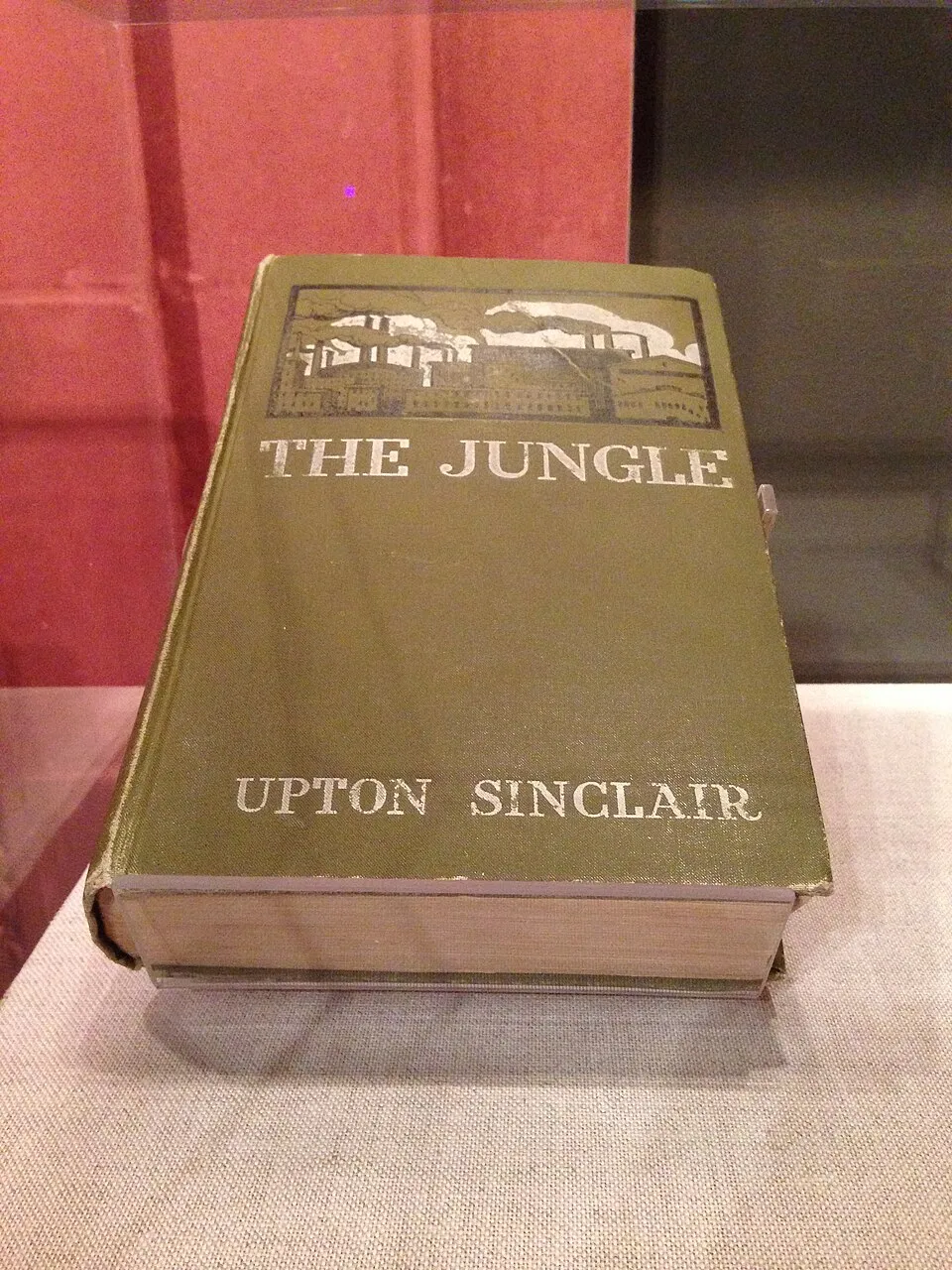
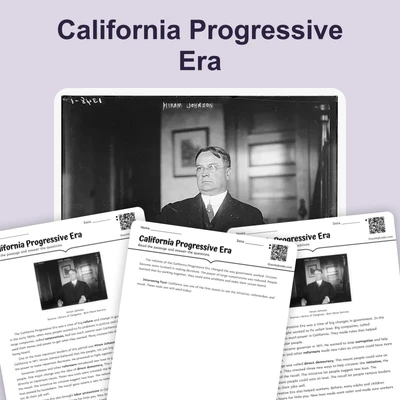
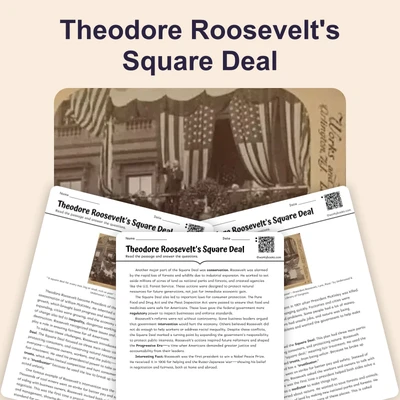
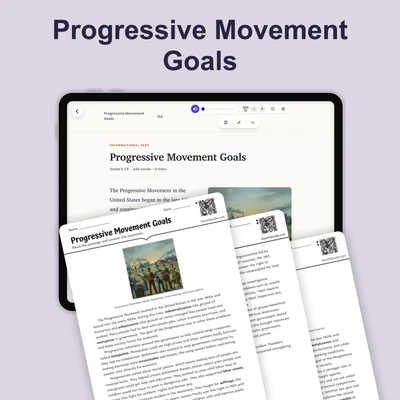
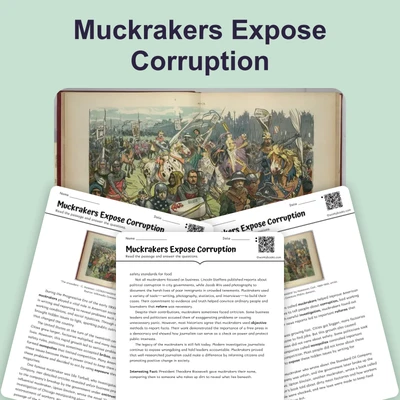
The Progressive Era in the United States began in the late 1800s and lasted into the early 1900s. During this time, many people wanted to fix problems in society. Some brave journalists called muckrakers played a very important role. They used writing and photography to show the public the truth about unsafe food, unfair work, and government corruption.
Muckrakers worked hard to uncover hidden problems. They visited factories, meatpacking plants, and poor neighborhoods. They talked to workers and took notes. They wrote articles and books to tell people what they saw. Their stories were published in newspapers and magazines. One famous muckraker, Upton Sinclair, wrote a book called "The Jungle." He described the dirty and dangerous conditions in meatpacking plants. After people read his book, they were shocked and demanded change. The government soon passed new food safety laws to protect people.
Another important muckraker was Ida Tarbell. She investigated the powerful Standard Oil Company. Tarbell showed how the company used unfair methods to hurt small businesses. Her work helped the government break up big trusts and make rules for fair business practices.
Jacob Riis was a photographer and writer. He took pictures of crowded city neighborhoods where many families lived in tiny, dark apartments. His photographs made people see the need for better housing and living conditions.
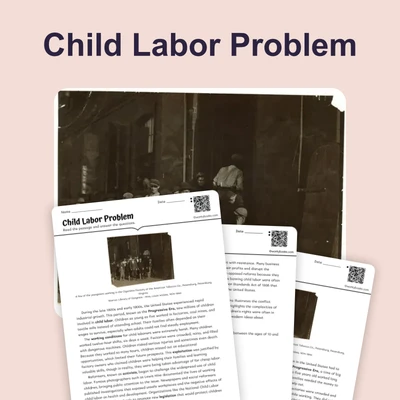
Muckrakers believed that telling the truth could help fix problems. Their work led to new laws about food safety, working hours, and child labor. These changes made life better for many Americans. The muckrakers’ courage and hard work proved that people can make a difference by speaking out.
Today, investigative journalism is still important. Journalists continue to uncover problems and help bring about reform. The muckrakers of the Progressive Era showed how the power of words and pictures can create real change.
Interesting Fact: President Theodore Roosevelt gave muckrakers their name. He compared their work to people who "raked up" dirt to show what was hidden.
Comprehension quiz (8 questions)
1. Who wrote "The Jungle"?
2. What did muckrakers do?
3. Who took photos of poor city life?
4. Why was Ida Tarbell important?
5. What effect did muckrakers have?
6. Muckrakers believed telling the truth would...
7. The Progressive Era ended in 1950. True or false?
8. What does "corruption" mean?
Perfect for the way you teach
- Build comprehension skills
- Auto-graded quiz
- Differentiated reading
- Read together at home
- Improve fluency
- Quiet reading time
- Reading curriculum support
- Independent practice
- Track Lexile growth