Pharaohs: God-Kings of Egypt — Reading Comprehension
Rate this
Premium Resource
Present
Present in classroom. No work saved
Assign
Classroom with student accounts, Track progress
Quick Play
No student accounts, assign with a link
Grades
5
6
7
8
PRINT+DIGITAL RESOURCE
This learning resource is available in interactive and printable formats. The interactive worksheet can be played online and assigned to students. The Printable PDF version can be downloaded and printed for completion by hand.
Explore the fascinating world of the pharaohs, the god-kings of ancient Egypt, in this rigorous history reading passage. Students will examine how pharaohs ruled as both political and religious leaders, constructed monumental works like the pyramids, and influenced Egypt’s unique social structure. The passage uses primary sources, archaeological evidence, and clear academic vocabulary to support historical thinking skills. Included are a glossary of key terms, comprehension activities, writing prompts, graphic organizers, and a timeline to deepen understanding. This resource is fully aligned with CA HSS 6.2 and CCSS RH.6-8 standards. An audio read aloud and full Spanish translation are included, making it accessible for all learners. Perfect for exploring geography, leadership, and the lasting impact of ancient civilizations.
CONTENT PREVIEW
Expand content preview
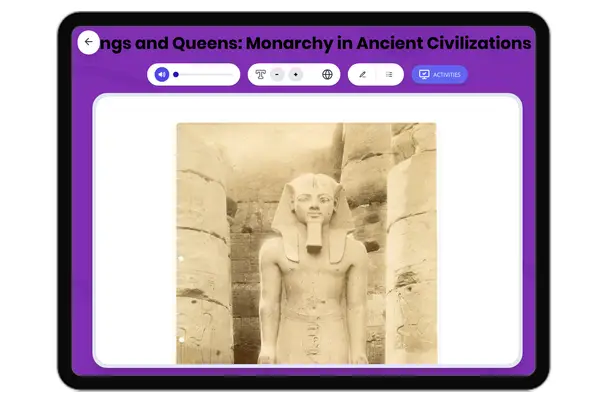
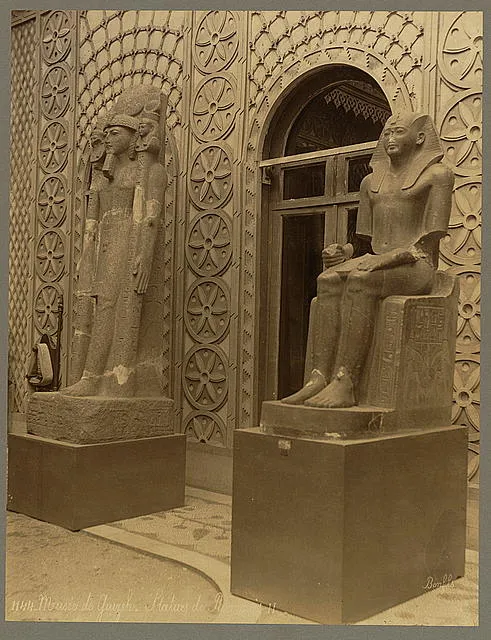
Musée de Guizeh. Statues de Ramessés II. Source: Library of Congress - Maison Bonfils (Beirut, Lebanon)
Pharaohs were the rulers of ancient Egypt, serving as both kings and religious leaders for over 3,000 years. The first dynasties began around 3100 BCE, when Upper and Lower Egypt were united under a single monarch. The power and identity of the pharaoh were deeply connected to Egypt’s geography, especially the life-giving Nile River, which made the land fertile and allowed civilization to thrive along its banks.
The role of the pharaoh was unique. Egyptians believed their pharaoh was not only a human ruler but also a living god, the earthly form of Horus and later identified with Osiris after death. This belief gave the pharaoh immense authority over all aspects of Egyptian society, including law, religion, and foreign policy. The pharaoh’s decisions shaped the lives of everyone, from powerful nobles to ordinary farmers. Pharaohs wore special symbols, such as the double crown representing the unity of Upper and Lower Egypt, and the crook and flail, signs of leadership and responsibility. The title of pharaoh itself comes from the Egyptian term 'per-aa,' meaning 'great house.'
Pharaohs organized large-scale construction projects that still inspire awe today. The most famous are the pyramids at Giza, built during the Old Kingdom (about 2600–2100 BCE). These massive tombs were constructed to ensure the pharaoh’s safe passage to the afterlife and to display their power. The Great Pyramid of Khufu is a primary source of archaeological evidence, revealing the advanced engineering skills of ancient Egyptians. Inscriptions and wall paintings inside tombs, like those in the Valley of the Kings, offer firsthand details about royal burials, daily life, and beliefs.
Egyptian society was highly hierarchical, with the pharaoh at the very top. Below him were priests, officials, scribes, artisans, and farmers. The pharaoh’s court was responsible for collecting taxes, managing irrigation, and defending Egypt’s borders. Famous pharaohs include Hatshepsut, one of the few women to rule as pharaoh, and Ramses II, known for his military campaigns and monument building. Over time, the power of the pharaoh changed, sometimes weakening when rivals challenged the throne or when Egypt was invaded by foreign powers, such as the Hyksos or later the Persians.
The legacy of the pharaohs endures in monuments, art, and the stories they left behind. Their rule helped unify Egypt and create a culture admired by the ancient world. Studying the pharaohs connects us to big questions about leadership, religion, and how geography shapes civilization.
Interesting Fact: Pharaohs sometimes married their siblings to keep the royal bloodline "pure." This practice was believed to strengthen their divine right to rule.
What was the pharaoh's main role?
King and religious leaderOnly a soldierOnly a farmerOnly a scribe
What river was key for Egypt?
Nile RiverAmazon RiverMississippi RiverYellow River
What were the pyramids used for?
Tombs for pharaohsHomes for farmersSchools for scribesMarkets for trade
Why did pharaohs build pyramids?
For afterlife and powerAs librariesTo store waterFor sports
How was Egyptian society organized?
HierarchicalDemocraticEqual for everyoneRandom
Who was Hatshepsut?
A female pharaohA scribeA soldierA farmer
Pharaohs always kept power easily. True or false?
TrueFalse
What does 'dynasty' mean?
Rulers from same familyA big pyramidA sacred animalA city in Egypt
Perfect For:
👩🏫 Teachers
• Reading comprehension practice
• Auto-graded assessments
• Literacy skill development
👨👩👧👦 Parents
• Reading practice at home
• Comprehension improvement
• Educational reading time
🏠 Homeschoolers
• Reading curriculum support
• Independent reading practice
• Progress monitoring
Reading Features:
📖
Reading Passage
Engaging fiction or nonfiction text
❓
Comprehension Quiz
Auto-graded questions
📊
Instant Feedback
Immediate results and scoring
📄
Printable Version
Download for offline reading
🔊
Read Aloud
Voice-over with word highlighting
Reviews & Ratings
No reviews yet. Be the first to share your experience!
Related Content
Geography of Ancient Egypt
This passage explores the vital role of geography in the rise of Ancient Egypt, focusing on the importance of the Nile R...
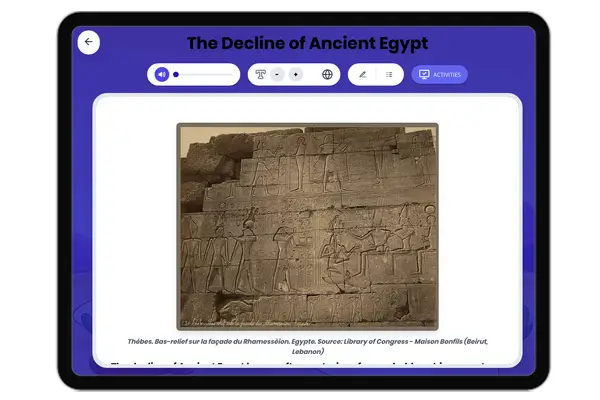
The Decline of Ancient Egypt
This detailed passage examines the decline of Ancient Egypt, exploring the complex causes behind the fall of one of hist...
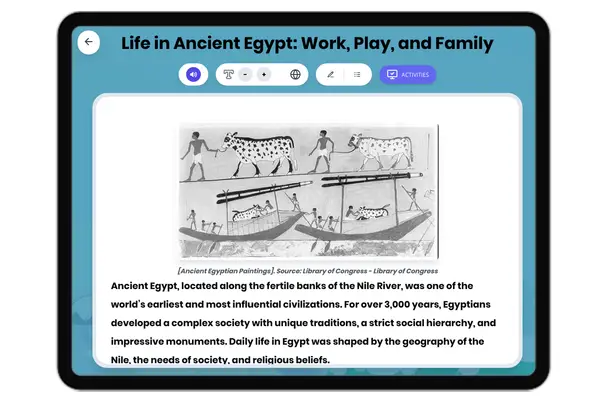
Daily Life in Ancient Egypt
Explore the fascinating world of daily life in Ancient Egypt with this comprehensive history reading passage. Students w...
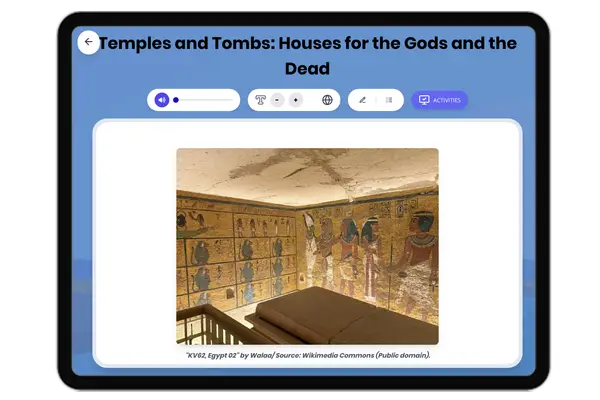
Temples and Tombs in Ancient Egypt
This passage explores the significance of temples and tombs in Ancient Egypt, focusing on their religious, social, and c...
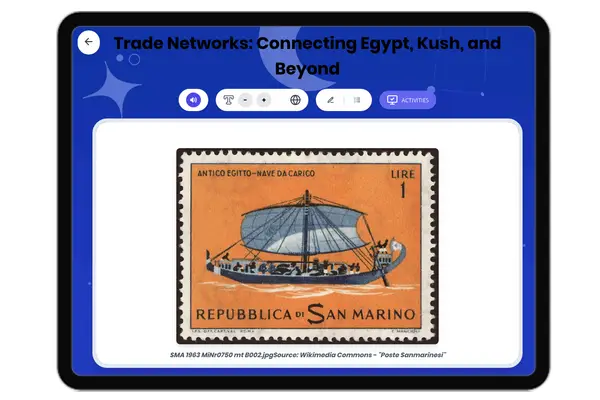
Egypt Kush Trade
This engaging history reading passage explores the complex trade networks that connected Ancient Egypt, Kush, and region...
6.2.3RH.6-8.1RH.6-8.4RH.6-8.7
New Kingdom Egypt
This engaging history reading passage explores the rise of Ancient Egypt during the New Kingdom, when Egypt became a pow...
CA HSS 6.2RH.6-8.2WHST.6-8.2
Evidence in Ancient History
This engaging history reading passage investigates how archaeologists and historians discover clues about how ancient pe...
Why Egypt Wanted Nubian Gold
This engaging passage explores the relationship between Ancient Egypt and the Kingdom of Kush (Nubia), focusing on why t...
How Pharaohs Governed Egypt
This history reading passage explores how Ancient Egypt was governed, highlighting the roles of the pharaoh, vizier, off...
Art and Architecture in Ancient Egypt
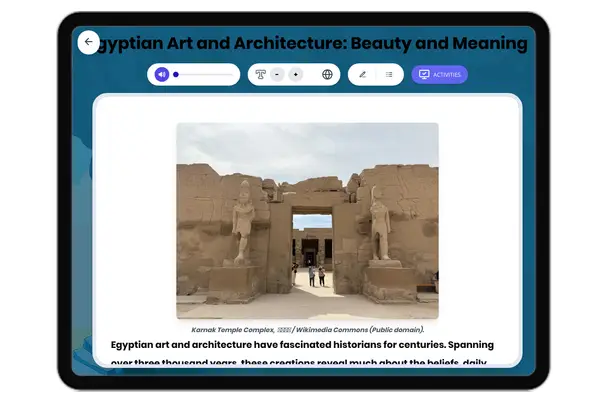
This passage explores the beauty and meaning behind Egyptian art and architecture, from the grand pyramids to detailed t...
King Narmer Unifies Egypt
This engaging history reading passage explores the unification of Ancient Egypt under King Narmer, focusing on the signi...
Ancient Egyptian Afterlife
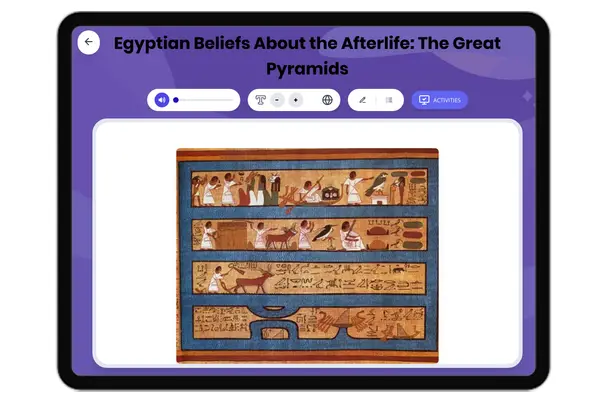
This engaging history reading passage explores ancient Egyptian beliefs about the afterlife and the construction of the ...
CA HSS 6.2RH.6-8.1RH.6-8.4
Ancient Theocracy
This engaging history reading passage explores the concept of theocracy in ancient civilizations, where priests and reli...
Ancient Mathematics
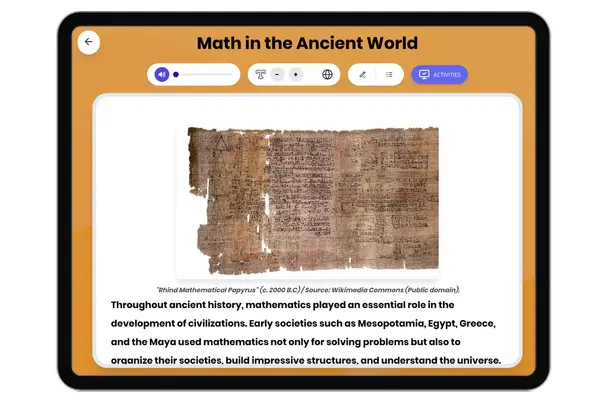
This passage explores the essential role of mathematics in ancient civilizations, including Mesopotamia, Egypt, Greece, ...
Ancient Monarchy
This reading passage explores the concept of monarchy in ancient civilizations, focusing on the origins, structure, and ...
Women in Ancient Societies
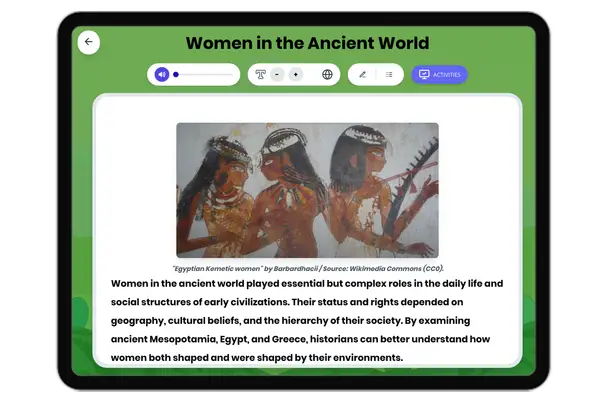
This reading passage explores the complex roles of women in the ancient world, focusing on civilizations such as Mesopot...
Ancient Science and Medicine
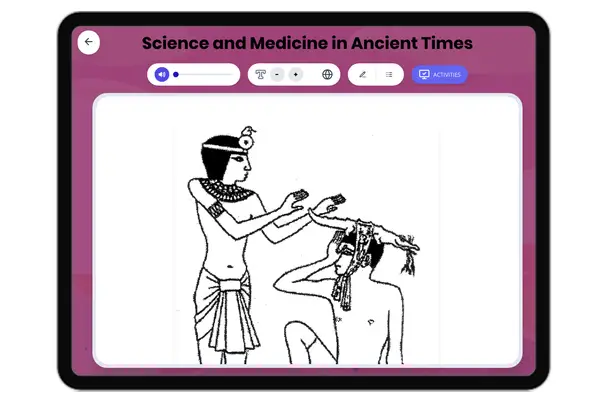
This comprehensive reading passage explores the development of science and medicine in ancient civilizations, including ...
Kush Conquers Egypt
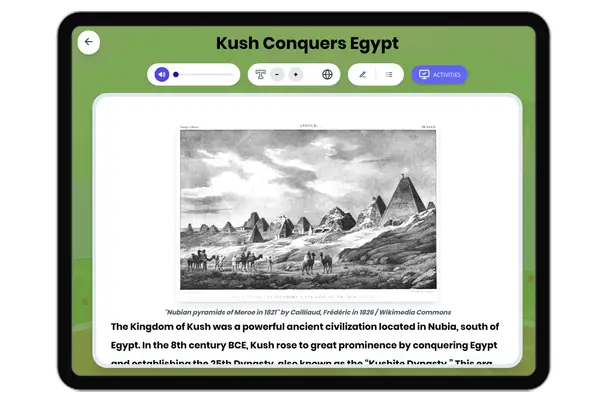
This reading passage explores the fascinating period when the Kingdom of Kush, located in Nubia south of Egypt, conquere...
Slavery in Ancient World
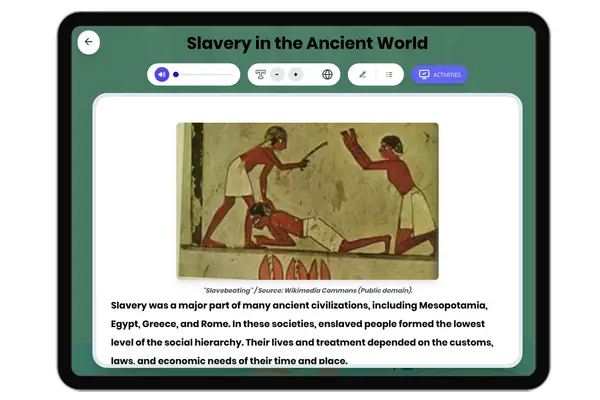
This passage explores the complex history of slavery in the ancient world, examining its presence in societies such as M...
Ancient Civilizations and the Environment
This engaging history reading passage explores how ancient civilizations such as Mesopotamia, Egypt, and the Maya adapte...