This learning resource is available in interactive and printable formats. The interactive worksheet can be played online and assigned to students. The Printable PDF version can be downloaded and printed for completion by hand.
This engaging science passage for Grades 6-8 explains why polar bears live in the Arctic by examining their unique biome adaptations. Students will learn about key science concepts such as adaptation, camouflage, and the characteristics of the Arctic biome. The passage defines important vocabulary terms, provides real-world examples, and encourages students to connect science to everyday life. Comprehension is reinforced through a multiple-choice quiz, a glossary of key terms, and writing activities that analyze cause and effect relationships in nature. This resource aligns with NGSS standards and is audio integrated for accessibility, making it ideal for science classrooms or independent study. Keywords include polar bear, adaptation, biome, NGSS, and Grade 6-8 science. The passage is also provided in Spanish for bilingual learners.
CONTENT PREVIEW
Expand content preview
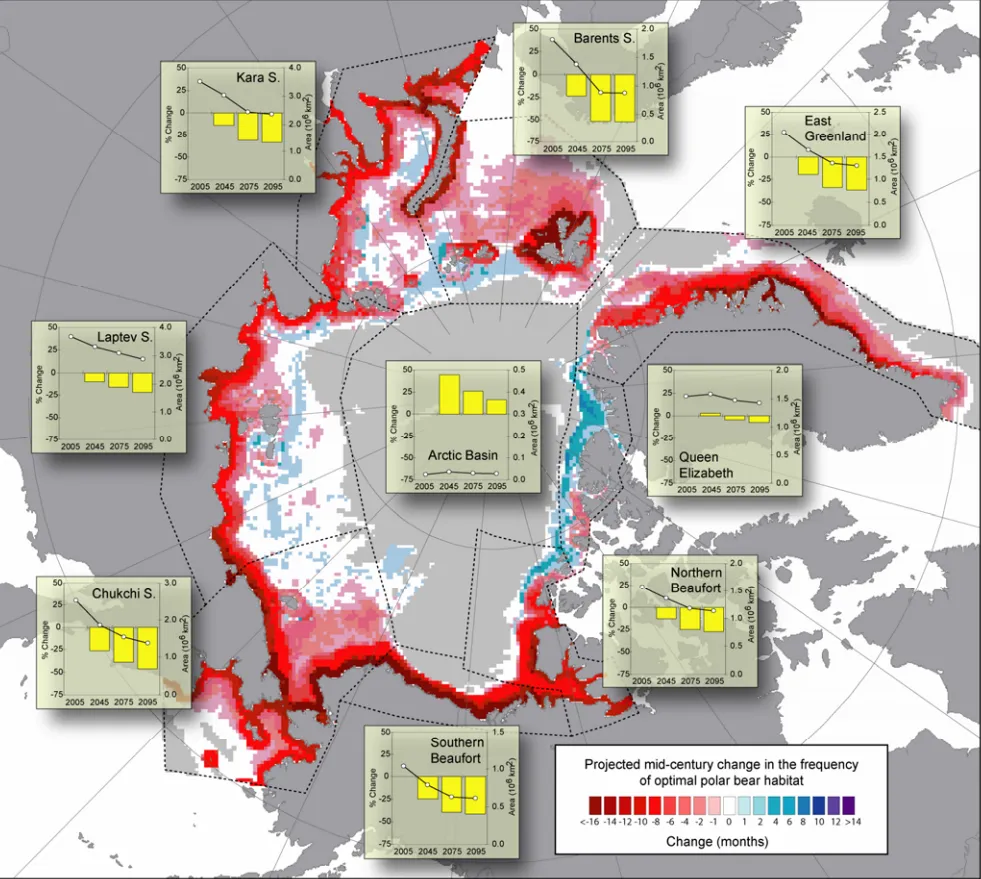
"Polar Bear Habitat" by USGS / Wikimedia Commons
The Arctic is a cold, icy region at the top of the world. It is known for its freezing temperatures, long winters, and unique wildlife. One of the most famous animals in the Arctic is the polar bear. Polar bears are not found in other parts of the world because they have special adaptations that help them survive in this extreme biome.
A biome is a large area of Earth with its own climate, plants, and animals. The Arctic biome is cold and has very little plant life. Polar bears are adapted to this environment in many ways. Their thick, white fur traps heat and provides insulation against the cold. Under their skin, they have a thick layer of fat called blubber that stores energy and keeps them warm. The white color of their fur acts as camouflage, helping them blend in with the snow and ice so they can sneak up on their prey.
Polar bears are excellent swimmers. Their large, powerful paws work like paddles in the water. They use these paws to swim long distances between ice floes in search of food. Polar bears mostly eat seals, which they hunt by waiting near breathing holes in the ice. Their sharp sense of smell helps them find seals even when they are far away or under the snow.
Living in the Arctic means facing months of darkness in winter and long days of sunlight in summer. Polar bears can survive without food for months by living off their fat reserves. This is an important adaptation because food can be hard to find when the sea ice melts in the summer.
Polar bears are an example of how animals can become perfectly suited to their environments through adaptations. Other animals, like camels in the desert or penguins in Antarctica, also have unique features that help them survive in their special biomes.
Interesting Fact: Polar bears have black skin underneath their fur to absorb and keep more heat from the sun.
What is the Arctic mainly known for?
Freezing temperatures and unique wildlifeWarm beaches and palm treesTall mountains and volcanoesRainforests and deserts
What do polar bears mainly eat?
SealsFishPenguinsWhales
What helps a polar bear stay warm?
Thick fur and blubberLarge earsThin skinShort tail
Why is camouflage important for polar bears?
Helps them sneak up on preyKeeps them dryMakes them run fasterHelps them climb trees
How do polar bears find seals under the snow?
Sharp sense of smellLoud roarBright colorsLong tongue
What is a biome?
Area with certain climate and lifeType of bearLayer of fatA polar ice cap
Polar bears have black skin. True or false?
TrueFalse
What does 'adaptation' mean?
A feature that helps survivalA kind of weatherA type of foodA place to sleep
Perfect For:
👩🏫 Teachers
• Reading comprehension practice
• Auto-graded assessments
• Literacy skill development
👨👩👧👦 Parents
• Reading practice at home
• Comprehension improvement
• Educational reading time
🏠 Homeschoolers
• Reading curriculum support
• Independent reading practice
• Progress monitoring
Reading Features:
📖
Reading Passage
Engaging fiction or nonfiction text
❓
Comprehension Quiz
Auto-graded questions
📊
Instant Feedback
Immediate results and scoring
📄
Printable Version
Download for offline reading
🔊
Read Aloud
Voice-over with word highlighting
Reviews & Ratings
No reviews yet. Be the first to share your experience!
Related Content
Climate and weather activity
This worksheet is perfect for understanding the differences between climate and weather. Students will read the phrases ...
Climate and Weather — Distinguishing Characterstics
This worksheet highlights the differences between climate and weather. The chart format makes comparing and contrasting ...
Comparing Weather and Climate Texts
This reading comprehension worksheet has 5th graders read two informational texts about Weather and Climate. Students th...
RI.5.9
Tools and Technology in Earth Science
This middle school science reading passage explores the wide range of tools and technologies used in Earth science, from...
MS-ESS2-2MS-ESS3-2MS-ETS1-1MS-PS4-3
What Is Earth Science?
This engaging middle school science passage introduces students to the field of Earth science, aligning with NGSS standa...
MS-ESS1MS-ESS2MS-ESS3SEP
What Is Space Weather and How Does It Affect the Earth?
This NGSS-aligned science passage for middle school explains what space weather is and how it affects Earth. Students le...
MS-ESS2-2
Extreme Weather and Climate Change
This Grade 6-8 science passage, aligned to NGSS standards, explores the impact of climate change on extreme weather even...
What Is The Difference Between Climate Model And Weather Model?
This reading passage delves into the fundamental differences between weather models and climate models, explaining their...
Scientific Inquiry in Earth Science
This passage explores scientific inquiry in Earth science for grades 6-8, aligned with NGSS standards MS-ESS1-4, MS-ESS2...
MS-ESS1-4MS-ESS2-1MS-ESS3-5SEP
Earth's Major Climate Zones Explained
This engaging science passage for grades 6-8 explains Earth's major climate zones, including tropical, temperate, and po...
Climate Through Earth's History
This engaging passage for grades 6-8 explores how Earth's climate has naturally changed over millions of years, highligh...
MS-ESS1-4MS-ESS2-6
Earth: Our Home in Space
This engaging Grade 4-5 science passage, aligned to NGSS, introduces students to Earth's special place in the solar syst...
Weather vs. Climate
This comprehensive passage for grades 6-8 explores the difference between weather and climate, aligning with NGSS standa...
MS-ESS2-6
Air Masses and Weather
This audio-integrated passage, "Air Masses and Weather," is designed for 6th-grade students to understand how the moveme...
How is Climate Different from Weather?
This passage distinguishes climate from weather for young readers. It defines climate as the usual weather patterns over...
RI.3.1RI.4.14.ESS2.D
Antarctica Climate
This engaging science passage for grades 6-8 explores Antarctica, the coldest climate zone on Earth. Students will learn...
How Climate Change Affects Weather
This middle school science passage explores how and why weather patterns are changing globally. Students will learn abou...
MS-ESS3-5
Climate Zones Word Sort
This word sort activity helps students understand different climate zones through real-world locations. Students classif...
Escape Velocity and Space Travel
This middle school science passage introduces students to the concept of escape velocity—the minimum speed required to b...
MS-ESS1-2MS-PS2-4
Weather Tools & Measurements Word Sort
This word sort activity connects weather measurement tools with their corresponding measurements. Students match 12 weat...