Predator and Prey in the Food Web
Interactive passage with audio narration, comprehension questions, and printable PDF.
By completing this purchase you agree to our Terms of Use and Privacy Policy. Your subscription renews automatically until you cancel. You can cancel anytime from your account settings. All sales are final and non-refundable. Digital content is available for download in your account immediately upon purchase.
What's included
Predator and Prey in the Food Web preview and details
About this printable Predator and Prey in the Food Web science reading passage, NGSS-aligned (Grade 6)
Sample passage and quiz from Predator and Prey in the Food Web
Reading passage and comprehension quiz preview
Predator and Prey in the Food Web
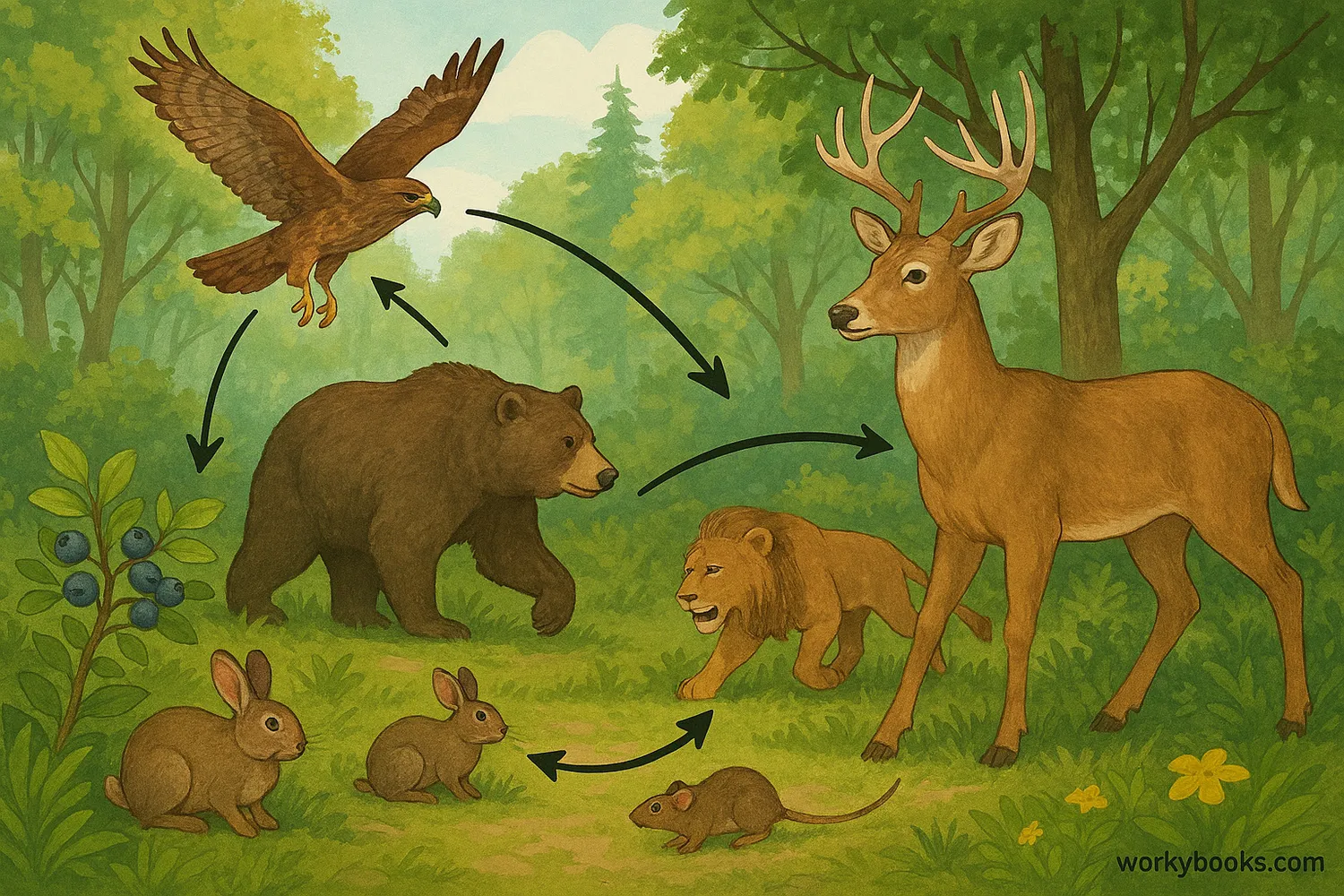
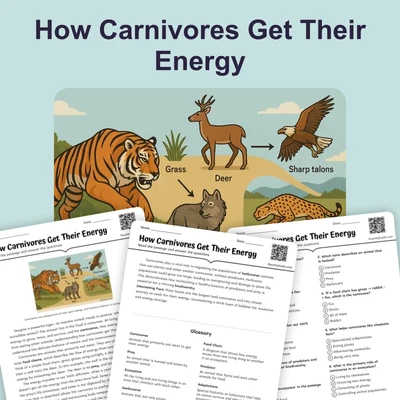
Predators and prey are two important parts of nature. A predator is an animal that hunts and eats other animals. The animals that get hunted and eaten are called prey. These connections are called predator-prey relationships.
There are many examples you might know. A lion is a predator because it hunts and eats zebras, which are the prey. An owl is a predator when it swoops down and catches a mouse. A shark is the predator when it eats a fish. Frogs are predators to flies, but they can also be prey to snakes. Some animals, like snakes, can be both predator and prey. A snake hunts mice, but can be eaten by a hawk. It depends on which animal you ask!
Predators have special adaptations that help them hunt. These can include sharp teeth, claws, excellent eyesight, speed, camouflage for sneaking, or even venom. Prey also have adaptations to help them survive. They may be fast runners, have camouflage to hide, hard shells or spines for protection, warning colors, or live in groups for safety.
Predators are important because they help keep prey populations from getting too large. If there are too many prey animals, they might eat all the plants and run out of food. This can hurt the whole ecosystem. For example, when wolves were removed from Yellowstone National Park, the deer population grew too big and the plants were eaten up. When wolves returned, they balanced the food web again by keeping the deer population healthy.
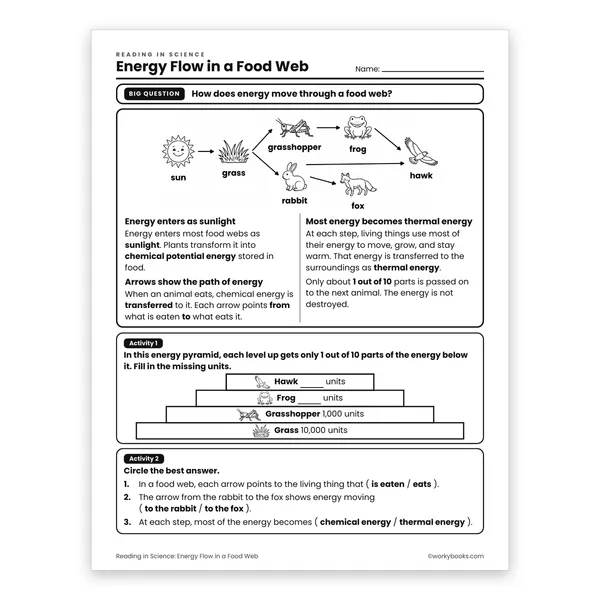
The food web is like a giant network where many predator-prey connections link together. It is not just a simple chain, but a web with many paths. Energy flows from prey to predator each time one animal eats another. You can think of predators and prey like a giant game of tag that never ends. Predators keep prey populations healthy and alert, while prey keep predators fed and the ecosystem balanced!
Interesting Fact: Some prey animals, like the poison dart frog, have bright warning colors to tell predators they are dangerous or taste bad!
Comprehension quiz (8 questions)
1. What is a predator?
2. Which is a prey animal?
3. What helps predators hunt?
4. What may happen if no predators?
5. Why do prey have camouflage?
6. What is a food web?
7. Predators keep prey populations healthy. True or false?
8. What does 'adaptation' mean?
Perfect for the way you teach
- Build comprehension skills
- Auto-graded quiz
- Differentiated reading
- Read together at home
- Improve fluency
- Quiet reading time
- Reading curriculum support
- Independent practice
- Track Lexile growth