Ribosomes Function
Interactive passage with audio narration, comprehension questions, and printable PDF.
By completing this purchase you agree to our Terms of Use and Privacy Policy. Your subscription renews automatically until you cancel. You can cancel anytime from your account settings. All sales are final and non-refundable. Digital content is available for download in your account immediately upon purchase.
What's included
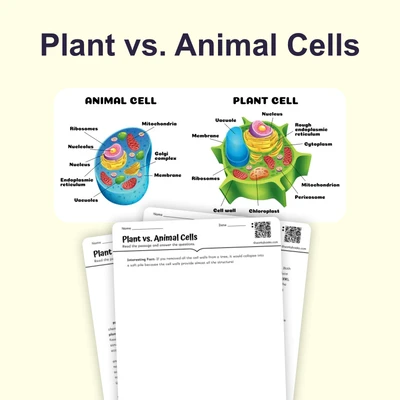
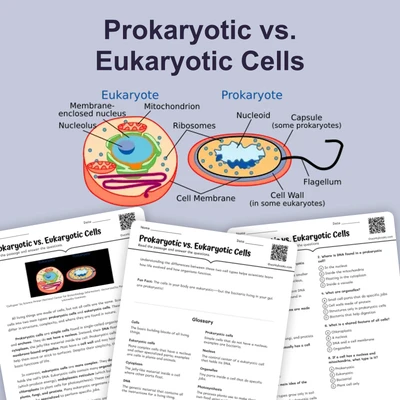
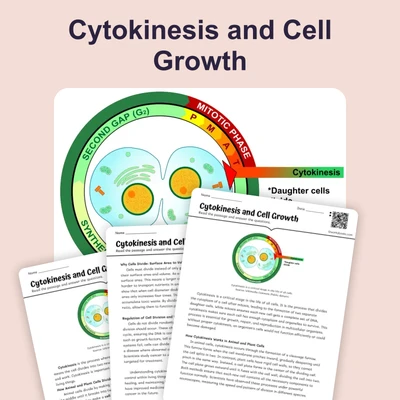
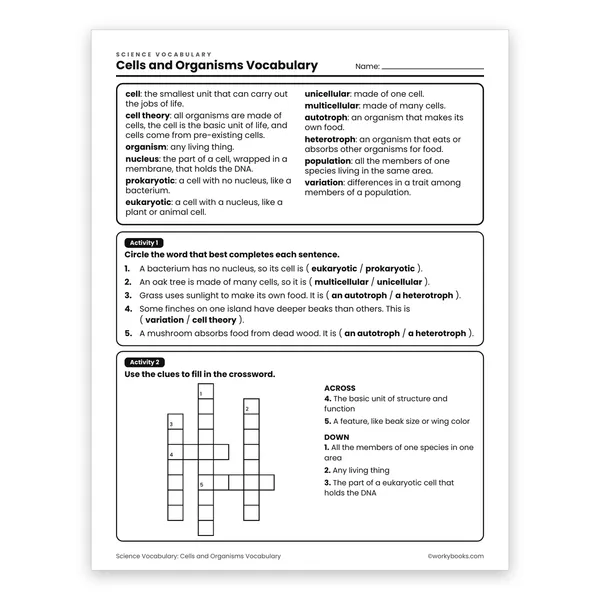
Ribosomes Function preview and details
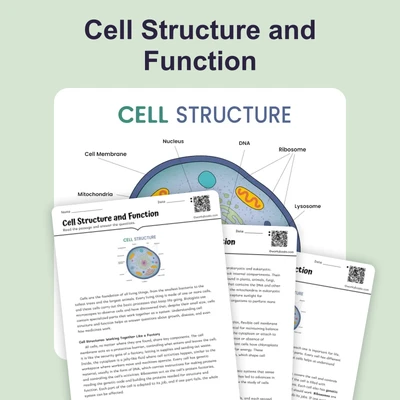
Sample passage and quiz from Ribosomes Function
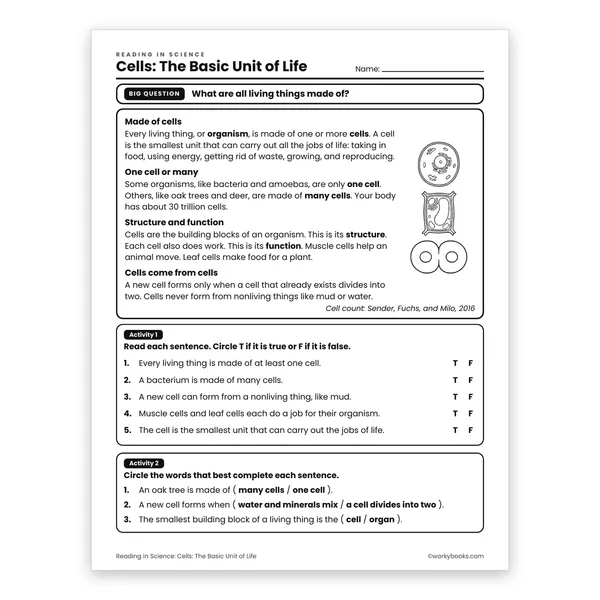
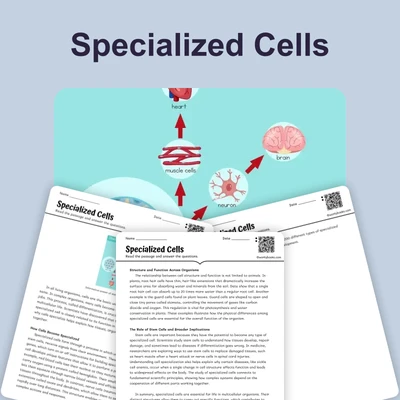
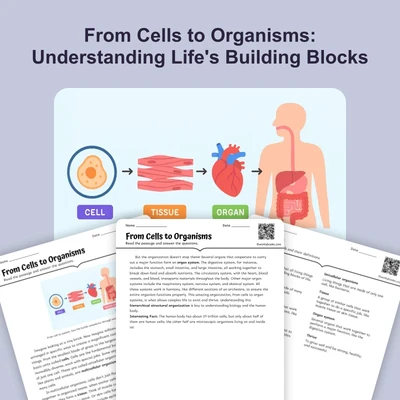
Reading passage and comprehension quiz preview
Ribosomes Function
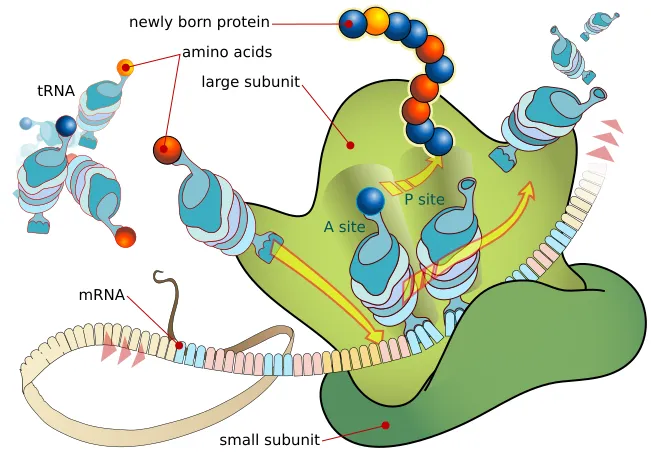
"Ribosome mRNA translation en" by LadyofHats / Wikimedia Commons.
Ribosomes are tiny but powerful structures found in all living cells. They are responsible for making proteins, which are essential for a cell’s survival and function. Proteins do many jobs in the body, like building muscles, carrying oxygen, and helping chemical reactions happen. Because of this, ribosomes are often called the “protein factories” of the cell.
Ribosomes can be found floating freely in the cytoplasm or attached to the endoplasmic reticulum, forming what’s called the rough ER. Whether free or attached, all ribosomes do the same job—reading instructions from the cell’s DNA (through a molecule called messenger RNA, or mRNA) and using those instructions to assemble proteins from amino acids. Each protein must be made in the correct order, or it won’t work properly.
Even though ribosomes are not surrounded by a membrane like other organelles, they are still very important. Ribosomes are made of two parts, called subunits, which come together only when it’s time to build a protein. These subunits are built in the nucleolus and then travel out into the cytoplasm.
All cells, from simple bacteria to complex plant and animal cells, have ribosomes. Cells that need to make a lot of proteins—like muscle cells or pancreas cells—have thousands of ribosomes working at once.
Fun Fact: A single human cell can have up to 10 million ribosomes, all working hard to build proteins every second!
Comprehension quiz (8 questions)
1. What is the main function of ribosomes?
2. Where can ribosomes be found in a cell?
3. What molecule carries the instructions that ribosomes read?
4. What are proteins made from?
5. What happens if proteins are not built in the correct order?
6. How do ribosome subunits come together?
7. What is the main idea of the passage?
8. Why do muscle cells have many ribosomes?
Perfect for the way you teach
- Build comprehension skills
- Auto-graded quiz
- Differentiated reading
- Read together at home
- Improve fluency
- Quiet reading time
- Reading curriculum support
- Independent practice
- Track Lexile growth