Cell Theory and History
Interactive passage with audio narration, comprehension questions, and printable PDF.
By completing this purchase you agree to our Terms of Use and Privacy Policy. Your subscription renews automatically until you cancel. You can cancel anytime from your account settings. All sales are final and non-refundable. Digital content is available for download in your account immediately upon purchase.
What's included
Cell Theory and History preview and details
About this printable Cell Theory and History science reading passage, NGSS-aligned (Grades 5-8)
Sample passage and quiz from Cell Theory and History
Reading passage and comprehension quiz preview
Cell Theory and History
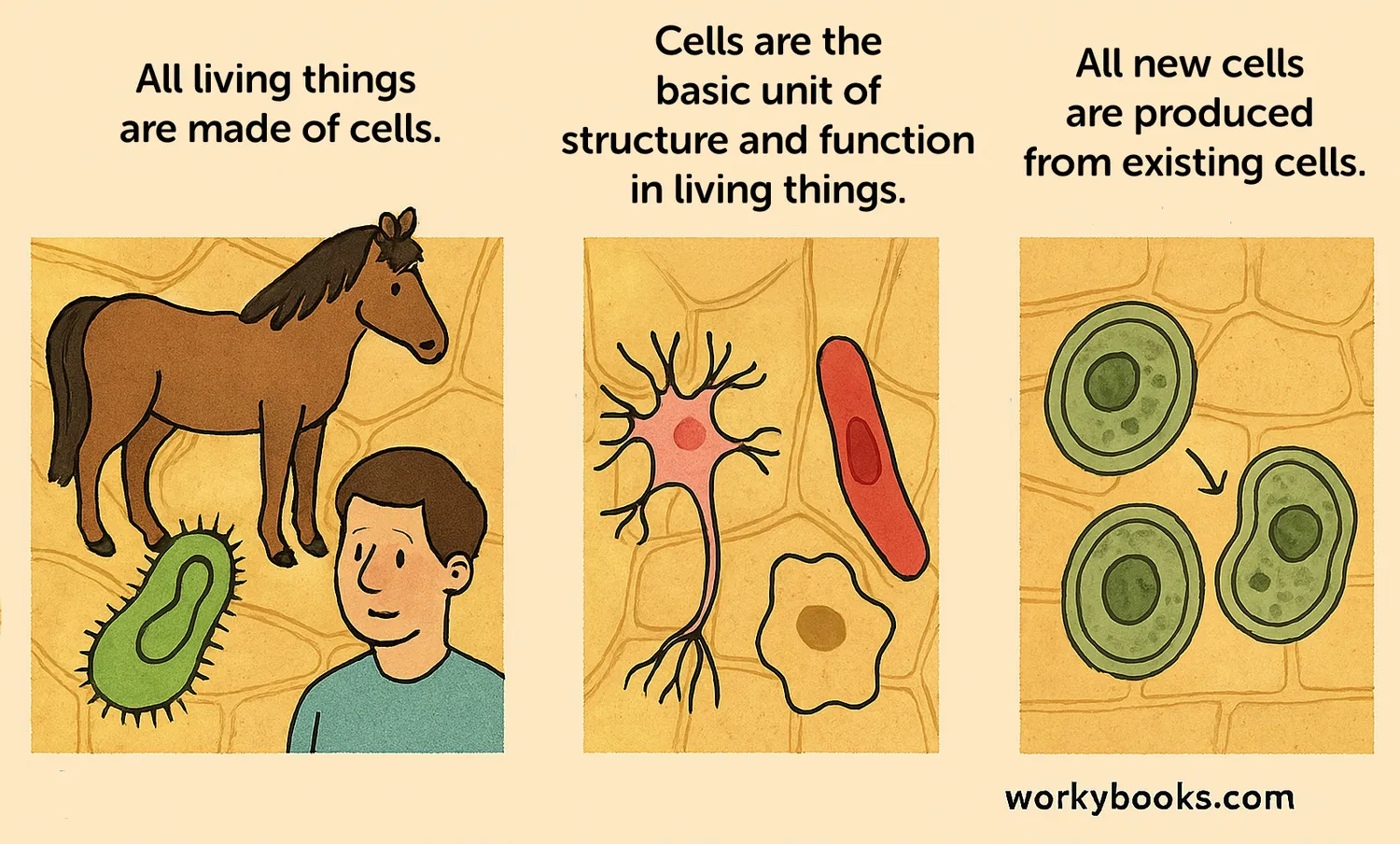
Cell theory is a fundamental idea in biology that explains the structure and function of all living things. Scientists observed that whether studying a leaf, an insect, or a human, every living organism is made up of tiny units called cells. The discovery of cells was not possible until the invention of the microscope, which allowed scientists to see objects too small for the naked eye. Understanding cell theory helps us answer important questions about life processes, disease, and even the origins of living things.
The Three Principles of Cell Theory
Cell theory is based on three main principles. First, all living things are made of one or more cells. For example, bacteria are single-celled organisms, while humans are made up of trillions of cells. Second, the cell is the basic unit of structure and function in living things. This means that all life processes happen within cells, such as making energy, responding to the environment, and reproducing. Third, all cells come from pre-existing cells, meaning new cells are produced only by the division of existing cells. This principle helps explain how living things grow, heal, and reproduce. Without these principles, scientists could not explain patterns like growth or how traits are passed from parents to offspring.
The History of Cell Theory
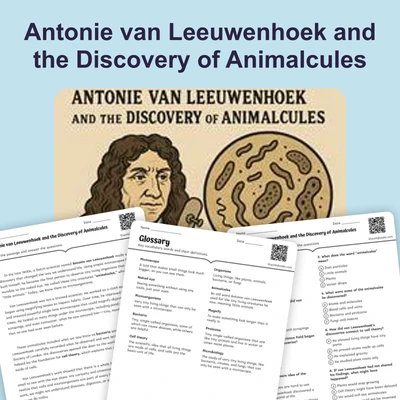
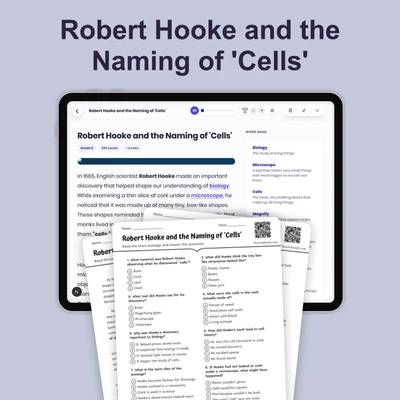
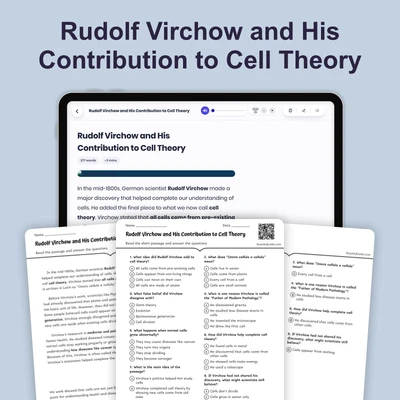
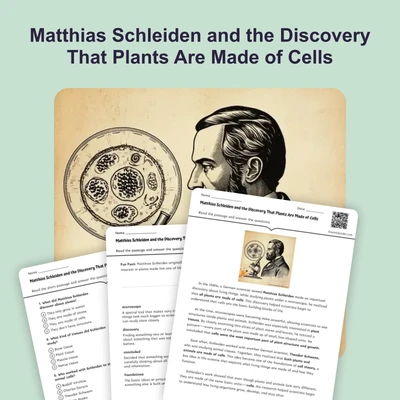
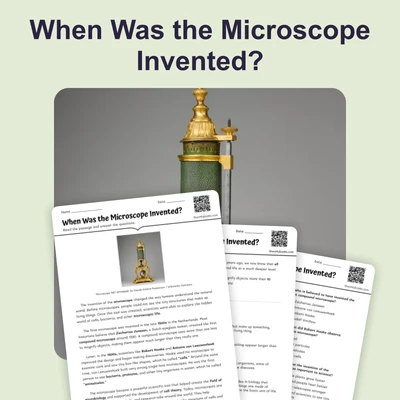
The development of cell theory depended on advances in technology and the careful work of several scientists. In 1665, Robert Hooke used a simple microscope to observe thin slices of cork. He noticed small, box-like structures, which he named "cells" because they looked like tiny rooms. Later, Anton van Leeuwenhoek improved microscope lenses and became the first to observe living cells, such as bacteria and single-celled organisms, in pond water. In the 1830s, Matthias Schleiden and Theodor Schwann studied plants and animals and concluded that all living things are made of cells. Finally, in 1855, Rudolf Virchow added the idea that all cells arise from existing cells. Each scientist built on the work of those before, using better microscopes and new techniques to gather evidence and test ideas.
The Importance of Cell Theory
Cell theory guides modern biology and medicine. For example, understanding that cells are the basic unit of life helps doctors diagnose diseases, such as cancer, which occurs when cells divide uncontrollably. Research on cells leads to medical advances, like vaccines and treatments for genetic disorders. In biotechnology, scientists use cell theory to clone organisms, grow tissues, and develop new medicines. The principles of cell theory also connect to other scientific ideas, such as how energy flows through ecosystems and how living things evolve.
In summary, cell theory combines careful observation, technological innovation, and scientific collaboration. It reveals that all living things share a common foundation and shows how discoveries build upon each other. As microscopes and technology continue to improve, scientists may uncover even more about the hidden world within every living thing.
Interesting Fact:
The human body contains about 37 trillion cells, each carrying out specialized tasks that keep you alive every second of the day!
Comprehension quiz (10 questions)
1. What is the main idea of cell theory?
2. Who was the first scientist to use the term 'cell'?
3. Which scientist first observed living cells in pond water?
4. What is the function of a microscope in cell theory?
5. What does it mean when the passage says cells are the 'basic unit of structure and function'?
6. Which word best describes 'division' as used in the passage?
7. Which principle explains why living things grow and heal?
8. Why was the invention of the microscope important to cell theory?
9. All living things are made of cells. (True/False)
10. Cells can only be seen with the naked eye. (True/False)
Perfect for the way you teach
- Build comprehension skills
- Auto-graded quiz
- Differentiated reading
- Read together at home
- Improve fluency
- Quiet reading time
- Reading curriculum support
- Independent practice
- Track Lexile growth