Saving the Axolotl: Endangered Species Facts
Interactive passage with audio narration, comprehension questions, and printable PDF.
By completing this purchase you agree to our Terms of Use and Privacy Policy. Your subscription renews automatically until you cancel. You can cancel anytime from your account settings. All sales are final and non-refundable. Digital content is available for download in your account immediately upon purchase.
What's included
Saving the Axolotl: Endangered Species Facts preview and details
About this printable Saving the Axolotl: Endangered Species Facts science reading passage, NGSS-aligned (Grade 6)
Sample passage and quiz from Saving the Axolotl: Endangered Species Facts
Reading passage and comprehension quiz preview
Saving the Axolotl: Endangered Species Facts
The axolotl, a rare salamander native to Mexico, is one of nature’s most remarkable creatures. Unlike most amphibians, it remains fully aquatic throughout its life, breathing through its distinctive frilly gills often likened to a mane. What makes the axolotl especially extraordinary is its ability to regenerate lost body parts—including limbs, parts of its heart, and even sections of its brain. Beyond its scientific importance in the study of regeneration, the axolotl also carries deep cultural significance in Mexico.
However, despite their extraordinary qualities, axolotls are critically endangered species. Their natural habitat is extremely limited, primarily to the ancient lake system of Xochimilco in Mexico City. For centuries, this network of canals and lakes provided the perfect home for these unique salamanders. Today, human activities have drastically reduced their numbers, pushing them to the brink of extinction. Understanding these human impacts is crucial for any conservation efforts.
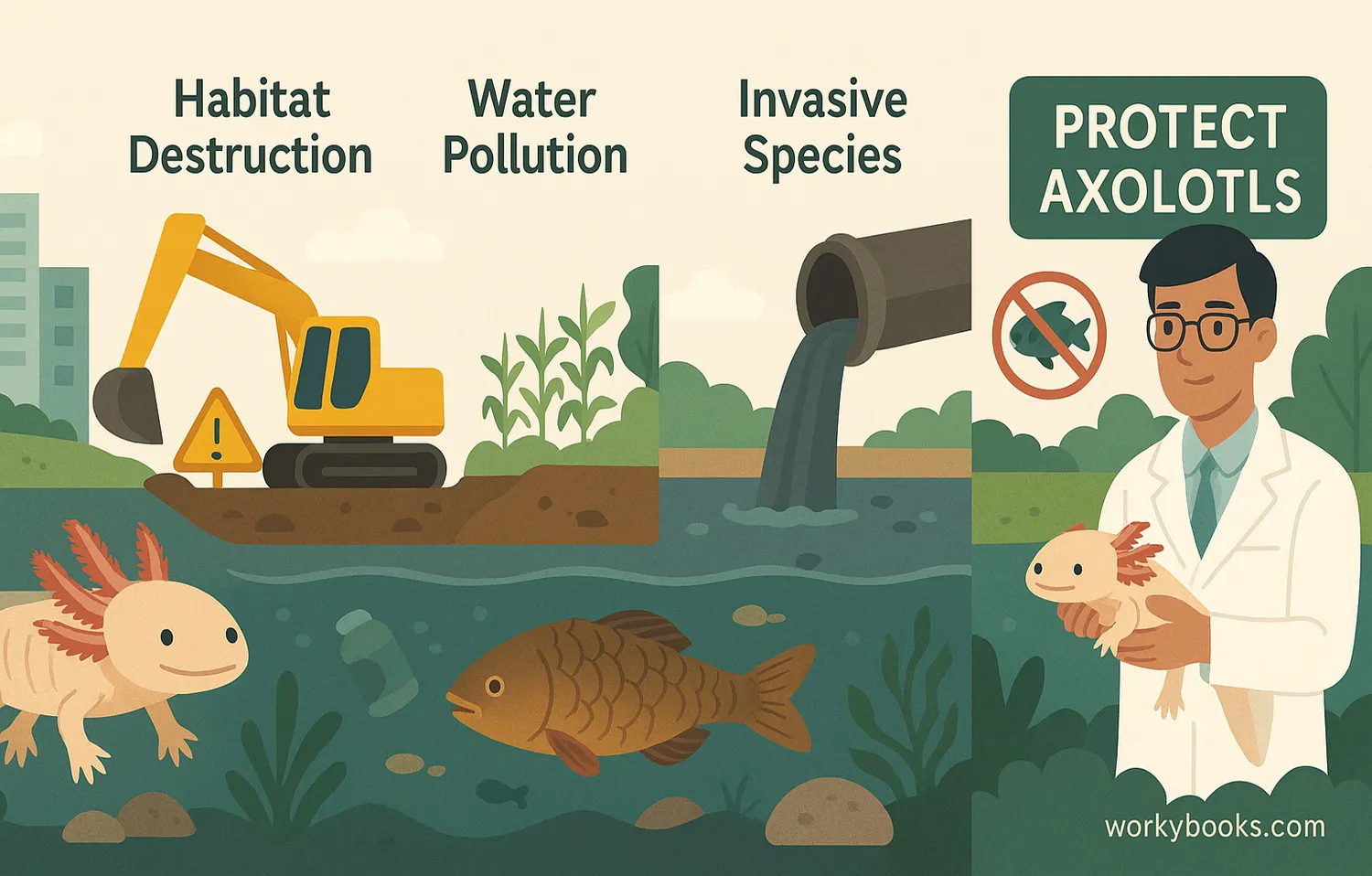
One of the biggest threats to the axolotl is habitat destruction. As Mexico City expands, urban development encroaches on their natural environment. Wetlands are drained for agriculture, and construction reduces the available water bodies where axolotls can thrive. Furthermore, water pollution from human waste and agricultural runoff severely degrades the water quality. Axolotls are very sensitive to changes in their environment, and polluted water makes it difficult for them to survive, impacting their biodiversity.
Another significant problem is the introduction of invasive species. Non-native fish, such as carp and tilapia, were introduced into Xochimilco's canals. These invasive species compete with axolotls for food and often prey on young axolotls. This competition and predation further decimate the already dwindling axolotl population. Climate change also plays a role, causing erratic weather patterns that can lead to droughts or floods, further stressing their delicate ecosystem.
Scientists and conservationists are working tirelessly to save the axolotl. Efforts include breeding programs in captivity, educating local communities about the importance of protecting the species, and restoring their natural habitat by improving water quality and removing invasive species. Protecting the axolotl is not just about saving one species; it's about preserving the delicate balance of an entire ecosystem and understanding our responsibility to the planet. Supporting these initiatives is vital for the future of these incredible amphibians and the overall health of our planet.
Interesting Fact: Axolotls are neotenic, meaning they retain their larval features, like external gills and an aquatic lifestyle, into adulthood, rather than undergoing metamorphosis into a terrestrial form.
Comprehension quiz (10 questions)
1. Which country is the axolotl native to?
2. What unique ability does the axolotl have?
3. The axolotl's frilly gills resemble a mane. True or False?
4. What does 'endangered species' mean?
5. Which of these is NOT a human impact on axolotl habitat?
6. Why are carp and tilapia a problem for axolotls?
7. How does climate change affect axolotls?
8. What is the primary location of axolotl's natural habitat?
9. If a new, highly effective water filter system was installed in Xochimilco, what would be the most likely immediate impact on axolotls?
10. Imagine a town near Xochimilco decides to stop all new construction near the wetlands. How would this likely benefit the axolotl?
Perfect for the way you teach
- Build comprehension skills
- Auto-graded quiz
- Differentiated reading
- Read together at home
- Improve fluency
- Quiet reading time
- Reading curriculum support
- Independent practice
- Track Lexile growth