Socrates the Philosopher
Interactive passage with audio narration, comprehension questions, and printable PDF.
By completing this purchase you agree to our Terms of Use and Privacy Policy. Your subscription renews automatically until you cancel. You can cancel anytime from your account settings. All sales are final and non-refundable. Digital content is available for download in your account immediately upon purchase.
What's included
Part of this bundle

Socrates the Philosopher preview and details
About this printable Socrates the Philosopher reading passage (Grades 6-8)
Sample passage and quiz from Socrates the Philosopher
Reading passage and comprehension quiz preview
Socrates the Philosopher
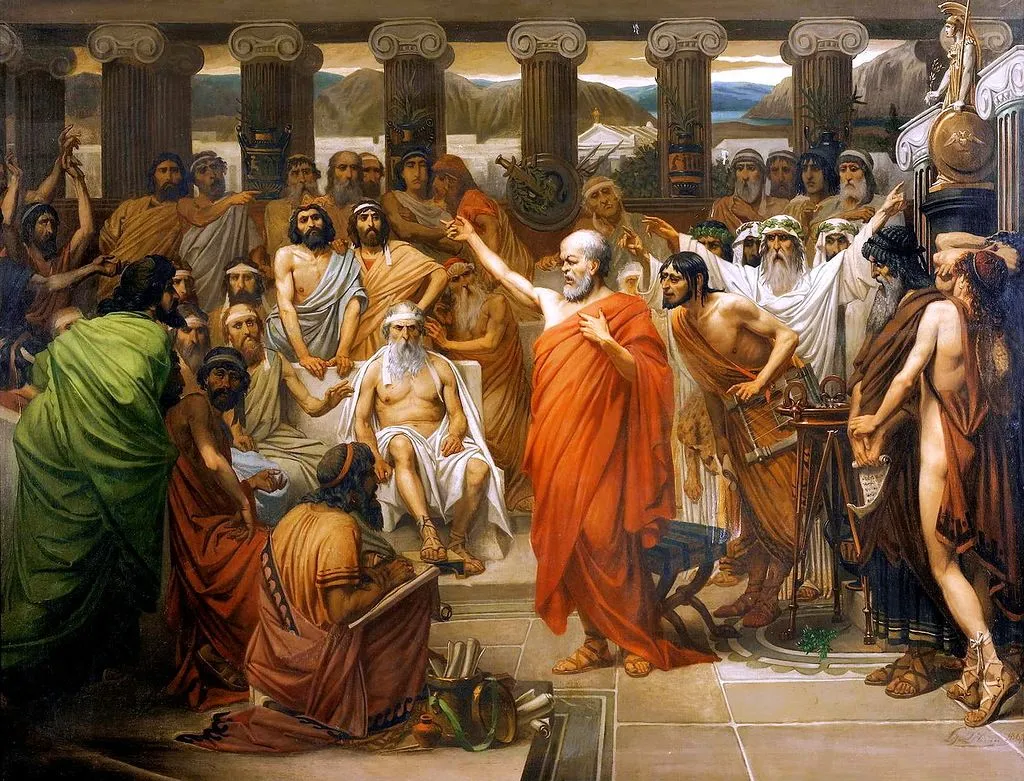
Socrates Address by Belgian artist Louis Joseph Lebrun, 1867 by Louis Le Brun / Wikimedia Commons
Socrates was a famous philosopher from ancient Athens, Greece, who lived from about 470 to 399 BCE. He is known for his unique teaching style and his deep influence on Western thought. Socrates never wrote down his ideas, but his student Plato recorded many of his conversations. These dialogues have allowed historians to learn about Socrates’ life, beliefs, and the impact he had on his city-state and the world.
Socrates was born in Athens, a powerful city-state known for its democracy and rich culture. He spent most of his life walking through the city’s agora, or public marketplace, asking people challenging questions about justice, courage, and the meaning of life. Instead of giving lectures, Socrates used a method called the Socratic Method. He asked a series of questions to help people examine their own beliefs. This method encouraged people to think critically and not simply accept traditions or opinions without evidence.
Primary sources, like Plato’s "Apology," describe how Socrates questioned not only ordinary citizens but also powerful leaders. For example, in 399 BCE, Socrates was put on trial for supposedly corrupting the youth and disrespecting the city’s gods. In his defense, as recorded by Plato, Socrates argued that he was actually helping the city by encouraging citizens to think for themselves. Archaeological discoveries in Athens, such as inscriptions and remains of the agora, show that public debate was a central part of Athenian life, making Socrates’ activities both important and controversial.
Socrates’ ideas had a lasting effect on philosophy and society. His teachings inspired Plato and, later, Aristotle, helping to shape the foundations of Western philosophy. Socrates’ focus on critical thinking influenced democratic societies, where open debate and questioning of authority are important values. However, his life also shows the risks of challenging popular beliefs. The city’s decision to execute Socrates reflected the tensions in Athenian society and the limits of free speech at that time.
Today, the Socratic Method is still used in schools and courts around the world. Socrates’ story helps us understand the importance of questioning, evidence, and open discussion in both ancient and modern societies.
Interesting Fact: Did you know? Socrates was so poor that he often walked barefoot and wore simple clothes, showing that he valued wisdom over wealth.
Comprehension quiz (8 questions)
1. Where was Socrates born?
2. Who was Socrates' famous student?
3. In what year was Socrates put on trial?
4. Why did Socrates use the Socratic Method?
5. What was the agora in Athens?
6. What effect did Socrates have on democracy?
7. Socrates was executed for his ideas. True or false?
8. What does 'primary source' mean?
Perfect for the way you teach
- Build comprehension skills
- Auto-graded quiz
- Differentiated reading
- Read together at home
- Improve fluency
- Quiet reading time
- Reading curriculum support
- Independent practice
- Track Lexile growth