This passage explores the historical significance of the Magna Carta, focusing on how English barons compelled King John to sign this landmark document in 1215. Students will learn about the causes and effects of the Magna Carta, its connection to social hierarchy, and its enduring influence on legal systems. The reading includes analysis of primary sources, a chronological timeline, and glossary of key terms. The passage meets CA HSS 7.6.5 and CCSS RH.6-8.1 standards, and is accompanied by a Spanish translation, read aloud audio, and comprehension activities. Designed for middle school learners, this resource encourages students to analyze cause-and-effect relationships and understand the Magna Carta's lasting impact on world history.
Written by Workybooks TeamPublished by Workybooks
Preview
Sample passage and quiz content
CONTENT PREVIEW
Expand content preview
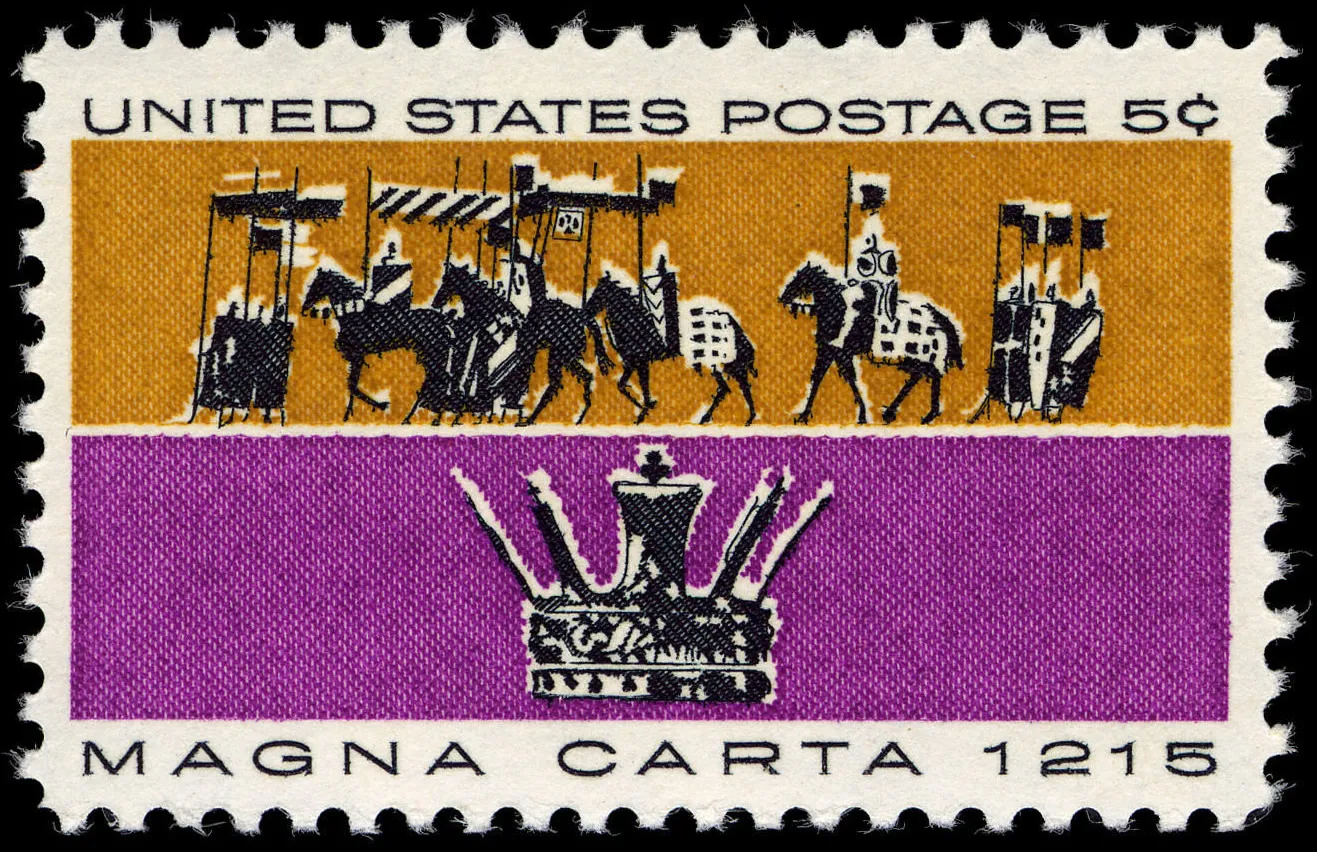
Magna Carta 5c 1965 issue U.S. stamp by Bureau of Engraving and Printing. Designed by Brook Temple. Wikimedia Commons
The Magna Carta is one of the most famous documents in world history. In June 1215, a group of powerful English barons forced King John to sign this historic charter at Runnymede, a meadow by the River Thames. The Magna Carta, which means "Great Charter" in Latin, was designed to limit the king’s power and protect certain rights for the nobility and, eventually, all free people.
During the early 13th century, England was facing political and economic turmoil. King John, who ruled from 1199 to 1216, had increased taxes and lost important lands in France. His harsh methods and frequent demands for money angered many nobles. The barons believed that King John was not respecting traditional feudal customs and was abusing his authority. In 1215, after failed negotiations, the barons rebelled and occupied London, forcing the king to meet their demands.
The Magna Carta consisted of 63 clauses, many of which addressed feudal rights and the relationship between the king and his subjects. Some of the most important clauses established the principle that the king was not above the law. For example, Clause 39 stated that no free man could be imprisoned or punished without the judgment of his peers or by the law of the land. This idea introduced the concept of due process and trial by jury. Another key clause protected the right of the Church to be free from royal interference.
Primary sources reveal how the Magna Carta was sealed in front of witnesses, including bishops, barons, and royal officials. A copy from the British Library still survives today. Although the Magna Carta was originally intended to protect the rights of the nobility, over time its principles influenced the development of constitutional government and individual rights in England and beyond. The Magna Carta was reissued several times, with each version strengthening its legacy.
The Magna Carta’s significance goes beyond medieval England. Its core ideas later inspired the writers of the United States Constitution and the Universal Declaration of Human Rights. By challenging the idea of unlimited royal power, the Magna Carta became a symbol of liberty and justice. Its message—that even rulers must obey the law—continues to shape political systems around the world.
This event connects to broader themes in world history, such as the rise of representative government and the struggle for rights and equality.
Interesting Fact: Only four original copies of the 1215 Magna Carta still exist, and they are kept in museums and libraries in England.
When was Magna Carta signed?
1215106613001199
Who was forced to sign Magna Carta?
King JohnKing HenryKing RichardKing Edward
Where was Magna Carta signed?
RunnymedeLondonParisCanterbury
Why did barons rebel against King John?
High taxes and lost landReligious reasonsForeign invasionNo heir to throne
What is due process?
Fair legal treatmentFarming methodRoyal ceremonyChurch festival
What did Clause 39 protect?
Right to fair trialKing's familyForeign tradeChurch taxes
Magna Carta influenced later laws. True or false?
TrueFalse
What is a charter?
Written document of rightsType of buildingBattle strategyReligious leader
Who it's for
Perfect for the way you teach
Teachers
Build comprehension skills
Auto-graded quiz
Differentiated reading
Parents
Read together at home
Improve fluency
Quiet reading time
Homeschoolers
Reading curriculum support
Independent practice
Track Lexile growth
Topics
Magna CartaKing JohnMiddle AgesEnglish historybaronsroyal power1215rightslawcharter
Reviews & Ratings
No reviews yet. Be the first to share your experience!
More reading you might love
19 more
Founding of Rome
This educational passage explores the legendary origins of Ancient Rome through the stories of Romulus and Aeneas, two i...
CA HSS 6.7CCSS RH.6-8.1CCSS RH.6-8.2CCSS RH.6-8.4
Han Dynasty Suspension Bridges
This passage explores the invention and impact of suspension bridges during the Han Dynasty in Ancient China, covering h...
CA HSS 6.6CCSS RH.6-8.1CCSS RH.6-8.4CCSS RH.6-8.7
Han Dynasty Wheelbarrow
This passage explores the invention and historical significance of the wheelbarrow during the Han dynasty in ancient Chi...
CA HSS 6.6CCSS RH.6-8.1RH.6-8.2RH.6-8.4
Han Dynasty Moldboard Plow
This engaging history reading passage explores the development and impact of the moldboard plow during the Han Dynasty i...
CA HSS 6.6.4CCSS RH.6-8.1RH.6-8.2RH.6-8.4
China's Terracotta Army
This passage explores the fascinating discovery of the Terra-Cotta Army near Xi’an, China, and its significance in ancie...
CA HSS 6.1CCSS RH.6-8.1CCSS RH.6-8.4CCSS RH.6-8.7
Lascaux Cave Paintings
This engaging passage introduces students to the prehistoric art of Lascaux Cave, a remarkable archaeological discovery ...
CA HSS 6.2.1CCSS RH.6-8.1CCSS RH.6-8.4
Out of Africa: First Migration
This comprehensive history reading passage explores the Out of Africa movement and how early humans migrated across cont...
CA HSS 6.1.1CCSS RH.6-8.1RH.6-8.2RH.6-8.4
Factory Working Conditions
This world history reading passage examines the working conditions and workers' struggles during the Industrial Revoluti...
CA HSS 7.11CCSS RH.6-8.1CCSS RH.6-8.2CCSS RH.6-8.4
How Early Humans Survived the Ice Age
This passage explores how Paleolithic people adapted to a variety of landscapes, including coastal regions, mountains, p...
CA HSS 6.1CCSS RH.6-8.1CCSS RH.6-8.2CCSS RH.6-8.4
Neolithic Tools
This passage explores the profound impact of new stone tools during the Neolithic period, focusing on how these innovati...
CA HSS 6.2CCSS RH.6-8.1CCSS RH.6-8.4
How Pottery Changed Daily Life
This engaging history reading passage explores how early humans invented pottery to solve the problem of long-term food ...
CA HSS 6.1.1CCSS RH.6-8.1CCSS RH.6-8.4
Social structures in Ancient World
This passage explores the organization and significance of family life in ancient societies, focusing on how extended fa...
CA HSS 6.2CCSS RH.6-8.1CCSS RH.6-8.4CCSS RH.6-8.7
Yohanan ben Zakkai and Judaism
This passage explores the pivotal role of Yohanan ben Zakkai in preserving Jewish learning and tradition after the destr...
CA HSS 6.3.5CCSS RH.6-8.1CCSS RH.6-8.2CCSS RH.6-8.4
Thucydides the Historian
This rigorous passage introduces students to Thucydides, the ancient Greek historian who chronicled the Peloponnesian Wa...
CA HSS 6.4CCSS RH.6-8.1CCSS RH.6-8.2CCSS RH.6-8.4
Socrates the Philosopher
This engaging history reading passage explores the life and legacy of Socrates, the ancient Greek philosopher renowned f...
CA HSS 6.4.1CCSS RH.6-8.1CCSS RH.6-8.4CCSS WHST.6-8.2
Ancient Mathematics
This passage explores the essential role of mathematics in ancient civilizations, including Mesopotamia, Egypt, Greece, ...
CA HSS 6.2CCSS RH.6-8.1CCSS RH.6-8.4
Native American Basket Weaving
This passage examines the historical importance of basket weaving among Indigenous Americans, highlighting how different...
CA HSS 6.1CCSS RH.6-8.1RH.6-8.4
Otto the Great and the Holy Roman Empire
This history reading passage introduces students to Otto the Great, one of the most influential rulers of the Middle Age...
CA HSS 7.1CCSS RH.6-8.1RH.6-8.2CCSS W.6-8.2
The Crusades
This passage delves into the Crusades, a series of religious wars fought from 1096 to 1291 between Christian and Muslim ...