Lascaux Cave Paintings
Interactive passage with audio narration, comprehension questions, and printable PDF.
By completing this purchase you agree to our Terms of Use and Privacy Policy. Your subscription renews automatically until you cancel. You can cancel anytime from your account settings. All sales are final and non-refundable. Digital content is available for download in your account immediately upon purchase.
What's included
Lascaux Cave Paintings preview and details
About this printable Lascaux Cave Paintings reading passage (Grades 6-8)
Sample passage and quiz from Lascaux Cave Paintings
Reading passage and comprehension quiz preview
Lascaux Cave Paintings
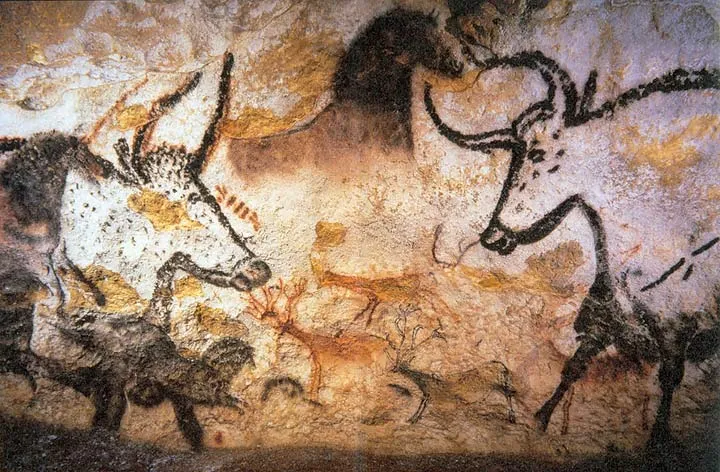
Lascaux Cave in southwestern France is one of the most important archaeological sites ever discovered. The cave contains more than 600 paintings and 1,500 engravings that date back to the Paleolithic period, about 17,000 years ago. These works of art offer a rare glimpse into the lives, beliefs, and skills of early modern humans during the Stone Age.
The discovery of Lascaux Cave happened by accident in 1940. Four teenagers—Marcel Ravidat, Jacques Marsal, Georges Agnel, and Simon Coencas—were exploring the hills near Montignac when their dog, Robot, fell into a hole. When the boys investigated, they found a cave filled with remarkable wall paintings. Archaeologists soon began to study the site, using careful excavation methods to preserve the delicate images. The cave’s main chamber, known as the “Hall of the Bulls,” features massive images of animals such as aurochs, deer, and horses painted with natural pigments. The artists used minerals and charcoal to create vibrant colors and even used scaffolding to reach high ceilings.
The purpose of the Lascaux paintings remains debated among scholars. Many believe the images held spiritual or magical significance, perhaps related to hunting rituals. The presence of detailed animal drawings, rare human figures, and mysterious symbols suggests a complex belief system. For example, the “Shaft Scene” shows a bison and a human-like figure, possibly representing a myth or story. Archaeologists have used primary sources like the paintings themselves, as well as analysis of pigments and tools, to learn about the artists’ techniques and intentions. The cave’s location near a river and fertile land may have made it an important meeting place for Stone Age communities.
Over time, exposure to air and light caused the paintings to deteriorate. To protect this heritage, the French government closed the cave to the public in 1963 and created a replica, Lascaux II, for visitors. Today, scientists use conservation methods and advanced technology to preserve the original site. The discovery of Lascaux has changed our understanding of prehistoric people, showing their artistic skill, social organization, and spiritual life. It connects us to a distant past and reveals the universal human desire to create and communicate.
Lascaux Cave is a powerful example of how archaeological discoveries can transform our knowledge of early societies. It fits into the broader history of human development, where art, technology, and environment shaped the rise of civilizations.
Interesting Fact: The Lascaux Cave was painted over thousands of years, with some images added centuries apart, showing a long tradition of artistic expression.
Comprehension quiz (8 questions)
1. Where is Lascaux Cave located?
2. When was Lascaux Cave discovered?
3. What is the main chamber called?
4. Why did people paint in Lascaux Cave?
5. How did scientists protect Lascaux Cave?
6. What does conservation mean in this passage?
7. Lascaux Cave is in Spain. True or false?
8. What is a primary source?
Perfect for the way you teach
- Build comprehension skills
- Auto-graded quiz
- Differentiated reading
- Read together at home
- Improve fluency
- Quiet reading time
- Reading curriculum support
- Independent practice
- Track Lexile growth