Spreading Christianity: Religion and Exploration — Reading Comprehension
Rate this
Premium Resource
Present
Present in classroom. No work saved
Assign
Classroom with student accounts, Track progress
Quick Play
No student accounts, assign with a link
Grades
3
4
5
Standards
D2.HIS.2.3-5
D2.HIS.3.3-5
D2.HIS.14.3-5
RI.4.3
RI.4.4
W.4.2
PRINT+DIGITAL RESOURCE
This learning resource is available in interactive and printable formats. The interactive worksheet can be played online and assigned to students. The Printable PDF version can be downloaded and printed for completion by hand.
This engaging U.S. history reading passage explores the spread of Christianity during the Age of Exploration, focusing on the interactions between European explorers, missionaries, and Native Americans. Students will learn how religion influenced exploration and settlement in North America, including the role of Spanish missions and the effects on Native American communities. The passage uses a clear, chronological narrative and highlights themes of bravery and problem-solving, making it accessible for upper elementary readers. Included are a glossary of key vocabulary words, a Spanish translation, an interactive timeline, and multiple comprehension activities aligned with C3 Framework standards. Students can also use graphic organizers to compare perspectives and sequence events. This history reading passage includes a read aloud audio and Spanish translation to support diverse learners. Ideal for building background knowledge in U.S. history while practicing reading skills.
CONTENT PREVIEW
Expand content preview
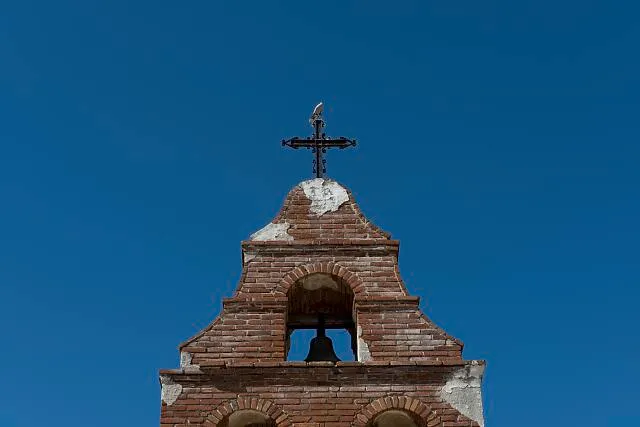
"Mission San Miguel Arcángel is a Spanish mission in San Miguel, San Luis Obispo County, California" by Highsmith, Carol M., 1946- / Library of Congress.
European explorers crossed the ocean to new lands during the Age of Exploration. Their journeys were not just about finding gold, spices, or new trade routes. Many explorers believed they were doing God’s work. They wanted to spread Christianity to the people they met in the Americas.
Religion was a powerful force for these explorers. Many believed it was their sacred duty to tell others about their faith. They thought God wanted them to help others become Christians. This idea is called religious motivation. It gave explorers a strong reason to travel far from home.
When explorers arrived in the Americas, they met Native American peoples. These groups had their own beliefs and ways of life. Some Europeans wanted to change this. They believed that converting Native Americans to Christianity would please God. To do this, they sent missionaries along with the explorers. Missionaries were people whose job was to teach others about Christianity.
Missionaries built missions, which were special communities where Native Americans could learn about the Christian faith. They taught about the Bible and how to pray. Sometimes, Native Americans learned to read and write at missions. Life at the missions changed many things for Native Americans. They learned new skills, but they also lost some of their old traditions.
Not all Native Americans wanted to become Christians. Some tried to keep their old beliefs and customs. But many missionaries worked hard to convert as many people as possible. This often led to big changes in Native American communities. Some Native people blended old and new beliefs together.
The explorers and missionaries believed they were helping others by sharing their faith. They saw themselves as brave and caring, doing what they thought was right. Their actions changed the culture and lives of Native Americans in lasting ways.
Today, some missions can still be visited in places like California, Texas, and Florida. These sites remind us of the strong connection between religion and exploration in early U.S. history.
Interesting Fact: The first Spanish mission in what is now the United States was built in Florida in 1565, at St. Augustine.
Why did many explorers travel to new lands?
To spread ChristianityOnly for goldTo escape EuropeTo find new animals
Who were missionaries?
People teaching ChristianityGold minersShip buildersNative American leaders
Where was the first Spanish mission in the U.S.?
St. Augustine, FloridaSan Diego, CaliforniaSanta Fe, New MexicoJamestown, Virginia
What is a mission?
A special community for teaching faithA type of shipA gold mineA Native American village
How did missions affect Native Americans?
Changed their cultureMade them richTaught them to sailGave them gold
Why did missionaries teach Native Americans?
To share ChristianityTo build housesTo find goldTo make maps
Explorers wanted to convert Native Americans. True or false?
TrueFalse
What does 'convert' mean in the passage?
Change religionBuild somethingTravel farWrite a letter
Perfect For:
👩🏫 Teachers
• Reading comprehension practice
• Auto-graded assessments
• Literacy skill development
👨👩👧👦 Parents
• Reading practice at home
• Comprehension improvement
• Educational reading time
🏠 Homeschoolers
• Reading curriculum support
• Independent reading practice
• Progress monitoring
Reading Features:
📖
Reading Passage
Engaging fiction or nonfiction text
❓
Comprehension Quiz
Auto-graded questions
📊
Instant Feedback
Immediate results and scoring
📄
Printable Version
Download for offline reading
🔊
Read Aloud
Voice-over with word highlighting
Reviews & Ratings
No reviews yet. Be the first to share your experience!
Related Content
Colonial Trade with England and Africa
This history reading passage explores colonial trade between the American colonies, England, and Africa, focusing on the...
D2.HIS.2.3-5D2.HIS.14.3-5RI.4.3RI.4.4
John Adams: Second President
This engaging U.S. history reading passage introduces students to John Adams, the second President of the United States....
D2.HIS.2.3-5D2.HIS.14.3-5RI.4.3RI.4.4
Building Washington D.C., Our Capital
This history reading passage explores the building of Washington D.C., the capital of the United States. Students will l...
D2.HIS.1-3.3-5D2.HIS.14.3-5RI.4.3RI.4.4
Dolley Madison Saves Washington's Portrait
This engaging history reading passage tells the inspiring story of Dolley Madison and her brave actions during the War o...
D2.HIS.2.3-5D2.HIS.14.3-5RI.4.3RI.4.4
Boomtowns Spring Up Out West
This engaging passage explores the exciting rise of boomtowns in the American West during the 1800s, focusing on the Gol...
D2.HIS.2.3-5D2.HIS.14.3-5RI.4.3RI.4.4
Franklin D. Roosevelt and the New Deal
This engaging history reading passage explores the life and leadership of Franklin D. Roosevelt and his creation of the ...
D2.HIS.2.3-5D2.HIS.14.3-5RI.4.3RI.4.4
Rationing and Life on the Home Front
This history reading passage explores rationing and life on the home front during World War II, focusing on how American...
D2.HIS.2.3-5D2.HIS.14.3-5RI.4.3RI.4.4
D-Day and the End of World War II
This engaging reading passage explores the key events of D-Day and how it helped bring World War II to a close. Students...
D2.HIS.2.3-5D2.HIS.14.3-5RI.4.3RI.4.4
Martin Luther King Jr. and "I Have a Dream"
This engaging history reading passage introduces students to the life and legacy of Martin Luther King Jr., focusing on ...
D2.HIS.2.3-5D2.HIS.14.3-5RI.4.1RI.4.3.
Ruby Bridges and the Little Rock Nine
This engaging history reading passage explores the stories of Ruby Bridges and the Little Rock Nine, two important group...
D2.HIS.2.3-5D2.HIS.14.3-5RI.4.3RI.4.4
Cesar Chavez and Farm Workers' Rights
This engaging history reading passage explores the life and impact of Cesar Chavez, a key leader in the fight for farm w...
D2.HIS.2.3-5D2.HIS.14.3-5RI.4.3RI.4.4
When Mexico Took Over California
This engaging U.S. history reading passage explores the period when Mexico took over California during the era of Westwa...
D2.HIS.2.3-5D2.HIS.3.3-5D2.HIS.14.3-5RI.4.3
Californios Culture
This history reading passage explores the story of the Californios—Spanish and Mexican settlers who shaped California be...
D2.HIS.2.3-5D2.HIS.3.3-5D2.HIS.14.3-5RI.4.3
The 31st State: California Joins the Union
This engaging U.S. history reading passage explores California's journey to becoming the 31st state in 1850. Students le...
D2.HIS.3.3-5D2.HIS.14.3-5RI.4.3RI.4.4
Routes to the Gold Fields
This engaging history reading passage explores the three main routes people took to reach the California gold fields dur...
D2.HIS.2.3-5D2.HIS.14.3-5RI.4.3RI.4.4
The Golden Spike: Connecting California to the Nation
This engaging U.S. history reading passage teaches students about the Golden Spike and how the first transcontinental ra...
D2.HIS.1.3-5D2.HIS.2.3-5D2.HIS.14.3-5RI.4.3
California Women Win the Vote in 1911
This engaging history reading passage explores how women in California fought and won the right to vote in 1911. Aligned...
D2.HIS.2.3-5D2.HIS.14.3-5RI.4.3RI.4.4
The 1965 Immigration Act
Discover the story of the 1965 Immigration Act with this engaging U.S. history reading passage. Perfect for building rea...
D2.HIS.4.3-5D2.HIS.14.3-5RI.5.3RI.5.4
Protecting California's Environment
This engaging U.S. history reading passage explores the story of how California has worked to protect its unique environ...
D2.HIS.2.3-5D2.HIS.14.3-5RI.4.3RI.4.4
Religious Freedom in the Middle Colonies
This engaging U.S. History reading passage explores the theme of religious freedom in the Middle Colonies during colonia...