Sumerian City-States
Interactive passage with audio narration, comprehension questions, and printable PDF.
By completing this purchase you agree to our Terms of Use and Privacy Policy. Your subscription renews automatically until you cancel. You can cancel anytime from your account settings. All sales are final and non-refundable. Digital content is available for download in your account immediately upon purchase.
What's included
Part of this bundle

Sumerian City-States preview and details
About this printable Sumerian City-States reading passage (Grades 5-8)
Sample passage and quiz from Sumerian City-States
Reading passage and comprehension quiz preview
First Sumerian City-States
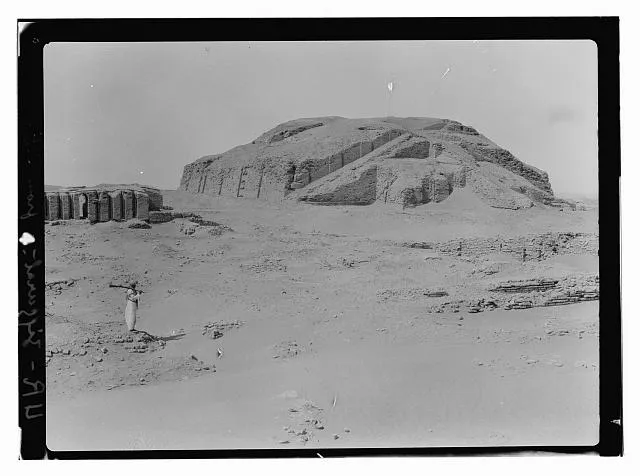
Source: Library of Congress - American Colony (Jerusalem). Photo Department
The earliest known cities appeared in the region of Mesopotamia around 3500 BCE. This area, located between the Tigris and Euphrates rivers in present-day Iraq, provided fertile soil but also faced unpredictable floods and hot, dry summers. The Sumerians were among the first people to settle here and create large, organized communities known as city-states. Each city-state had its own ruler, government, and laws, but shared language and culture with other Sumerian cities.
To survive and thrive in Mesopotamia’s difficult environment, Sumerians developed advanced irrigation systems. They dug canals to carry river water to their fields, making agriculture possible even during dry periods. Archaeologists have found clay tablets from Uruk and Ur that show detailed plans of these canals. The success of farming allowed Sumerian cities like Uruk, Ur, and Lagash to grow in size and wealth. With more food, populations increased and people began to specialize in different jobs, such as potters, merchants, and scribes. This led to a complex social hierarchy with kings and priests at the top and slaves at the bottom.
Sumerian city-states were known for their impressive architecture and inventions. One of the most important buildings was the ziggurat, a massive stepped temple that served as a religious center. The remains of the ziggurat at Uruk give us clues about Sumerian religious beliefs and their use of mud bricks. Sumerians also invented cuneiform, the world’s first system of writing, by pressing wedge-shaped marks into clay tablets. These tablets recorded trade, laws, and stories such as the Epic of Gilgamesh, providing historians with valuable primary sources about daily life and government.
Over time, competition and conflict arose between city-states for control of land and water. Some, like the city-state of Lagash, built protective walls and armies. By about 2350 BCE, Sumerian cities were unified under the rule of Sargon of Akkad, marking the end of Sumerian independence. Still, many aspects of Sumerian culture, such as writing and religious traditions, continued to influence later civilizations.
The Sumerian city-states of Mesopotamia were among the first true urban societies, shaping government, technology, and culture for centuries to come. Studying their achievements helps us understand how geography, innovation, and human cooperation gave rise to civilization.
Interesting Fact: Some Sumerian city-states had populations of more than 40,000 people, making them among the largest settlements in the ancient world.
Comprehension quiz (8 questions)
1. Where did Sumerians build their cities?
2. What is a ziggurat?
3. Who unified the Sumerian city-states?
4. Why did Sumerians build canals?
5. What effect did irrigation have?
6. How did writing help Sumerians?
7. Sumerians invented cuneiform writing.
8. What is 'social hierarchy'?
Perfect for the way you teach
- Build comprehension skills
- Auto-graded quiz
- Differentiated reading
- Read together at home
- Improve fluency
- Quiet reading time
- Reading curriculum support
- Independent practice
- Track Lexile growth