Symbiosis: Mutualism, Commensalism, and Parasitism
Interactive passage with audio narration, comprehension questions, and printable PDF.
By completing this purchase you agree to our Terms of Use and Privacy Policy. Your subscription renews automatically until you cancel. You can cancel anytime from your account settings. All sales are final and non-refundable. Digital content is available for download in your account immediately upon purchase.
What's included
Symbiosis: Mutualism, Commensalism, and Parasitism preview and details
About this printable Symbiosis: Mutualism, Commensalism, and Parasitism science reading passage, NGSS-aligned (Grade 6)
Sample passage and quiz from Symbiosis: Mutualism, Commensalism, and Parasitism
Reading passage and comprehension quiz preview
Symbiosis: Mutualism, Commensalism, and Parasitism
Throughout nature, living organisms have developed remarkable relationships that go far beyond simple competition for resources. Different species often form close, long-term partnerships where they work together, live alongside each other, or depend on one another for survival. This fascinating biological phenomenon is called symbiosis, and it plays a crucial role in how ecosystems operate. From tiny bacteria to massive whales, symbiotic relationships demonstrate the incredible ways that organisms have evolved to survive and thrive by connecting their lives with other species.
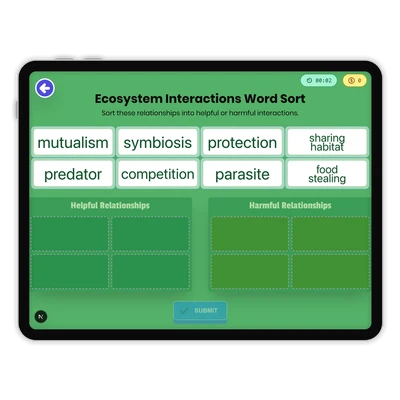
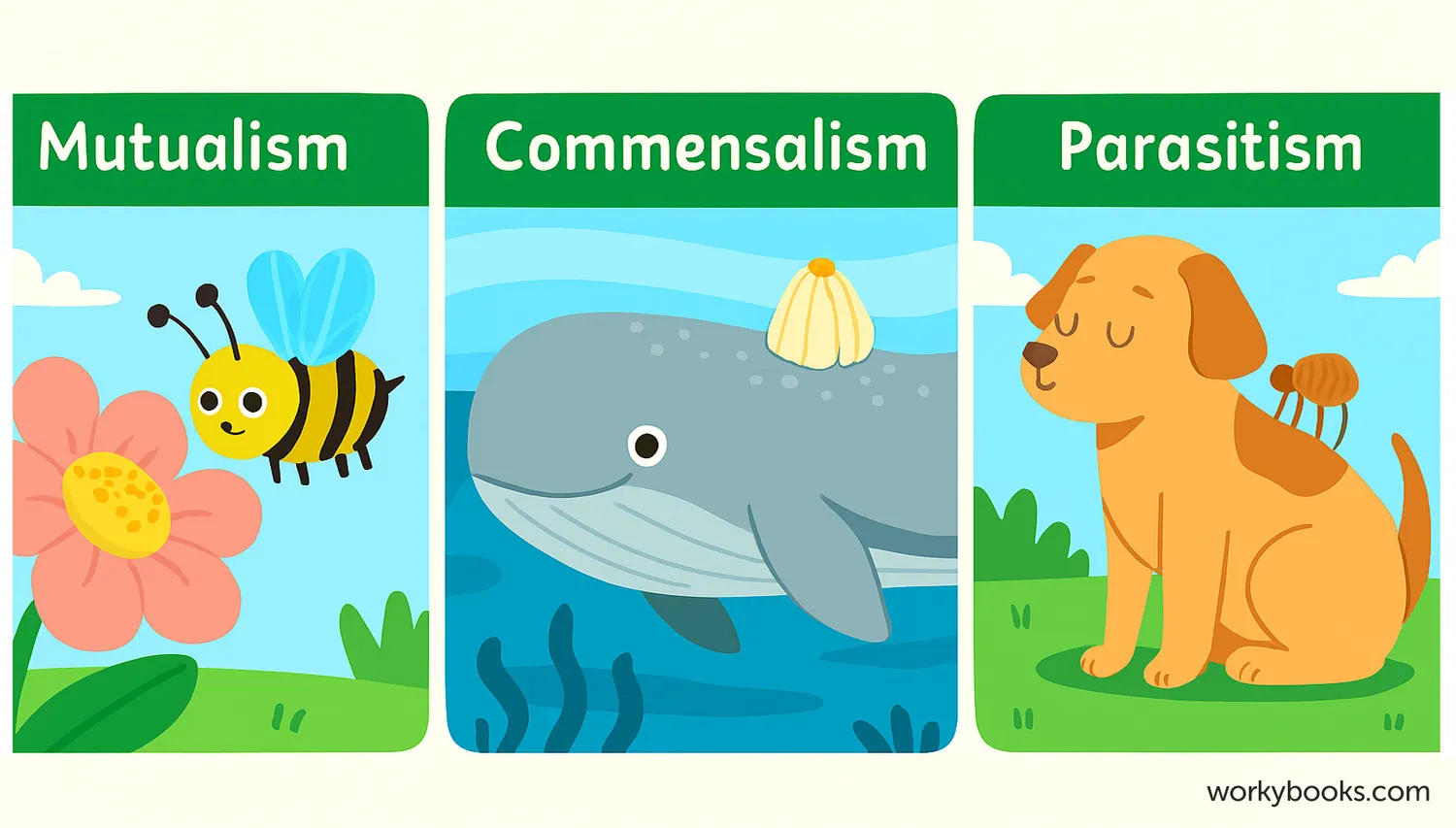
There are three main types of symbiotic relationships: mutualism, commensalism, and parasitism. Each one describes a different kind of interaction and impact on the organisms involved.
First, let's look at mutualism. This is when both organisms involved in the relationship benefit. Think of it as a win-win situation! A classic example is the relationship between bees and flowers. Bees get nectar, which is food, from the flowers. As they collect nectar, they spread pollen from one flower to another, which helps the flowers reproduce. Both the bee and the flower get something good out of this interaction.
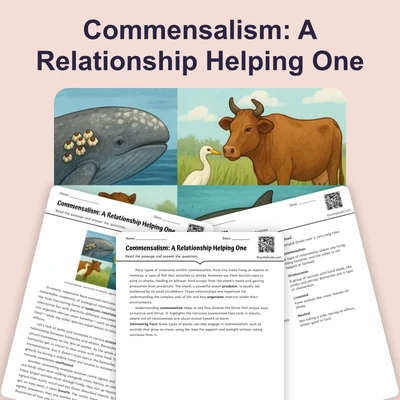
Next is commensalism. In this type of symbiosis, one organism benefits, and the other is neither helped nor harmed. It's like one friend getting a ride to school and the other friend, the driver, doesn't mind but also doesn't get anything extra from it. An example in nature is barnacles living on whales. The barnacles attach to the whale's skin, getting a safe place to live and easy access to food as the whale swims through nutrient-rich water. The whale, however, doesn't seem to be affected at all by the barnacles.
Finally, we have parasitism. This is a relationship where one organism, called the parasite, benefits by living on or in another organism, called the host. The host is harmed in the process. Unlike predators that quickly kill their prey, parasites usually don't kill their host right away because they need the host to survive. Fleas on a dog are a good example. The fleas feed on the dog's blood, which gives them food, but it makes the dog itchy and uncomfortable, and can even cause health problems. Ticks and tapeworms are other common parasites.
Understanding these different types of symbiotic relationships helps us see the amazing complexity and balance in nature. Every interaction, whether beneficial or harmful, plays a role in the survival of species and the health of the entire biome.
Interesting Fact: Some fungi and algae live together in a mutualistic relationship to form lichens, which can survive in extremely harsh environments where neither could live alone!
Comprehension quiz (10 questions)
1. Which relationship benefits both organisms?
2. What is a parasite's main goal?
3. True or False: A parasite always kills its host quickly.
4. Which word means a close, long-term interaction?
5. A clownfish living in an anemone (protection) is an example of:
6. If a bird builds a nest in a tree, and the tree is not affected, this is:
7. What relationship best describes a mosquito biting a human?
8. How would removing all bees affect flowering plants?
9. A lion hunting a zebra is NOT an example of symbiosis because:
10. Why is it important for scientists to study symbiotic relationships?
Perfect for the way you teach
- Build comprehension skills
- Auto-graded quiz
- Differentiated reading
- Read together at home
- Improve fluency
- Quiet reading time
- Reading curriculum support
- Independent practice
- Track Lexile growth