Taiga Biome Facts and Location
Interactive passage with audio narration, comprehension questions, and printable PDF.
By completing this purchase you agree to our Terms of Use and Privacy Policy. Your subscription renews automatically until you cancel. You can cancel anytime from your account settings. All sales are final and non-refundable. Digital content is available for download in your account immediately upon purchase.
What's included
Taiga Biome Facts and Location preview and details
About this printable Taiga Biome Facts and Location science reading passage, NGSS-aligned (Grade 6)
Sample passage and quiz from Taiga Biome Facts and Location
Reading passage and comprehension quiz preview
Taiga Biome Facts and Location
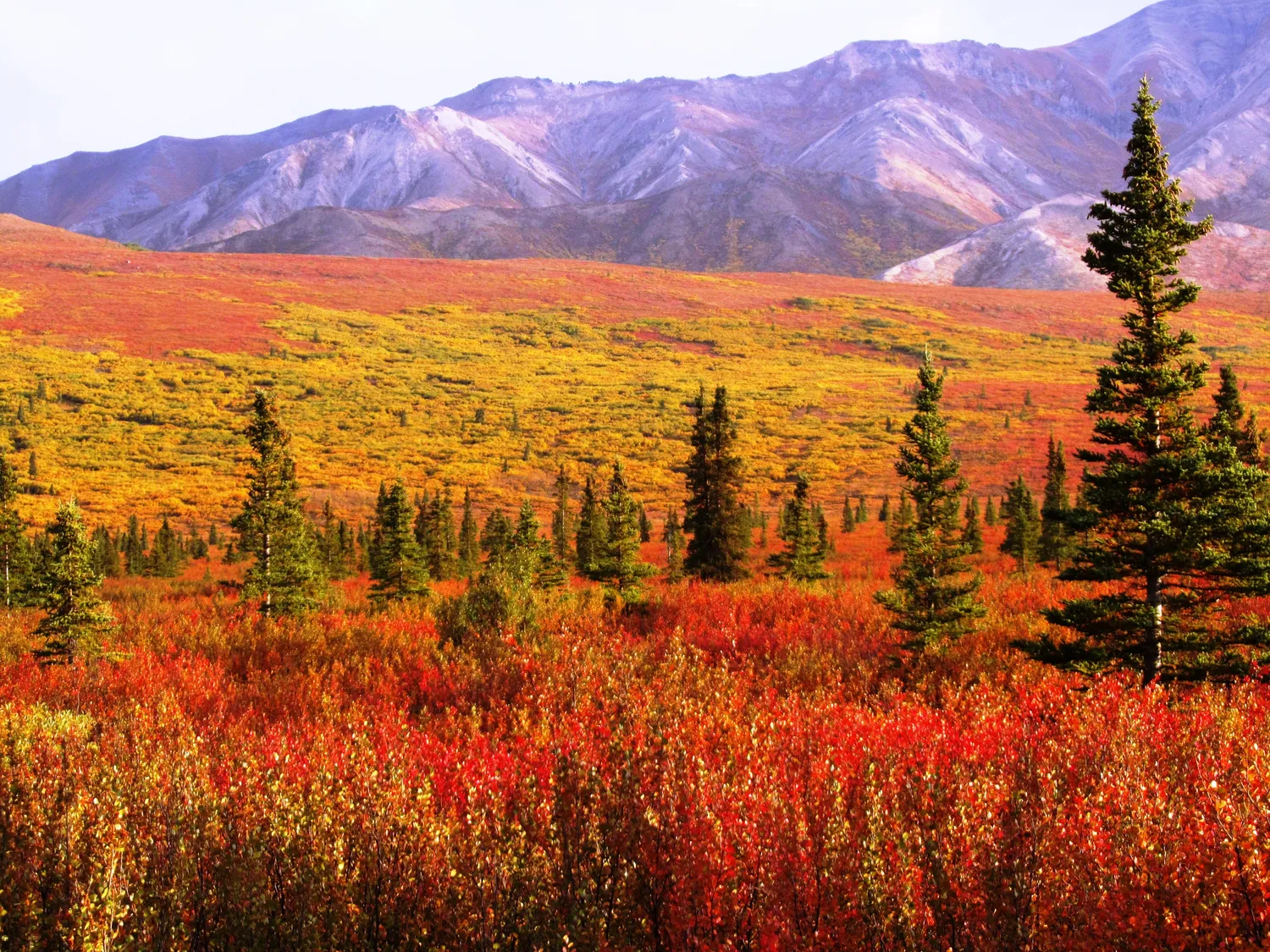
"Fall colors in a transition zone, where boreal forest gives way to brushy tundra" by NPS Photo / Wikimedia Commons.
Imagine a world of towering, evergreen trees, where winter lasts for months and the ground beneath is often frozen solid. This is the magnificent Taiga biome, also known as the boreal forest. It's the largest land biome on Earth, stretching across vast northern regions of North America, Europe, and Asia. If you look at a world map, you'll see a green belt of these forests just south of the Arctic tundra.
The Taiga's climate is characterized by long, cold winters and short, mild summers. Temperatures can plummet to extreme lows, sometimes reaching -50°C (-58°F)! This harsh climate shapes everything that lives here. The dominant plant life in the Taiga consists of coniferous trees, such as spruces, firs, and pines. These trees are well-adapted to the cold, with needle-like leaves that have a waxy coating to prevent water loss and shed snow easily. Their dark color also helps them absorb more sunlight.
Beneath the surface, much of the Taiga soil contains permafrost – a layer of ground that remains frozen for at least two consecutive years. This permafrost prevents water from draining away, creating many bogs and wetlands. The soil itself is often acidic and nutrient-poor, making it challenging for many plants to grow, but the coniferous trees have specialized roots that can thrive in these conditions.
The Taiga biome is home to a diverse array of wildlife specially adapted to its challenging environment. Animals like moose, caribou, bears, wolves, and various species of foxes and lynx live here. Many animals have thick fur or feathers to keep warm, and some, like the snowshoe hare, change their fur color seasonally to blend in with their surroundings. Birds like owls and crossbills are also common. Understanding the Taiga biome helps us appreciate how living things adapt to extreme conditions and the unique ecosystem it creates, making it a crucial part of our global environment.
Interesting Fact: The Taiga contains about one-third of all the trees on Earth, playing a massive role in global oxygen production.
Comprehension quiz (10 questions)
1. What is another name for the Taiga biome?
2. Which of these trees is NOT typically found in the Taiga?
3. Why do coniferous trees have needle-like leaves?
4. How do animals like the snowshoe hare adapt?
5. What effect does permafrost have on the soil?
6. If the Taiga's average temperature suddenly rose significantly, what might happen to the permafrost?
7. Which characteristic best helps Taiga animals survive cold winters?
8. If a new species of broadleaf tree were introduced to the Taiga, would it likely thrive?
9. The Taiga biome is found only in North America.
10. What does the word 'permafrost' mean in the passage?
Perfect for the way you teach
- Build comprehension skills
- Auto-graded quiz
- Differentiated reading
- Read together at home
- Improve fluency
- Quiet reading time
- Reading curriculum support
- Independent practice
- Track Lexile growth