This learning resource is available in interactive and printable formats. The interactive worksheet can be played online and assigned to students. The Printable PDF version can be downloaded and printed for completion by hand.
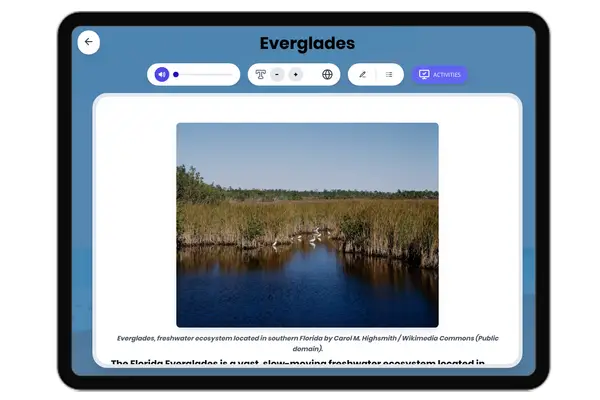
This comprehensive science passage introduces middle school students to the concept of wetland biomes. Aligned with NGSS standard MS-LS2-1, it explains how wetlands function as transitional zones between aquatic and terrestrial environments. The passage describes the unique soil and water conditions in wetlands, explores the four main types—marshes, swamps, bogs, and fens—and discusses the specialized adaptations that allow plants and animals to survive in these habitats. Real-world examples, such as the Everglades and peat bogs, illustrate the diversity of wetlands. Students will learn about the ecological importance of wetlands, including their roles in water purification, flood control, and supporting biodiversity. The resource includes a glossary, differentiated and Spanish versions, a multiple-choice quiz, writing prompts, and graphic organizers for deeper learning. Audio integration supports accessibility for all learners.
CONTENT PREVIEW
Expand content preview
"Wetlands near Drury, Maryland" by Highsmith, Carol M., 1946- / Library of Congress.
Wetlands are biomes where water covers or saturates the soil for at least part of the year. These areas are vital to Earth's health because they support a wide variety of plants, animals, and microorganisms. Wetlands help control floods, clean water, and provide habitats for many rare species. Scientists study wetlands to understand how they function as natural filters and as transitional zones between dry land and aquatic environments. Understanding wetlands helps us see how ecosystems interact and why protecting these areas is so important.
Types of Wetlands and Their Features Wetlands can be classified into four main types: marshes, swamps, bogs, and fens. Marshes are dominated by grasses and reeds and often have standing or slow-moving water. Swamps usually have trees or shrubs and support greater plant diversity. Bogs are acidic wetlands with little surface water movement and are rich in peat, which is partially decayed plant material. Fens also contain peat but receive water from both rainfall and groundwater, making them less acidic than bogs. Each type of wetland has its own unique soil composition and plant communities, shaped by water depth, movement, and chemistry.
Mechanisms and Interactions in Wetlands Wetlands act as transitional zones between terrestrial (land) and aquatic (water) systems. When water floods a wetland, oxygen levels in the soil drop, creating anaerobic conditions. Only certain plants, like cattails and mangroves, can survive here because they have specialized adaptations, such as air spaces in their stems or roots that allow oxygen transport. Wetland plants slow water flow, which causes sediments and pollutants to settle out, purifying the water. For example, the Everglades in Florida filter about 2.6 billion gallons of water each day. Wetlands also store excess rainwater, reducing the risk of floods downstream. The interaction between plants, water, and soil forms a complex system that supports a high level of biodiversity.
Adaptations and Global Importance Plants and animals in wetlands have evolved unique features to survive variable water levels and low oxygen soils. Some wetland plants grow shallow, spreading roots to absorb oxygen from the surface, while others develop thick, waxy leaves to prevent water loss. Animals like beavers and amphibians are specially adapted to live in both water and on land. Globally, wetlands cover about 6% of Earth's land surface but are home to more than 40% of all species. However, wetlands are disappearing at an alarming rate due to human activities such as draining for agriculture and urban development. Loss of wetlands reduces natural flood protection, water quality, and habitats for many species, highlighting the urgent need for conservation.
Wetlands show how interconnected Earth's systems are, serving as natural bridges between land and water. Protecting these unique environments supports biodiversity, improves water quality, and helps people and wildlife adapt to environmental change.
Interesting Fact: Some wetland plants, like the Venus flytrap, have evolved to trap and digest insects to get nutrients in poor, waterlogged soils!
What is a wetland?
A biome where water covers or saturates soil for part or all of the yearA dry area with little water and few plantsA forest with many trees and no waterA mountain area with high elevation
Which of the following is NOT a type of wetland described in the passage?
MarshDesertBogFen
What is the main function of wetland plants in water purification?
They slow water flow, allowing sediments and pollutants to settle outThey absorb sunlight and produce oxygenThey make the water move fasterThey eat insects in the water
Which adaptation helps some wetland plants survive in anaerobic soil conditions?
Air spaces in stems or roots for oxygen transportThick bark for protectionDeep taproots for stabilityNeedle-like leaves to reduce water loss
Based on the passage, which wetland type is more acidic and rich in peat?
MarshSwampBogFen
What does the term 'biodiversity' mean in the context of wetlands?
The variety of different living things in a particular environmentHow much water is present in an areaThe number of trees in a forestThe movement of water through an ecosystem
How do human activities threaten wetlands?
By draining them for agriculture and urban developmentBy planting more trees in themBy increasing rainfallBy cleaning up pollution
Why are wetlands considered transitional zones?
They are natural areas between land and waterThey are found only in mountainsThey have no plantsThey are always dry
Wetlands are home to more than 40% of all species on Earth. (True/False)
TrueFalse
Wetlands can help reduce the risk of floods downstream. (True/False)
TrueFalse
Perfect For:
👩🏫 Teachers
• Reading comprehension practice
• Auto-graded assessments
• Literacy skill development
👨👩👧👦 Parents
• Reading practice at home
• Comprehension improvement
• Educational reading time
🏠 Homeschoolers
• Reading curriculum support
• Independent reading practice
• Progress monitoring
Reading Features:
📖
Reading Passage
Engaging fiction or nonfiction text
❓
Comprehension Quiz
Auto-graded questions
📊
Instant Feedback
Immediate results and scoring
📄
Printable Version
Download for offline reading
🔊
Read Aloud
Voice-over with word highlighting
Reviews & Ratings
No reviews yet. Be the first to share your experience!
Related Content
The Leafy Sea Dragon: Nature's Living Seaweed
This NGSS-aligned passage explores how leafy sea dragons (Phycodurus eques) demonstrate key life science concepts for mi...
MS-LS2-1RI.6.3RI.7.3RI.8.8
The Narwhal: Arctic’s Unicorn of the Sea
This NGSS-aligned passage (MS-LS2-1) explores how narwhals survive in Arctic ecosystems. Students learn about specialize...
MS-LS2-1RI.6.3RI.7.3RI.8.8
The Blue-Ringed Octopus
This NGSS aligned passage explores how the tiny blue-ringed octopus impacts its ecosystem through predator-prey relation...
MS-LS2-1RI.6.3RI.7.3RI.8.8
Tardigrades: Microscopic Superheroes
Aligned to MS-LS1-1, this passage examines how tardigrade cell structures (TDP proteins, DNA-repair enzymes) allow survi...
MS-LS2-1RI.6.3RI.7.3RI.8.8
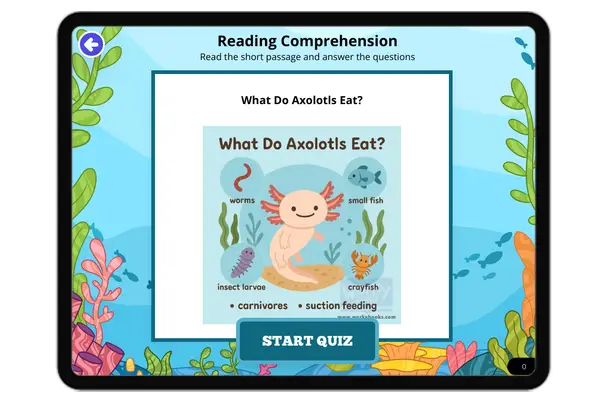
What Do Axolotls Eat?
This science reading passage, titled "What Do Axolotls Eat?", offers an engaging exploration into the feeding habits of ...
MS-LS2-1
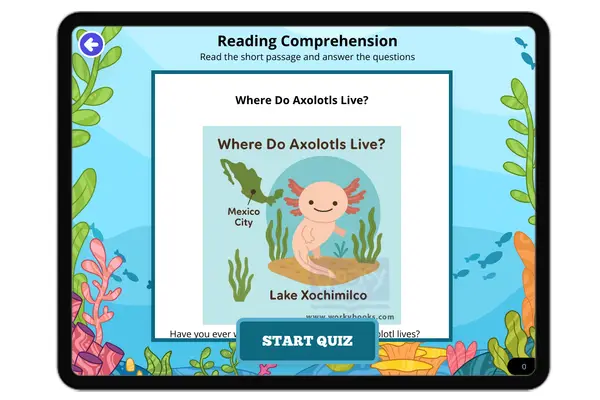
Where Do Axolotls Live?
This science reading passage, titled "The Axolotl's Home," delves into the specific natural environment of the fascinati...
MS-LS4-DMS-LS2-1
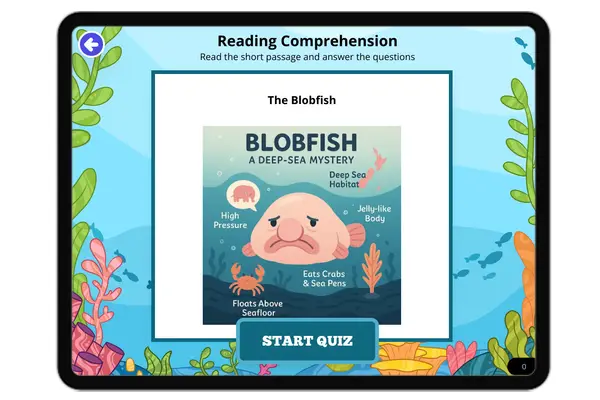
The Blobfish
This science reading passage, titled "The Blobfish: A Deep-Sea Mystery," introduces students to one of Earth's most pecu...
MS-LS4-DMS-LS2-1
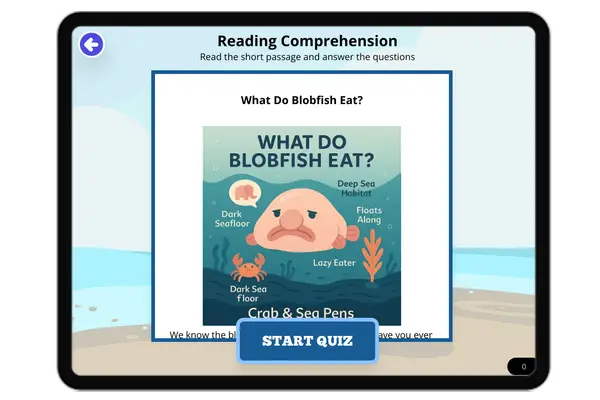
What Do Blobfish Eat?
This science reading passage, titled "What Do Blobfish Eat?", offers an engaging exploration into the feeding habits of ...
MS-LS2-1
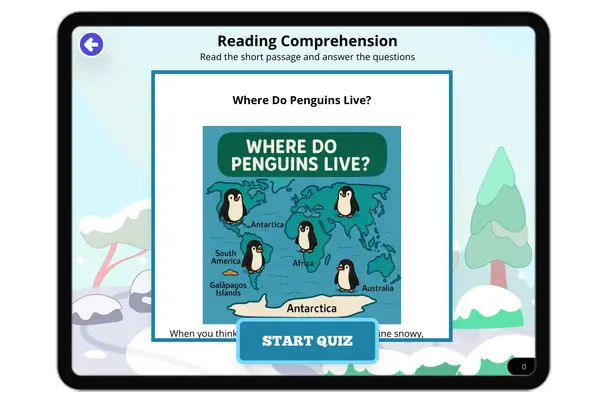
Where Do Penguins Live?
This engaging science reading passage, titled "Where Do Penguins Live? A Cold and Coastal World," clarifies the diverse ...
MS-LS2-1
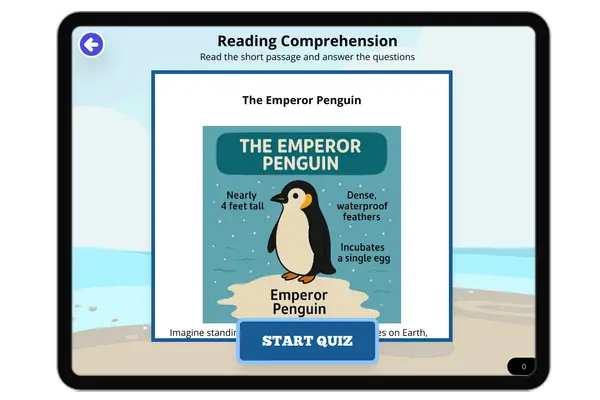
The Emperor Penguin
This science reading passage, titled "The Emperor Penguin: Antarctica's Royal Survivor," introduces students to one of t...
MS-LS2-1
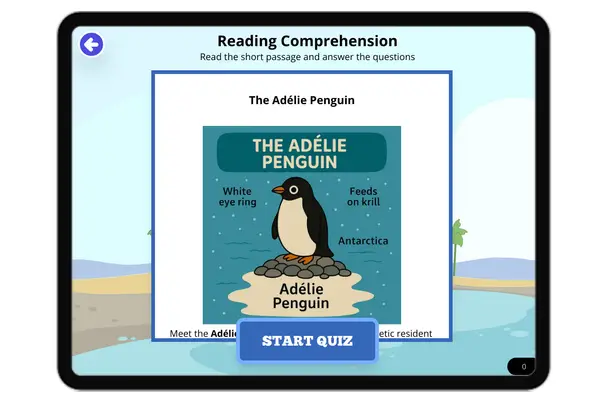
The Adélie Penguin
This engaging science reading passage, titled "The Adélie Penguin: Antarctica's Little Explorer," introduces students to...
MS-LS2-1
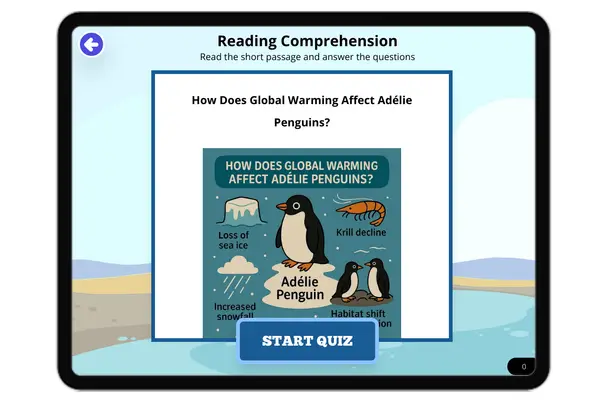
How Does Global Warming Affect Adélie Penguins?
This comprehensive science passage, titled "How Does Global Warming Affect Adélie Penguins?", details the significant im...
MS-LS2-1
Desert Birds
This informational passage for grades 6-8 examines how desert birds survive and thrive in some of the harshest environme...
MS-LS2-1MS-LS2-2MS-LS1-4
Abiotic Factors in Ecosystems
This comprehensive informational reading passage is designed for middle school science students and aligns with NGSS sta...
MS-LS2-1
Biomes: Terrestrial Ecosystems
This NGSS-aligned science reading passage for grades 6-8 provides a comprehensive survey of Earth’s major terrestrial bi...
MS-LS2-1
Biomes: Aquatic Ecosystems
This middle school science passage, aligned with NGSS standard MS-LS2-1, introduces students to the key features and mec...
MS-LS2-1
Galápagos Islands
This engaging science passage explores the Galápagos Islands, a volcanic archipelago located off the coast of Ecuador in...
MS-LS2-1MS-LS4-4MS-ESS3-4
Florida Everglades
This comprehensive passage introduces middle school students to the Florida Everglades, a distinctive wetland ecosystem ...
MS-LS2-1MS-LS2-4MS-ESS3-3MS-ESS3-4
Great Barrier Reef
This passage introduces middle school students to the Great Barrier Reef, the world's largest coral reef system, located...