This learning resource is available in interactive and printable formats. The interactive worksheet can be played online and assigned to students. The Printable PDF version can be downloaded and printed for completion by hand.
This engaging science passage explores the Galápagos Islands, a volcanic archipelago located off the coast of Ecuador in the Pacific Ocean. Aligned with NGSS standards MS-LS2-1, MS-LS4-4, and MS-ESS3-4, students will learn about the islands’ volcanic origins, their geographic isolation, and the resulting evolution of unique endemic species like the giant tortoise, marine iguana, and blue-footed booby. The passage explains how Charles Darwin’s observations in the Galápagos inspired his theory of evolution by natural selection. Students will examine the islands’ role as a UNESCO World Heritage Site, the ongoing conservation efforts, and the challenges posed by invasive species. Activities include a glossary, comprehension questions, writing prompts, and graphic organizers. This resource is ideal for middle school science classrooms and includes audio integration for accessibility, making it a comprehensive tool for exploring ecosystems, adaptation, and conservation.
CONTENT PREVIEW
Expand content preview
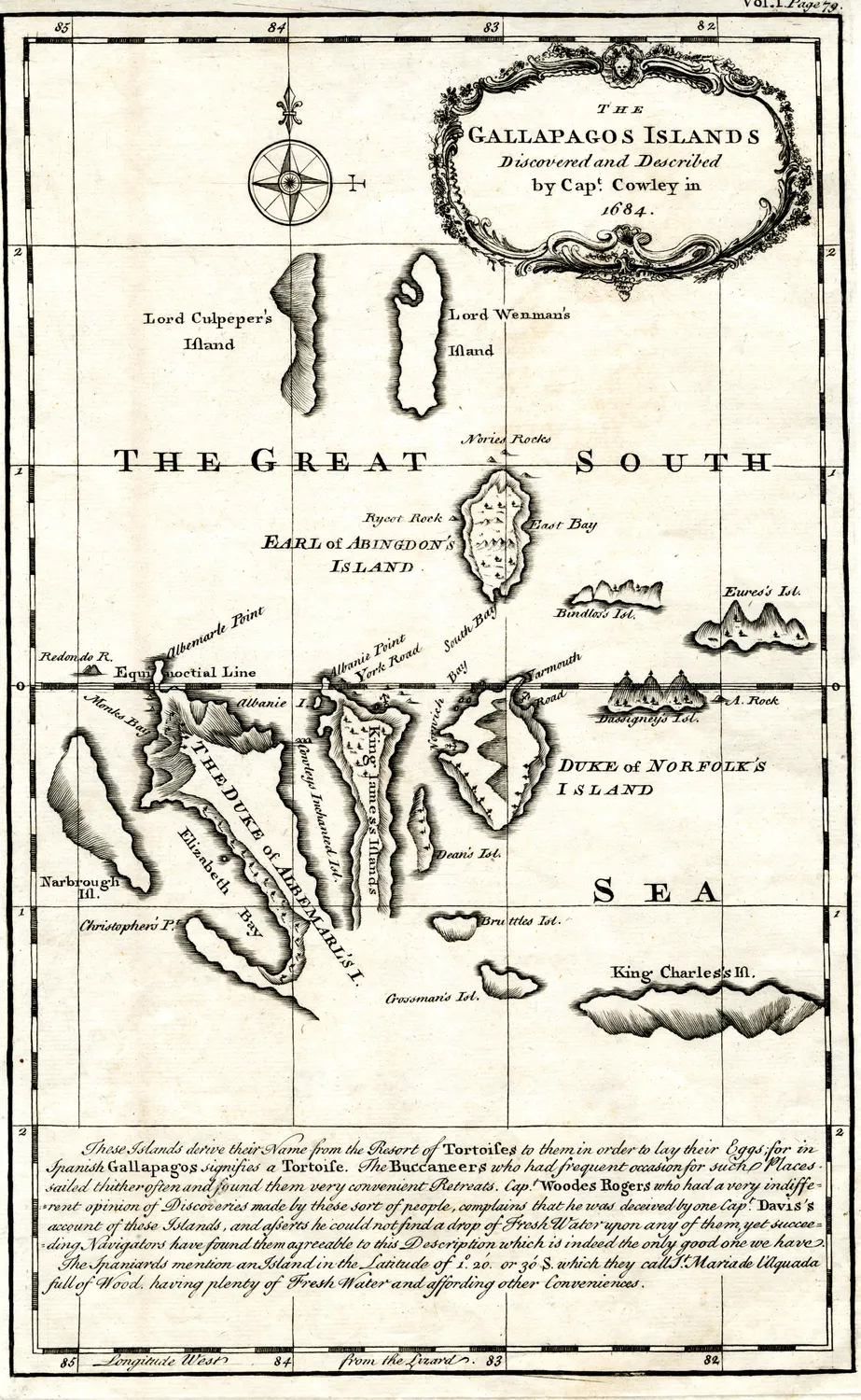
"Galapagos 1744" by Emanuel Bowen, from an original by William Ambrosia Cowley / Wikimedia Commons (Public domain).
The Galápagos Islands are a remote group of volcanic islands located about 1,000 kilometers west of Ecuador in the Pacific Ocean. Their isolation has made them a natural laboratory for studying evolution and ecosystems. The islands are famous for their unique plants and animals, many of which are endemic, meaning they are found nowhere else on Earth. Scientists have long studied the Galápagos to understand how living things adapt and change over time.
Volcanic Origins and Geographic Isolation The Galápagos Islands were formed by volcanic activity millions of years ago. Hot magma from beneath Earth’s crust pushed upward, creating new land in the ocean. This process, called volcanism, still shapes the islands today, with some volcanoes remaining active. Because the islands are separated from the mainland by vast stretches of ocean, only a few species were able to reach them, usually by drifting on vegetation or flying. Over time, these species evolved to fit the unique environments found on each island, leading to high levels of biodiversity.
Unique Wildlife and Darwin's Discoveries The Galápagos are home to extraordinary wildlife. The giant tortoise can weigh up to 250 kilograms and live over 100 years. The marine iguana is the only lizard in the world that swims and feeds in the ocean. Brightly colored blue-footed boobies are well-known for their courtship dances. Charles Darwin visited the islands in 1835 and noticed how similar species varied from island to island, helping him develop the theory of natural selection. This theory explains how species adapt to their environment over generations.
Conservation and Modern Challenges Today, the Galápagos Islands are a UNESCO World Heritage Site and are protected by strict conservation laws. However, the islands face challenges from invasive species like rats and goats, which threaten native wildlife and plants. Scientists and park rangers work to control these invaders and restore balance to the ecosystem. In addition, increasing human activity, such as tourism and fishing, puts pressure on the fragile environment. Conservation efforts focus on sustainable practices to ensure that the Galápagos’ unique biodiversity survives for future generations.
Protecting the Galápagos Islands is important not just for Ecuador, but for the entire world. These islands help scientists understand evolution, adaptation, and the impact of humans on nature. The lessons learned here can inform conservation efforts in other ecosystems globally.
Interesting Fact: The Galápagos marine iguana can dive up to 9 meters (30 feet) underwater to feed on seaweed—a unique adaptation among lizards!
Where are the Galápagos Islands located?
In the Pacific Ocean, about 1,000 kilometers west of EcuadorIn the Atlantic Ocean, near BrazilIn the Indian Ocean, near IndiaIn the Pacific Ocean, near Australia
What does it mean if a species is 'endemic' to the Galápagos?
It is only found on these islandsIt lives in many different placesIt migrates to other continentsIt is always endangered
Which animal is unique for being able to swim and feed in the ocean?
What does the term 'biodiversity' mean in the passage?
A large number of fish in the oceanDifferent types of plants and animals living togetherVolcanoes on the islandsThe blue color of birds’ feet
How did the volcanic origin of the Galápagos Islands affect the types of species found there?
It made the islands cold and lifelessIt created new land far from the mainland, allowing only some species to arrive and evolve separatelyIt caused all species to migrate awayIt led to the extinction of all native animals
Why are invasive species a problem in the Galápagos Islands?
They bring new food for native animalsThey help keep the ecosystem balancedThey threaten native wildlife and plants by competing or causing harmThey make islands more colorful
How did Charles Darwin’s visit to the Galápagos Islands change scientific understanding?
He discovered a new oceanHe developed the theory of natural selection by observing differences in speciesHe invented new fishing methodsHe built the first volcano monitoring station
What is one way people are working to protect the Galápagos Islands?
By introducing more invasive speciesBy building more hotelsBy using sustainable practices and controlling invasive speciesBy removing all animals
The blue-footed booby is a type of fish. (True/False)
TrueFalse
The Galápagos Islands are recognized as a UNESCO World Heritage Site. (True/False)
TrueFalse
Perfect For:
👩🏫 Teachers
• Reading comprehension practice
• Auto-graded assessments
• Literacy skill development
👨👩👧👦 Parents
• Reading practice at home
• Comprehension improvement
• Educational reading time
🏠 Homeschoolers
• Reading curriculum support
• Independent reading practice
• Progress monitoring
Reading Features:
📖
Reading Passage
Engaging fiction or nonfiction text
❓
Comprehension Quiz
Auto-graded questions
📊
Instant Feedback
Immediate results and scoring
📄
Printable Version
Download for offline reading
🔊
Read Aloud
Voice-over with word highlighting
Reviews & Ratings
No reviews yet. Be the first to share your experience!
Related Content
Natural Disaster: Tornadoes
Tornadoes are dangerous spinning columns of air. Knowing the signs and having safety plans can help protect you from the...
RI.3.1RI.4.4RI.4.2RI.5.2
The Leafy Sea Dragon: Nature's Living Seaweed
This NGSS-aligned passage explores how leafy sea dragons (Phycodurus eques) demonstrate key life science concepts for mi...
MS-LS2-1RI.6.3RI.7.3RI.8.8
The Narwhal: Arctic’s Unicorn of the Sea
This NGSS-aligned passage (MS-LS2-1) explores how narwhals survive in Arctic ecosystems. Students learn about specialize...
MS-LS2-1RI.6.3RI.7.3RI.8.8
The Giant Isopod: Biological Evolution
This NGSS passage examines how giant isopods evolved for deep-sea survival, including slow metabolism for food scarcity,...
MS-LS4-4RI.6.3RI.7.3RI.8.8
The Blue-Ringed Octopus
This NGSS aligned passage explores how the tiny blue-ringed octopus impacts its ecosystem through predator-prey relation...
MS-LS2-1RI.6.3RI.7.3RI.8.8
Tardigrades: Microscopic Superheroes
Aligned to MS-LS1-1, this passage examines how tardigrade cell structures (TDP proteins, DNA-repair enzymes) allow survi...
MS-LS2-1RI.6.3RI.7.3RI.8.8
What Do Axolotls Eat?
This science reading passage, titled "What Do Axolotls Eat?", offers an engaging exploration into the feeding habits of ...
MS-LS2-1
Where Do Axolotls Live?
This science reading passage, titled "The Axolotl's Home," delves into the specific natural environment of the fascinati...
MS-LS4-DMS-LS2-1
The Blobfish
This science reading passage, titled "The Blobfish: A Deep-Sea Mystery," introduces students to one of Earth's most pecu...
MS-LS4-DMS-LS2-1
What Do Blobfish Eat?
This science reading passage, titled "What Do Blobfish Eat?", offers an engaging exploration into the feeding habits of ...
MS-LS2-1
Where Do Penguins Live?
This engaging science reading passage, titled "Where Do Penguins Live? A Cold and Coastal World," clarifies the diverse ...
MS-LS2-1
The Emperor Penguin
This science reading passage, titled "The Emperor Penguin: Antarctica's Royal Survivor," introduces students to one of t...
MS-LS2-1
The Adélie Penguin
This engaging science reading passage, titled "The Adélie Penguin: Antarctica's Little Explorer," introduces students to...
MS-LS2-1
How Does Global Warming Affect Adélie Penguins?
This comprehensive science passage, titled "How Does Global Warming Affect Adélie Penguins?", details the significant im...
MS-LS2-1
What Is Biodiversity?
This comprehensive science reading passage for grades 6-8 introduces students to biodiversity and explores its importanc...
MS-LS2-5MS-LS4-4
Conservation Strategies
This comprehensive passage introduces students in grades 6-8 to the major strategies used in conservation biology, such ...
MS-LS2-5MS-ESS3-4
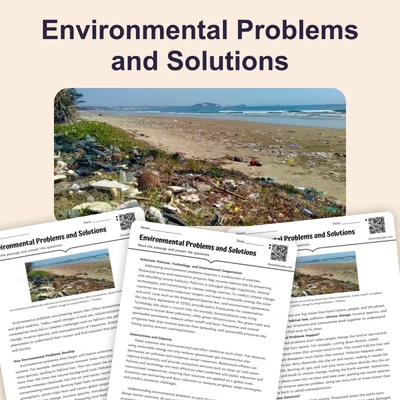
Environmental Problems and Solutions
This passage for grades 6-8 introduces major environmental problems such as habitat loss, pollution, climate change, inv...
MS-LS2-4MS-ESS3-3MS-ESS3-4
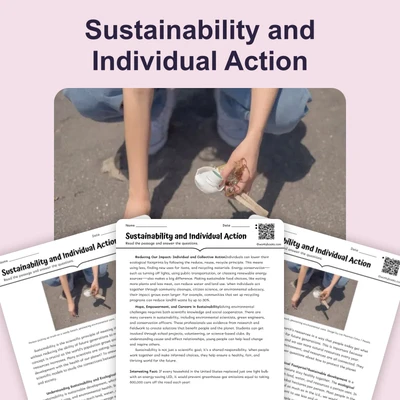
Sustainability and Individual Action
This reading passage for grades 6-8 introduces the concept of sustainability, defined as meeting current needs without c...
MS-ESS3-4
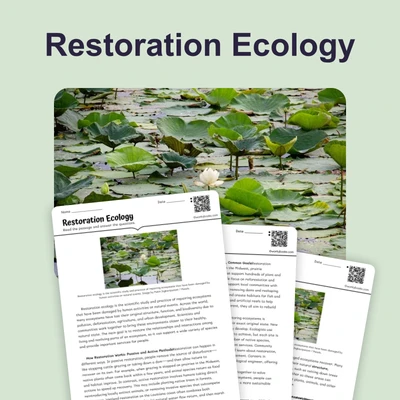
Restoration Ecology
This passage introduces middle school students to the vital field of restoration ecology, aligning with NGSS standards M...
MS-LS2-4MS-ESS3-4
Climate Change: Solutions and Mitigation
This passage explores scientific solutions and mitigation strategies for climate change, designed for middle school scie...