The CCC: Jobs for Young Men
Interactive passage with audio narration, comprehension questions, and printable PDF.
By completing this purchase you agree to our Terms of Use and Privacy Policy. Your subscription renews automatically until you cancel. You can cancel anytime from your account settings. All sales are final and non-refundable. Digital content is available for download in your account immediately upon purchase.
What's included
The CCC: Jobs for Young Men preview and details
About this printable The CCC: Jobs for Young Men reading passage (Grades 3-5)
Sample passage and quiz from The CCC: Jobs for Young Men
Reading passage and comprehension quiz preview
Civilian Conservation Corps
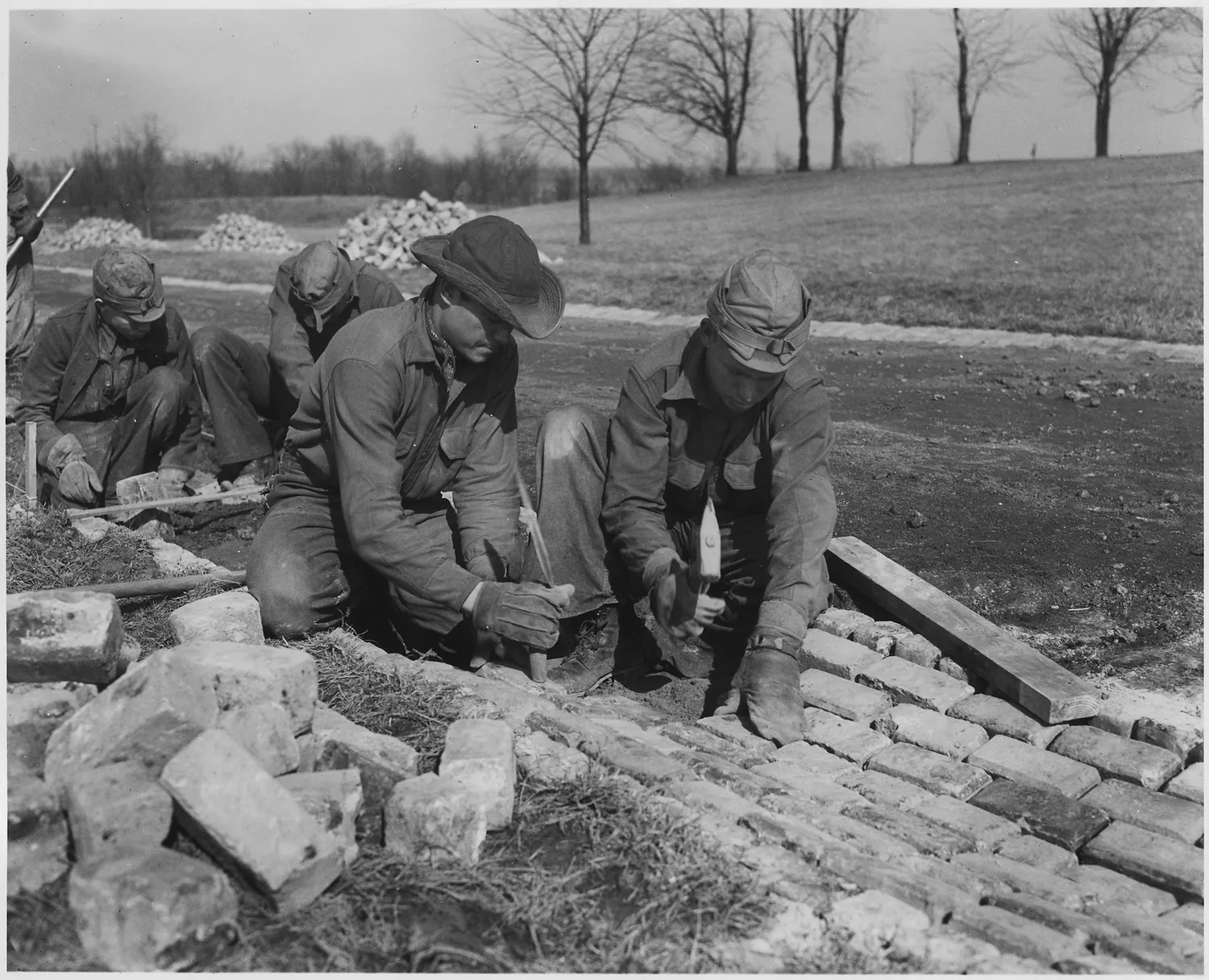
"Civilian Conservation Corps - NARA - 195832"
Source: Wikimedia Commons (Public domain).
The Civilian Conservation Corps (CCC) was a program created in 1933 during the Great Depression. The United States was facing tough times. Many people could not find work. Families were struggling to buy food and pay bills.
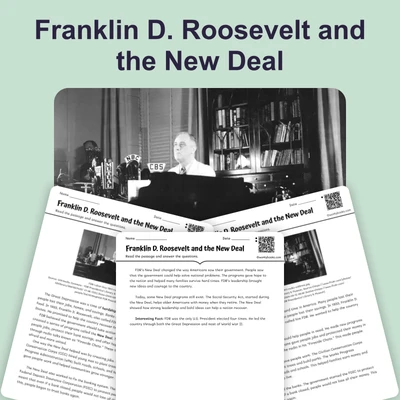
President Franklin D. Roosevelt started the CCC as part of the New Deal. The goal was to give young, unemployed men jobs and help the country at the same time. The CCC hired men ages 18 to 25. They were sent to camps across the country. At these camps, they worked on public lands.
The young men planted millions of trees. They built parks, roads, and trails. They fought forest fires and helped stop floods. Their work helped protect nature and made public spaces better for everyone. Each man in the CCC earned $30 a month. Most of that money was sent home to help their families.
Life in the camps was strict but fair. The men lived in dorms and wore uniforms. They learned new skills, such as building, farming, and caring for the land. The CCC also gave them food, shelter, and a small education program. For many, it was their first steady job.
The CCC did much more than just provide jobs. It helped build national parks like Shenandoah and Great Smoky Mountains. The men created trails, picnic areas, and planted trees to stop erosion. They built fire towers to spot smoke and prevent big fires. Their hard work made America’s lands healthier and safer.
By 1942, the CCC had hired about 3 million men. When World War II began, the program ended as workers joined the military or found other jobs. But the changes they made lasted a long time. Parks, forests, and trails are still used today, thanks to the CCC.
The Civilian Conservation Corps showed how people could work together to solve big problems. It helped families, protected nature, and gave young men hope for the future.
Interesting Fact: Many famous parks and forests in the United States were built or improved by CCC workers, and some of their stone buildings and trails are still standing today!
Comprehension quiz (8 questions)
1. When did the CCC start?
2. Who created the CCC?
3. What did CCC workers build?
4. Why was the CCC created?
5. How did the CCC help families?
6. What happened after World War II started?
7. The CCC planted millions of trees. True or false?
8. What does 'conservation' mean?
Common Core standards for The CCC: Jobs for Young Men
Explain events, procedures, ideas, or concepts in a historical, scientific, or technical text, including what happened and why, based on specific information in the text.
Determine the meaning of general academic and domain-specific words or phrases in a text relevant to a grade 4 topic or subject area.
Write informative/explanatory texts to examine a topic and convey ideas and information clearly.
Perfect for the way you teach
- Build comprehension skills
- Auto-graded quiz
- Differentiated reading
- Read together at home
- Improve fluency
- Quiet reading time
- Reading curriculum support
- Independent practice
- Track Lexile growth