The Crusades
Interactive passage with audio narration, comprehension questions, and printable PDF.
By completing this purchase you agree to our Terms of Use and Privacy Policy. Your subscription renews automatically until you cancel. You can cancel anytime from your account settings. All sales are final and non-refundable. Digital content is available for download in your account immediately upon purchase.
What's included
The Crusades preview and details
About this printable The Crusades reading passage (Grades 5-8)
Sample passage and quiz from The Crusades
Reading passage and comprehension quiz preview
The Crusades
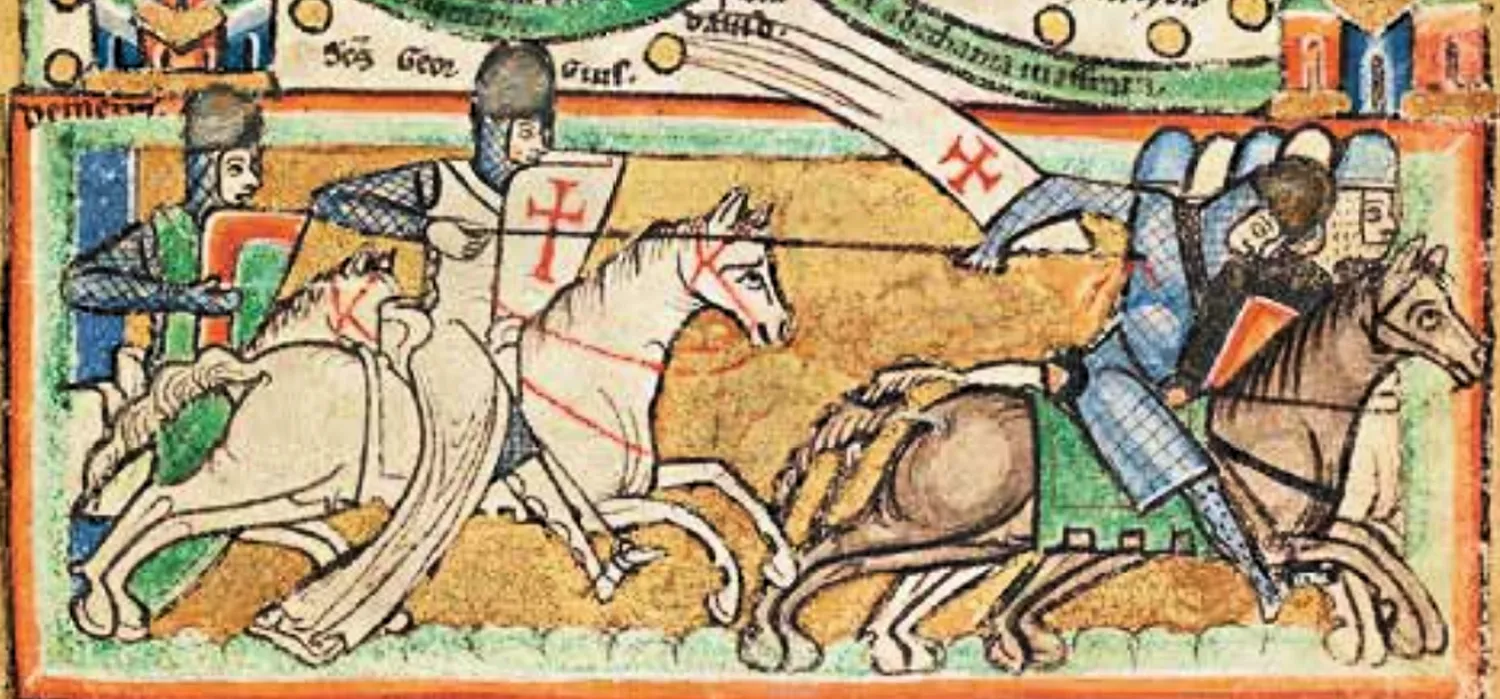
"Map of Crusader Jerusalem, late 12th century, Saint George and Saint Demetrius of Thessaloniki on horseback charging a group of fleeing mounted Muslim warriors at the Battle of Antioch (1098)" by End of 12th century artist / Wikimedia Commons.
The Crusades were a series of religious wars that took place between 1096 and 1291 in the Middle Ages. Led mainly by Christian knights from Europe, the Crusades aimed to capture the city of Jerusalem and other sacred sites in the Holy Land from Muslim rulers. For nearly 200 years, waves of armies and pilgrims traveled thousands of miles, fighting in battles, establishing new states, and changing the course of history.
The First Crusade began in 1095 when Pope Urban II called for Christians in Western Europe to help the Byzantine Empire, which was under threat from Muslim Seljuk Turks. He urged Christians to reclaim Jerusalem, which was seen as the birthplace of Jesus and a sacred city for Christianity. After a long and dangerous journey, Crusader armies captured Jerusalem in 1099. According to a letter written by Crusader leader Raymond of Aguilers, the city was taken after a difficult siege, with thousands of people involved on both sides.
Over the next two centuries, there were several more Crusades. The Second Crusade (1147–1149) failed to capture more territory, while the Third Crusade (1189–1192), led by famous rulers like Richard the Lionheart of England and Saladin, ended with a treaty that allowed Christian pilgrims to visit Jerusalem, but left the city under Muslim control. The Crusader states that were created in the region, including the Kingdom of Jerusalem, often had to defend themselves from attacks and relied on support from Europe. Archaeological evidence, such as the ruins of castles like Krak des Chevaliers in Syria, shows how Crusaders tried to maintain control of these lands.
Many different groups participated in the Crusades, including knights, peasants, merchants, and religious orders such as the Knights Templar. The reasons for joining were complex. Some sought religious forgiveness, others wanted adventure or wealth, and some were following their lords. The Crusades also led to cultural exchanges, trade growth, and new ideas moving between Europe and the Middle East. However, the wars caused great suffering, including violence against local Jewish and Muslim communities, and left a legacy of conflict and distrust.
By 1291, Muslim forces recaptured the last Crusader stronghold in the Holy Land. Although the Crusades failed to create lasting Christian kingdoms in the region, they changed European society. They increased contact with new cultures, goods, and technologies, and helped shape political and religious ideas.
The story of the Crusades connects to larger themes in world history, such as the power of religion, the importance of geography, and the long-term impact of cultural interaction and conflict.
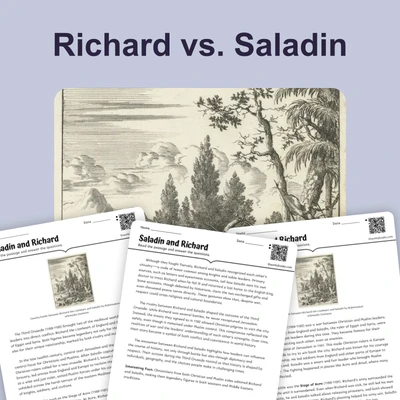
Interesting Fact: During the Third Crusade, Richard the Lionheart and Saladin respected each other as leaders, even sending each other gifts while still at war.
Comprehension quiz (8 questions)
1. When did the First Crusade begin?
2. Who called for the First Crusade?
3. Which city did Crusaders want to capture?
4. Why did some people join the Crusades?
5. What was the result of the Third Crusade?
6. How did Crusades affect trade?
7. The Crusades lasted nearly 200 years. True or false?
8. What does 'siege' mean?
Perfect for the way you teach
- Build comprehension skills
- Auto-graded quiz
- Differentiated reading
- Read together at home
- Improve fluency
- Quiet reading time
- Reading curriculum support
- Independent practice
- Track Lexile growth