The Diverse World of Eight-Legged Arachnids
Interactive passage with audio narration, comprehension questions, and printable PDF.
By completing this purchase you agree to our Terms of Use and Privacy Policy. Your subscription renews automatically until you cancel. You can cancel anytime from your account settings. All sales are final and non-refundable. Digital content is available for download in your account immediately upon purchase.
What's included
The Diverse World of Eight-Legged Arachnids preview and details
About this printable The Diverse World of Eight-Legged Arachnids science reading passage, NGSS-aligned (Grade 6)
Sample passage and quiz from The Diverse World of Eight-Legged Arachnids
Reading passage and comprehension quiz preview
The Diverse World of Eight-Legged Arachnids
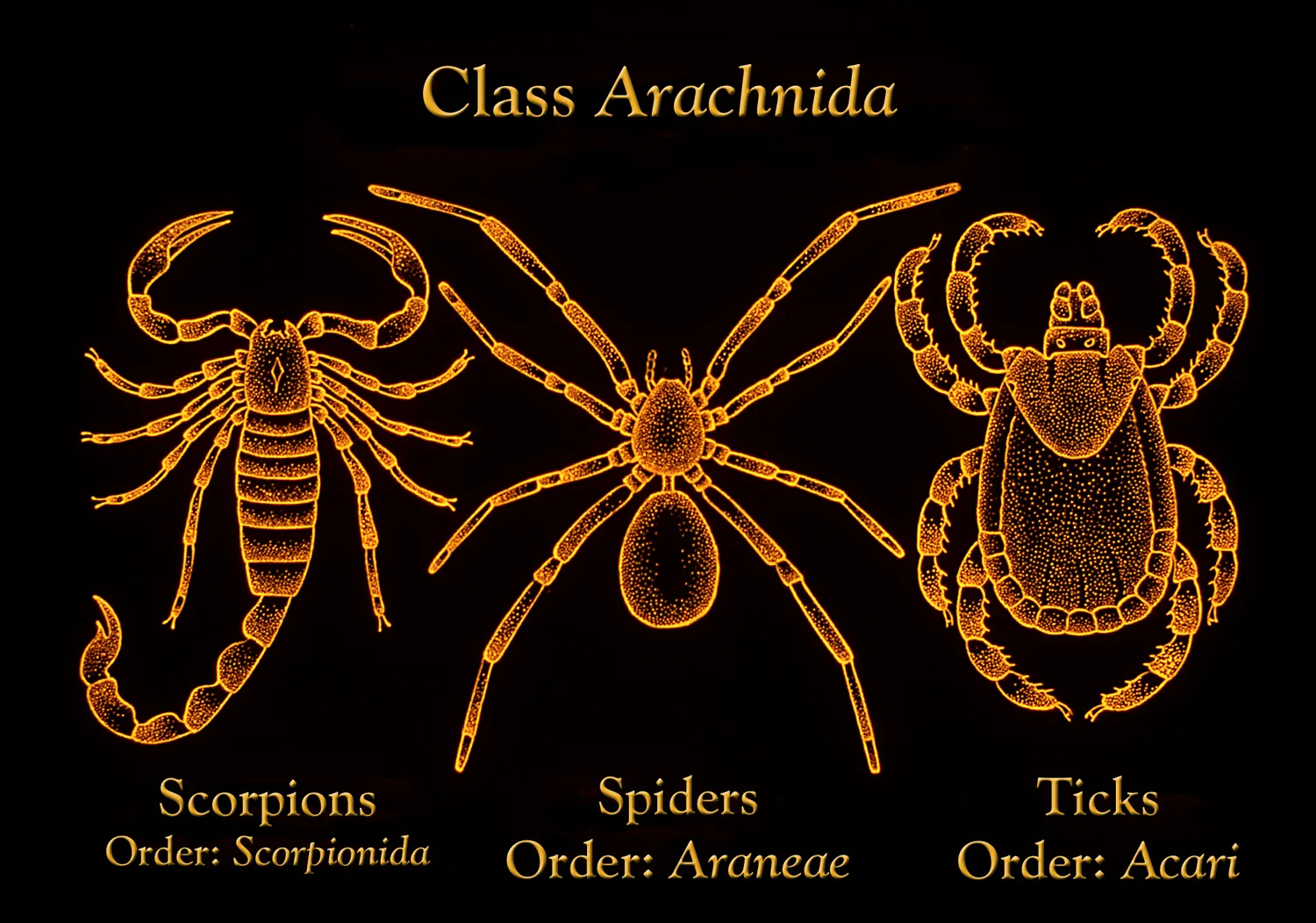
"Class Arachnida" / Wikimedia Commons.
Imagine a creature that walks on eight legs, has no antennae, and often spins intricate traps. This describes the amazing world of arachnids, a group of invertebrates that includes spiders, scorpions, ticks, and mites. While often mistaken for insects, arachnids are a distinct class of animals with unique features. They are incredibly diverse, found in almost every habitat on Earth, from hot deserts to tropical rainforests and even cold mountains.
One of the most defining features of an arachnid is its body plan. Unlike insects, which have three body segments, arachnids typically have two main body parts: the cephalothorax (a fused head and thorax) and the abdomen. They possess eight legs, which they use for walking, hunting, and sometimes even digging. Instead of antennae, arachnids have specialized mouthparts called chelicerae, which can be fangs in spiders or pincers in scorpions, used for grabbing prey and defense. Many also have a pair of pedipalps, which are small, leg-like appendages used for sensing, manipulation, or reproduction.
Arachnids are primarily predators, meaning they hunt and eat other animals. Spiders, for example, are famous for their silk, which they use to build webs to catch insects, create protective egg sacs, or even travel through the air. Scorpions use their powerful pincers to grasp prey and their venomous stingers to paralyze it. Ticks and mites, on the other hand, are often parasites, feeding on the blood or skin of other animals, including humans.
The exoskeleton, a hard outer covering, protects arachnids and prevents water loss. As they grow, they must shed this exoskeleton in a process called molting. This allows them to get larger and repair any damage. The diversity of arachnids is truly remarkable, showcasing millions of years of evolution and adaptation to various ecological roles. Understanding these fascinating creatures helps us appreciate the intricate web of life on our planet.
Interesting Fact: Some spiders can jump up to 50 times their own body length to catch prey.
Comprehension quiz (10 questions)
1. How many body segments do most arachnids have?
2. What do spiders use their chelicerae for?
3. Arachnids are a type of insect.
4. Which term describes animals that hunt and eat other animals?
5. What is the primary function of an exoskeleton?
6. What is molting in arachnids?
7. How do pedipalps differ from legs in arachnids?
8. Why might arachnids need to molt?
9. If an arachnid had a damaged leg, which process would help it repair the injury?
10. Which of these animals is NOT an arachnid?
Perfect for the way you teach
- Build comprehension skills
- Auto-graded quiz
- Differentiated reading
- Read together at home
- Improve fluency
- Quiet reading time
- Reading curriculum support
- Independent practice
- Track Lexile growth